Breaking News
Breaking News
from Washington and beyond

Elon Musk Rips “Snake” Aide Who Caused Trump Breakup

Is Sergio Gor to blame for the sudden feud between Donald Trump and Elon Musk?

Elon Musk purses his lips while wearing a DOGE cap.
Kevin Dietsch/Getty Images

Elon Musk thinks White House presidential personnel director Sergio Gor is a “snake.” Gor, who is responsible for picking the approximately 4,000 executive branch staff members, reportedly made sure Musk’s good friend Jared Isaacman got his nomination to lead NASA rescinded.

“He is a snake,” Musk commented on Wednesday under an article describing the lack of vetting that Gor, who vets Trump’s staff, had gone through himself. The rivalry between these two men allegedly started in March when Musk, who was more involved with DOGE at the time, admonished Gor for not filling the Trump administration’s staff quickly enough, “humiliating” him in a Cabinet meeting. Isaacman lost his nomination shortly after, something that infuriated the world’s richest man.

There is obviously still bad blood between Musk and the Trump administration, and comments like these from Musk help illuminate just how and why the beef started. Musk’s flurry of tweets against Trump—claiming he’s in the Epstein files and attacking his One Big Beautiful Bill Act—were directly influenced by the spat between Musk and Gor.
Trump Suffers Huge Loss in Efforts to Speedily Deport People

The ruling gives potential deportees more time to challenge Donald Trump.

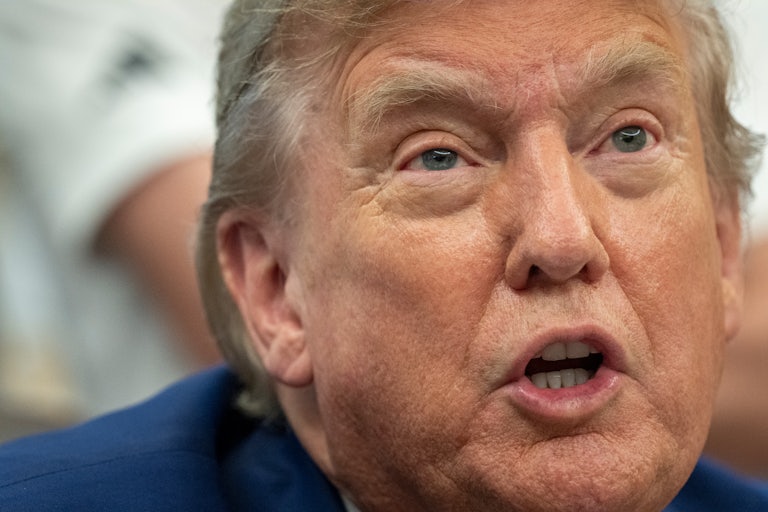
Donald Trump speaks while sitting at his desk in the Oval Office
Ken Cedeno/UPI/Bloomberg/Getty Images

A federal judge just destroyed the Trump administration’s attacks on undocumented immigrants’ habeas corpus rights by upholding a 21-day notice requirement for potential deportees. 

U.S. District Judge Stephanie Haines, a Trump appointee to the bench in Pennsylvania, ruled that the government could not provide detainees with only seven days to challenge their removal or seek asylum after receiving a deportation order. 

In a 15-page ruling that blocked the expedited deportation of a Venezuelan man, Haines provided a detailed hypothetical to demonstrate exactly why seven days would be insufficient for a detainee to have sufficient time to be heard by a court. 

“Assume that detainee John Doe … receives notice on June 1, 2026 at 12:00 P.M., that he is subject to removal under the [Alien Enemies Act] and the Proclamation. His only recourse is to file with the Judiciary in habeas,” she wrote. 

“Assume that John Doe then begins drafting, through whatever means are available to him, a habeas petition.… Halfway through drafting his petition (or while waiting for a callback from his attorney, or while still looking for one), on June 4 2026, at 5:00 P.M., he is placed on a plane which will arrive in Northern District of Texas” the same day, Haines wrote.  

“He has no opportunity to take his partially drafted petition with him or call his attorney (or find an attorney) before he is transferred,” she wrote. 

Haines imagined that the detainee might take a day to acclimate to his surroundings or find the means to continue working on his petition or hear back from his attorney—and by that time, around noon on June 6, 2026, “he stands to be removed from the country in just two days.”

“Might there not be a significant risk that this individual will not reach the judiciary before his seven days have run their course, meaning that he would be removed without any hearing whatsoever? Might not his movements from one facility to another, his quest to draft a petition, and/or his search for word from an attorney take even longer than the timeframes that the Court has just described?” Haines wrote.

“The Court cannot help but answer those questions in the affirmative,” she concluded. 

In May, Haines upheld Trump’s invocation of the Alien Enemies Act and his declaration that the Venezuelan gang Tren de Aragua was mounting an “incursion” into the United States. In her ruling, though, she rejected the administration’s goal to curb due process for those targeted by the AEA. With the Department of Homeland Security pushed to provide detainees with only 12 to 24 hours, she called for the administration to abide by a three-weeks notice. 

Read more about Trump’s deportation efforts:

Federal Reserve Warns Trump’s Economy Is About to Get Whole Lot Worse

Trump’s tariffs are directly to blame, said Federal Reserve Chair Jerome Powell.

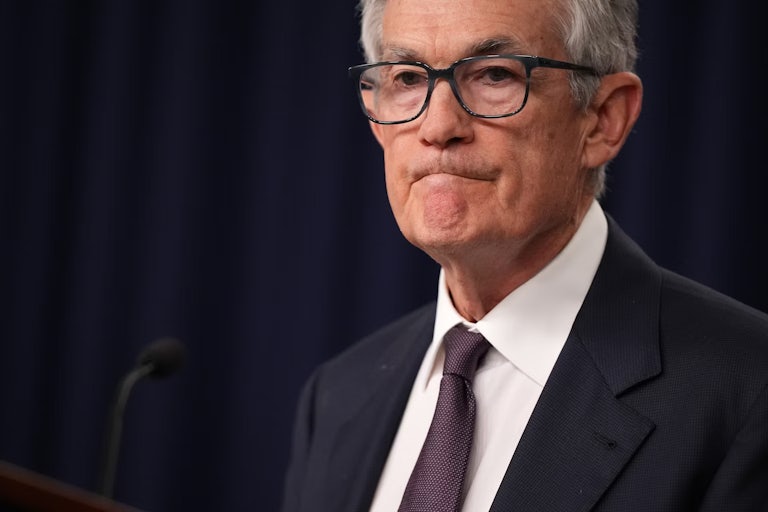
Jerome Powell purses his lips in a grim line.
Andrew Harnik/Getty Images

The Federal Reserve is forecasting aggressive stagflation for the remainder of 2025.

Inflation is expected to go up to 3 percent, GDP growth is expected to fall by 1.4 percent, and unemployment will rise to 4.5 percent, the Fed announced Wednesday.

This report comes as the Trump administration weighs further aiding Israel in its war on Iran, a move that could seriously destabilize the region and multiple economies, including our own. There’s also Trump’s “One Big Beautiful Bill Act,” which is expected to add $2.8 trillion to the deficit and reward tax cuts to wealthy individuals and corporations while slashing Medicaid and other social welfare programs.

Fed Chair Jerome Powell took to the podium on Wednesday to reaffirm what he’s been saying for months: This economic downturn is a direct result of President Trump’s tariffs.

“Increases in tariffs this year are likely to push up prices and weigh on economic activity. The effects on inflation could be short-lived, reflecting a onetime shift in the price level. It’s also possible that the inflationary effects could instead be more persistent,” Powell said. “Avoiding that outcome will depend on the size of the tariff effects, on how long it takes for them to pass through fully into prices, and ultimately, on keeping long-term inflation expectations well-anchored.”

The Fed has refused to cut interest rates as a result of the projected stagflation. Trump has yet to comment on the Fed’s report.

Trump Reveals His Amazing “Intelligence” on Iran’s Supposed Nukes

Donald Trump is using well-vetted intelligence to inform reasonable policy—not.

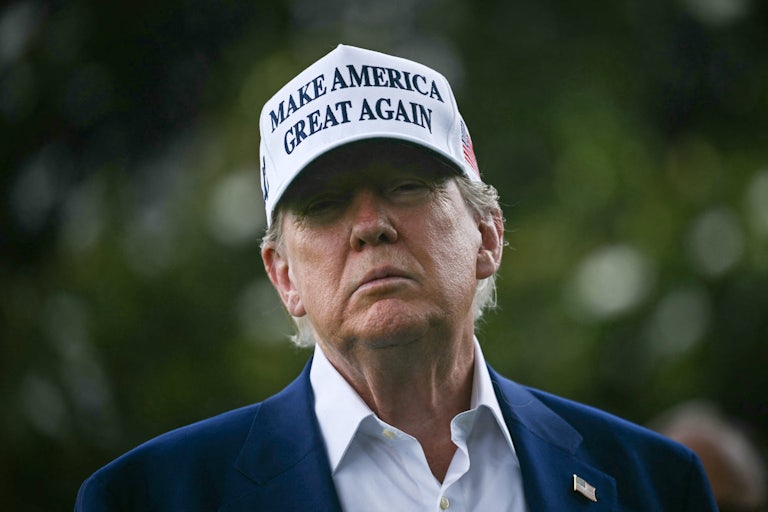
Donald Trump wears a white "Make America Great Again" hat and stands on the White House lawn
Brendan Smialowski/AFP/Getty Images

Donald Trump claimed to have intelligence Wednesday … but he doesn’t seem to know what he has intelligence about.

As tensions continue to build in the Middle East following Israel’s brutal strikes against Iran, the U.S. president took a break from the Situation Room to host an entirely unnecessary flag-raising ceremony on two newly erected flagpoles at the White House. While standing with members of his family, Trump halfheartedly responded to a question from the press, revealing just how little he knows about the situation in Iran.

“Do you have any intelligence that Iran is targeting—” asked one reporter.

“I have intelligence,” Trump said, grinning.

He continued speaking inaudibly as the reporter finished her question: “that Iran is targeting any U.S. assets?”

“We’re doing very well, thank you,” Trump replied, before dismissing the press.

Trump’s director of national intelligence was left scrambling this week after the president said he “didn’t care” about his own government’s assessment that Iran was still years away from acquiring a nuclear weapon because he thinks “they were very close to having it.” Intelligence chief Tulsi Gabbard ultimately opted to lie and say that she and the president were in total agreement—despite saying the exact opposite just a few months ago.

Trump is simply parroting rhetoric from the Israeli government, which has repeatedly touted Iran’s nascent nuclear capabilities as a justification for its sweeping military operation there. The U.S. president has given Israel the green light to continue its assault on Iran, leaving the door open for further U.S. military intervention.

Two officials familiar with Trump’s ongoing discussions about getting involved in Iran told CNN that the president was warming up to the idea of using U.S. military assets in the Middle East. The U.S. has already sent two aircraft carriers to the region.

Republican Senator Warns Trump Against Entering Israel’s War on Iran

Who knew Josh Hawley would be leading the Republican resistance on this?

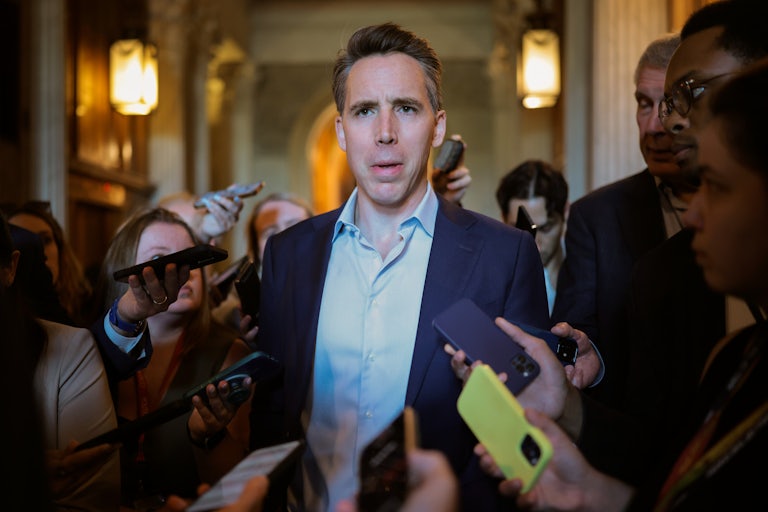
Senator Josh Hawley speaks to reporters in the Capitol.
Kayla Bartkowski/Getty Images

Senator Josh Hawley has added his name to the short list of Republicans in Congress voicing their opposition to Trump’s current and potential further support of Israel’s war on Iran.

“Josh Hawley, who spoke to Trump last night, told me he ‘would not’ be comfortable if the US took offensive action against Iran,” CNN’s Manu Raju posted on X on Wednesday.

“I don’t want us fighting a war. I don’t want another Mideast war.... I’m a little concerned about our sudden military buildup in the region,” Hawley told Raju. “I think Trump’s message to them is if you don’t [give up nukes], you’re on your own with Israel. I think all that’s fine. It’s a very different thing though for us to then say, but we are going to offensively … go strike Iran or insert ourselves into the conflict?”

“Trump’s offering [Iran] an off-ramp. Take the off-ramp,” he continued. “If not, you’re going to be on your own with Israel, but I don’t think there’s a need for the United States to affirmatively insert ourselves.”

There is a growing split between traditional war hawk neocons and MAGA Republicans grasping on to the last dregs of Trump’s promises of “America First” and an end to endless wars. But whether Hawley’s concern will turn into a serious attempt to stop Trump’s current trajectory remains to be seen.