Trump Asks Random Farmer Which Countries to Tariff Next
Donald Trump seemed confused about the extent of his own tariffs.

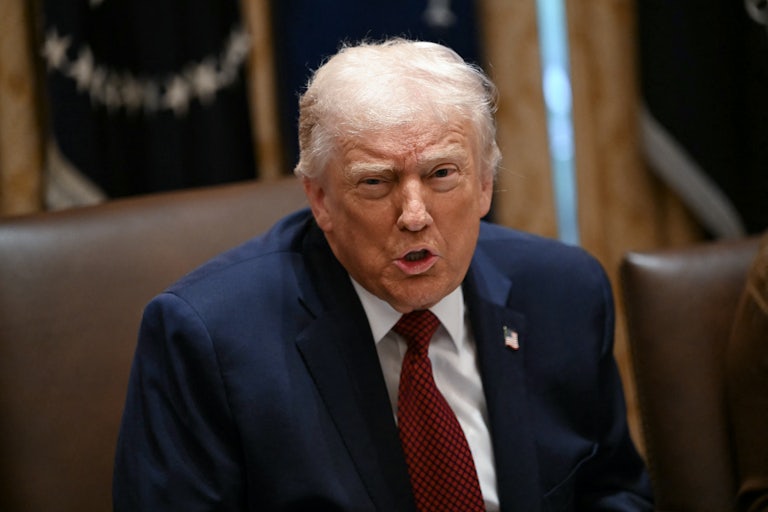
President Donald Trump revealed Monday just how clueless he is about his own tariff policies, and appeared to improvise new rice tariffs on the fly after speaking with one rice farmer.
During a roundtable to unveil a $12 billion bailout package for American farmers, Meryl Kennedy, CEO of Louisiana-based Kennedy Rice Mill, told Trump that she believed other countries were “dumping” rice into the United States.
“Which countries?” Trump asked.
“India, Thailand, even China into Puerto Rico. Puerto Rico used to be one of the largest markets for rice, we haven’t shipped rice into Puerto Rico for years,” Kennedy said, adding that the president needed to “double down” on his tariffs.
“You want more?” Trump asked incredulously, and Kennedy replied that other countries were “cheating” by subsidizing their rice production.
Trump seemed to have no idea whether other countries were “dumping” rice, and asked Treasury Secretary Scott Bessent if India had a tariff exemption for rice.
“No sir, we’re still working on their trade deal,” Bessent replied. As of August, India is facing steep 50 percent tariffs on all exports, with exceptions for certain agricultural products, such as tea, coffee, and spices—not rice. In October, exports from India to the United States rose for the first time in months as trade negotiations were underway.
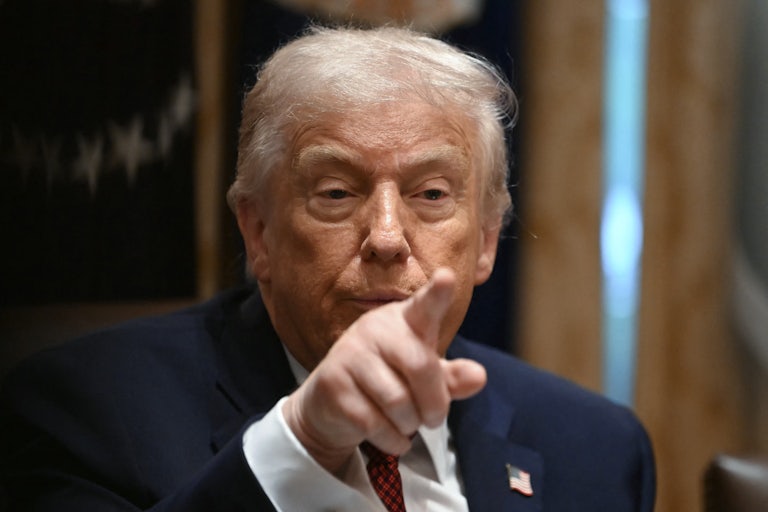
As Kennedy tried to explain how India might be illegally subsidizing its rice production, Trump interrupted her. “Give me the countries, if you could? Go ahead. India, who else? Mark it down, Scott,” the president said.
Kennedy repeated the “main culprits” of India, Thailand, and China, adding, “But there’s others too, and we can get you a full list.” Trump promised he’d “take care” of the problem quickly.
U.S. rice production is small compared to that of other grains, such as soybeans or corn. Across the six states that produce rice, there are only an estimated 5,500 farmers for that crop. In 2025, rice production in the U.S. reportedly suffered from adverse weather, while rice production in South American countries surged.
During the same roundtable, Trump also floated placing “very severe” tariffs on fertilizer imported from Canada—the largest supplier to the United States—which could boost domestic production but risks further hurting farmers.