Breaking News
Breaking News
from Washington and beyond

Here’s Why Trump Keeps Changing His Opinion About TikTok

Allies of the Republican presidential nominee are increasingly involved with the Chinese media industry.

The TikTok logo
Silas Stein/picture alliance/Getty Images

Donald Trump is—once again—trying to backpedal on his opinions about TikTok.

The presumed GOP presidential nominee is trying to argue that it wasn’t conservatives who originally pushed to ban the popular social media platform, but rather President Joe Biden.

“Just so everyone knows, especially the young people, Crooked Joe Biden is responsible for banning TikTok,” Trump wrote on Truth Social, before cooking up a novel conspiracy that Biden is removing American access to the platform in a bid to help one of its social media rivals, Facebook.

“He is the one pushing it to close, and doing it to help his friends over at Facebook become richer and more dominant, and able to continue to fight, perhaps illegally, the Republican Party. It’s called ELECTION INTERFERENCE,” Trump said.

It’s at least the third instance in which Trump has conveniently forgotten how hard he fought during his own administration to ban the Chinese-owned app. Long before Biden signed the effective ban—which is purportedly about national security—into law, Trump attempted to eradicate TikTok via an executive order before he left office in 2020. He claimed that the video-sharing platform “[threatened] the national security, foreign policy, and economy of the United States.”

And the flipped script comes at an opportune moment for the presidential candidate. Major Republican donor Jeff Yass, whom Trump appears to be courting, reportedly owns a 15 percent stake in TikTok. Trump’s former campaign manager Paul Manafort, who is reportedly trying to rejoin Trump’s team, has new business ties to the Chinese media industry.

Another of Trump’s allies, former Treasury Secretary Steven Mnuchin, revealed his own plans to acquire the social media company via an investor group just a day after the ban passed with overwhelming bipartisan support in the House.

“I think the legislation should pass, and I think it should be sold,” Mnuchin told CNBC in March. “It’s a great business, and I’m going to put together a group to buy TikTok.”

ByteDance announced shortly after Biden signed the ban—which gave TikTok an ultimatum to either sell its I.P. to an American owner or stop operating within the U.S.—that the company doesn’t “have any plans to sell.”
Read more about Trump's shifting support:

Virginia Schools Stop Virtue Signaling, Bring Back Confederate Names

The Shenandoah County school board voted to reinstate the Confederate names of its schools.

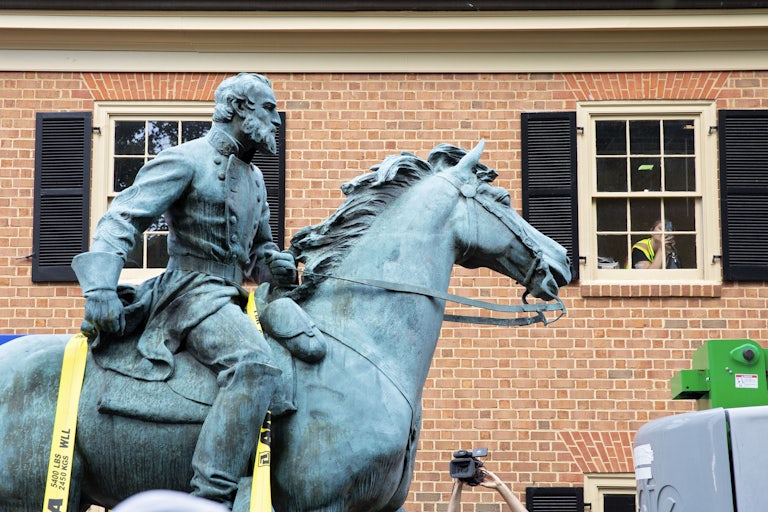
A statue of Stonewall Jackson in Charlottesville, Virginia
Ryan M. Kelly/AFP/Getty Images
A statue of Confederate General Stonewall Jackson, whose name will be reinstated on a high school in Quicksburg, Virginia

After removing Confederate names from two of its public schools during the summer of 2020, a rural Virginia county has become the first school district in the country to reverse such a change.

Shenandoah County’s school board voted early Friday morning to reinstate the names of three Confederate officers on two schools, after a meeting that lasted for hours prompted by years of pushback, The New York Times reported. According to the Times, school board meetings were filled with local residents who said the name changes were secretive and rushed through and said they resented cultural shifts being forced upon them.

Four years ago, during protests against racial injustice across the country, the board voted 5–1 in a virtual meeting to change the names of Ashby-Lee Elementary and Stonewall Jackson High. The schools were renamed the next year as Honey Run and Mountain View. But backlash in the county, which is 90 percent white, led to a revote in 2022 that resulted in a tie.

“When you read about [Stonewall Jackson]—who he was, what he stood for, his character, his loyalty, his leadership, how Godly a man he was—those standards that he had were much higher than any leadership of the school system in 2020,” Tom Streett, one of the board members, said Friday before he and the rest of the board voted 5–1 to restore the names.

The protests across the United States during the summer of 2020 against racial injustice resulted in changes ranging from new school curricula about the country’s racial history to name changes such as those in Shenandoah County. In the years since, though, the right wing has pushed back on any changes to the pre-2020 status quo, from denying that systematic racism exists to inventing the specter of “critical race theory” to prevent any mention of racism in schools or school policy, even winning school board elections on the premise. The result has been a decimation of public education in America.

New Hush-Money Evidence Shows Trump Basically Admitting to Crimes

Trump’s lawyers had tried to prevent this tweet from being entered into evidence.

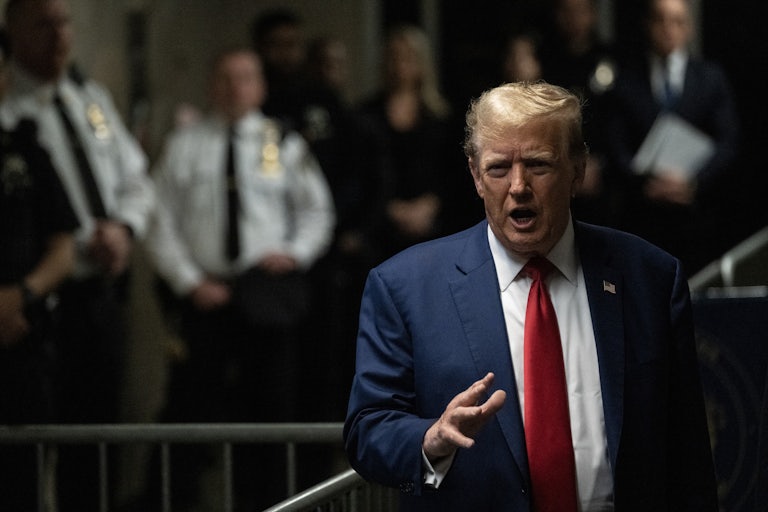
Donald Trump gestures as he speaks
Victor J. Blue/Pool/Getty Images

Donald Trump is suddenly in the odd situation of having to defend against his own words.

An old tweet of his was admitted into evidence in his hush-money trial Friday, and the post appears to challenge what Trump’s legal defense has tried to claim since opening statements.

In May 2018, Trump admitted on Twitter (now called X) that his former fixer Michael Cohen actually did receive a “monthly retainer”—even though Trump’s attorneys have attempted to argue that Cohen was not paid back for the $130,000 hush-money payments made to porn actress Stormy Daniels. Instead, Trump’s lawyers claim Cohen was paid as an employee.

“Mr. Cohen, an attorney, received a monthly retainer, not from the campaign and having nothing to do with the campaign, from which he entered into, through reimbursement, a private contract between these two parties, known as a non-disclosure agreement or NDA,” Trump wrote at the time.

Prosecutors have argued that the retainer fee was simply a guise to pay Cohen back.

The timestamp on the tweet also provides further evidence that Trump was aware of multiple $35,000 checks to Cohen inked by his two sons, Eric Trump and Donald Trump Jr., as well as Trump Organization CFO Allen Weisselberg, made via a revocable trust.

Trump is accused of using Cohen to sweep an affair with Daniels under the rug ahead of the 2016 presidential election. The Republican presidential nominee faces 34 felony charges in this case for allegedly falsifying business records with the intent to further an underlying crime. Trump has pleaded not guilty on all counts.

Cassidy Hutchinson Could Be Latest Major Republican Defection

The former Trump White House staffer said she’s voting for “character” in the fall.

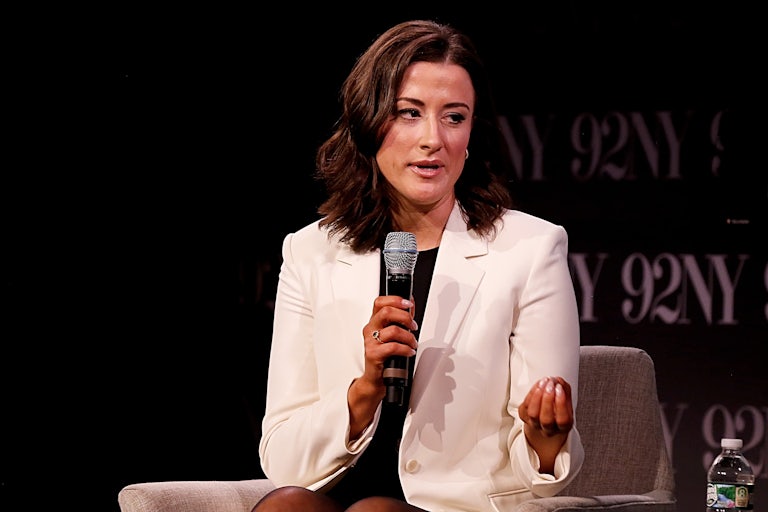
Cassidy Hutchinson speaks into a microphone
Dominik Bindl/Getty Images

Donald Trump’s former White House aide Cassidy Hutchinson could leave the Republican Party behind and vote for Joe Biden in November.

Hutchinson made the comment during an event at Colorado Mesa University on Tuesday. Video posted to X (formerly Twitter) on Thursday shows Hutchinson addressing the crowd.

“I’ve never voted for a Democrat in my life, but I would absolutely consider voting for Joe Biden this upcoming November because he will not seek to destroy our nation. He will not seek to destroy our Constitution,” she said.

Hutchinson’s statement does not come lightly. She had a harrowing time while working in Trump’s White House, describing a hostile environment where Trump threw dishes, wanted to allow armed supporters at his January 6 rally, and tried to strangle a Secret Service agent. In her book, Enough, Hutchinson accused former Trump lawyer Rudy Giuliani of groping her just before Trump’s speech on January 6. She also had to put up with aggressive advances from Representative Matt Gaetz, a Trump acolyte who even falsely claimed that two dated, she said. She would become a star witness for the House January 6 investigative committee.

During House Republicans’ failed attempt to impeach Biden, one of their witnesses, Tony Bobulinski, tried to paint Hutchinson as an “absolute liar and a fraud” because she described an “out of sight” meeting between him and Trump’s former chief of staff, Mark Meadows, at a 2020 campaign rally in Rome, Georgia. Hutchinson shut him down with photographic evidence of the meeting.

Hutchinson is not the first Trump White House aide to signal support for Biden. Former White House deputy press secretary Sarah Matthews told MSNBC late last month that she’d be voting for the president’s reelection, stating that “when we have a candidate on the ballot who will not uphold the Constitution, then I feel like I have to put policy aside, and I want to support the person who is best suited to defeat Donald Trump.”

Georgia’s former Lieutenant Governor Geoff Duncan has also endorsed Biden, saying he plans on “voting for a decent person I disagree with on policy over a criminal defendant without a moral compass.”

Read about Hutchinson's fellow defectors:

Threat to Democracy Steve Bannon Will Be in Jail Through Election

A court has unanimously rejected Bannon’s appeal of his contempt of Congress convictions.

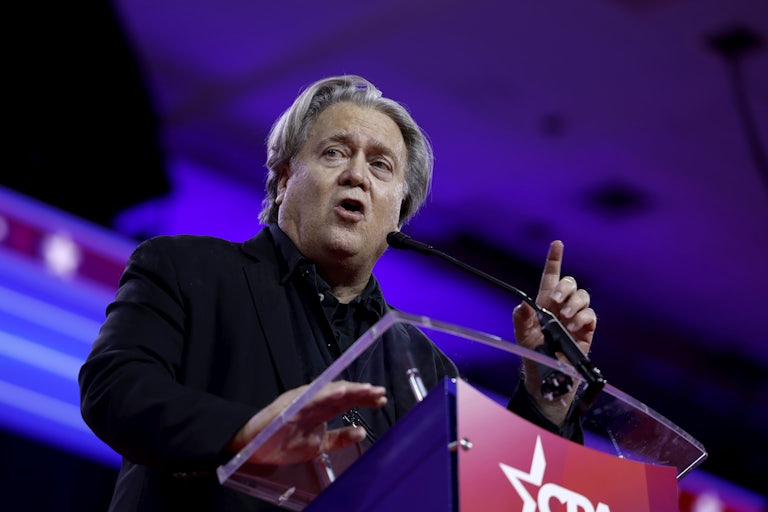
Steve Bannon gestures as he speaks into a microphone
Anna Moneymaker/Getty Images

A three-judge panel on the U.S. Circuit Court for the District of Columbia rejected Steve Bannon’s appeal case Friday, upholding a criminal court’s ruling that the former adviser to Donald Trump must serve jail time.

Bannon was convicted by a jury in 2022 on two counts of contempt of Congress for refusing to respond or comply with a subpoena request issued by the January 6 House Select Committee. He was sentenced that year to four months in jail but has remained free while he appealed the decision. If he begins the sentence soon, he could be in prison during the election in November.

“Because we have no basis to depart from that binding precedent, and because none of Bannon’s other challenges to his convictions have merit, we affirm [the conviction],” the panel wrote in a 20-page opinion, noting that a contrary ruling on Bannon’s crime would “hamstring Congress’s investigatory authority.”

Bannon claimed he could not comply with the Congressional subpoena on the basis of assumed executive privilege, arguing that—although he was a private citizen at the time—his discussions with Trump were confidential.

Bannon will likely attempt to appeal the case again, either to the 11-member bench of the appeals court or to the Supreme Court. In the meantime, he is likely headed to prison.

Another of Trump’s former advisers—Peter Navarro—faced a similar fate in January, when he was sentenced to four months in prison after spending years dodging a congressional subpoena. All of his attempts to overturn his sentence have failed.

This story has been updated.