Here’s a Better Idea Than Trying to Assassinate the President
Cole Allen squandered his life on a hopeless mission to change the course of history. Let’s learn from his mistakes.

Cole Allen, the 31-year-old California man who, by his own admission, armed himself and attempted to breach the security at this past weekend’s White House Correspondents’ Dinner, was officially charged this week with attempting to assassinate the president. The case—at least what’s been publicly disclosed—is still quite murky; questions remain about whether Allen even fired his gun in the bowels of the Washington Hilton Hotel. Still, the takeaway, to me at least, is clear: You should not try to assassinate the president.
I know, this is probably not something that you need to be told. Murder is, after all, inherently immoral and a criminal act to boot. Murdering the president of the United States also comes with a high degree of difficulty given his 24/7 protection by a posse of well-trained armed guards. In just about every conceivable scenario, you will likely fail and you will definitely not be able to go back to living your previous life. Still, there are some additional things to consider that are specific to the Trump era itself: whether killing the president won’t make matters much worse, and whether there is a better way to channel your discontent.
Allen is an unusual would-be assassin. There’s nothing about him that reminds me of any number of mass shooters of recent vintage. There’s no air of glory-seeking; no meme-sludge in his rhetoric. In his manifesto, he spends quite a bit of time apologizing to various people in his life for betraying their trust and takes no evident pleasure in the task he’s put himself to doing. (He also seems prematurely disdainful of the security measures that ultimately foiled his plot.) What’s most unique, and perhaps most troubling, is that his decision to try to take the president’s life is, as TNR contributor Elizabeth Spiers noted on Bluesky, rooted in a sense of moral injury.
The Huffington Post’s David Wood, who has written extensively about how soldiers often suffer from moral injury after their tours of duty have concluded, describes the condition as the “sense that [one’s] fundamental understanding of right and wrong has been violated, and the grief, numbness or guilt that often ensues.” In his manifesto, Allen wrote, “I am a citizen of the United States of America. What my representatives do reflects on me. And I am no longer willing to permit a pedophile, rapist, and traitor to coat my hands with his crimes.” For all intents and purposes, he is saying that he is implicated in Trump’s evident corruption and misrule. “Turning the other cheek when *someone else* is oppressed is not Christian behavior,” he wrote, “it is complicity in the oppressor’s crimes.”
This is perhaps the most worrying part of this story—that there might be others out there who feel this way, and who might be compelled to take the same action. These are the natural consequences of our current age of elite impunity, in which a corrupt president transforms the government into an instrument of self-dealing and revenge, and justice is perceived as slow in arriving, if it arrives at all. Allen spends a considerable amount of time in his manifesto building the moral scaffolding necessary to accommodate his decision to travel to Washington, D.C., to dole out a quick dose of accountability. Based on his writing, I think he works harder than most would-be mass shooters to illuminate a humane logic for his actions. I still think he draws all the wrong conclusions.
One thing that Allen gets badly wrong is the idea that killing Trump might have provided a short cut to putting things right. I think many people believe this about the efficacy of political violence, even if they would never engage in it themselves. But I’m unconvinced, at least as it pertains to Trump, because MAGA is something of a cult movement, steeped in its own byzantine mythology and awash in conspiratorial thinking. The one thing you probably don’t want to do if you want to bring the country back from the brink of this madness is to give this movement a martyr.
At the moment, MAGA is cracking up under the weight of the Trump administration’s many failings. As Greg Sargent noted about a recent Fox News poll, Trump’s coalition is contracting: “On both his general approval ratings and many major issues, his numbers among voter groups that have reliably supported him in the past are awful. They’re also terrible among the non-Trumpy groups that he pulled into the coalition in 2024.” It seems the worst possible thing anyone can do is interrupt this free fall. Don’t shoot a man who’s busy shooting himself in the foot.
Had Allen been successful in his attempt to kill Trump, he might have altered the thermostatic chemistry of the electorate, goosed Trump’s support, and brought back morally affronted fence sitters who were ready to leave Trump behind. It also might well have touched off a wave of political violence in the other direction—which was a thing he really should have considered before he acted. As it is, I worry that TNR contributor Ana Marie Cox is correct that Cole’s attempt will bond Trump and the White House press corps together in a shared trauma, further eroding the latter group’s already withered sense of duty in holding the administration accountable, thus exacerbating the original problem.
So, at the risk of stating the obvious, don’t attempt to—or even daydream about—assassinating the president. The best path to thwarting Trumpism lies in the deliberations of lawful democracy. This is not a path that favors quick fixes and instant gratification. We must organize in numbers to boot Trump and the GOP from power and install leaders who can command a majority to put things right, up to and including possible impeachment and putting people in jail.
On a more personal note, I was saddened to read that Allen felt alone in his grave misgivings. While he enumerated a community of people surrounding him—family, friends, work colleagues, his church—he separated himself from what sounds like a vibrant network of people rather than seeking them out. Had he done so, he might have found a better path to take that might have relieved his moral injury and contributed much more to the anti-Trump cause.
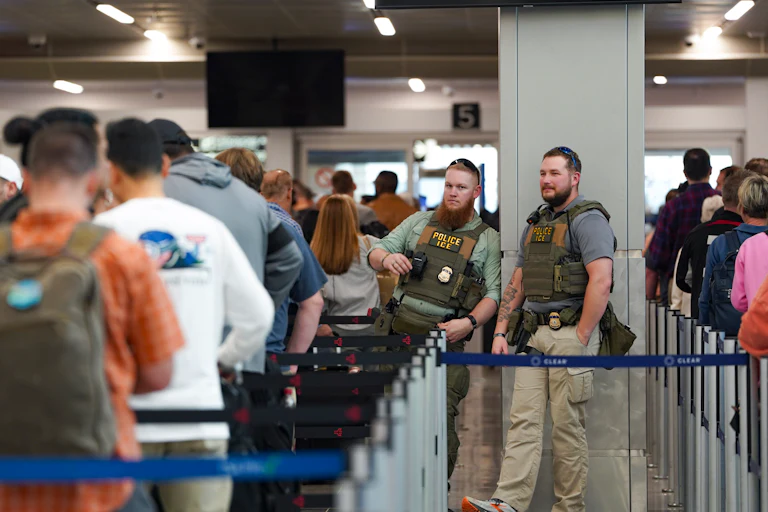
Around the same time Washingtonians were preparing for this weekend’s White House Correspondents’ Dinner, I was catching up with an acquaintance from Minneapolis, who was giving me an intimate view of what it’s like to participate in anti-ICE resistance in the Twin Cities. Her phone was a warren of group chats and text chains in which concentric orbits of organized citizens went about the daily business of protecting their neighbors and keeping watch over their neighborhoods. In Minneapolis and St. Paul, democracy is a well-oiled machine with regular training sessions from skilled political organizers.
One thing she mentioned about those trainings has stuck with me after the events of Saturday night. The trainers told the people they were organizing that sometimes they’d end up on the front lines of ICE violence—that they’d bear witness to some terrible sights, see things that would make them angry. The trainers, she said, made it clear that anyone who did not think they could handle these circumstances without succumbing to violent, retributive impulses needed to find some other role—that there were plenty of other ways they could help where their despair or anger wouldn’t get the better of them.
Given the success of this faction of Trump resistance, we’d do well to heed this advice. There are plenty of things we can do, right now, to fortify our communities and protect our neighbors—to materially impact the lives of others for good, find fellowship along the way, and absolve any sense of moral injury that may be creeping into our psyche. It’s more lethal to Trumpism long-term if we organize in opposition than it is to grab a gun and take a run at the president. I’m sorry that Allen couldn’t find his way to this realization. He might have done some good.
This article first appeared in Power Mad, a weekly TNR newsletter authored by deputy editor Jason Linkins. Sign up here.