Newsletter
Power Mad
A weekly review of the rogues and scoundrels of American politics

The Residents of Minneapolis Are Fighting for All of Us

The sights of Minneapolitans defending their community have been inspiring. But underneath these displays of heroism, there is despair, fear, and hurt.

People gather in front of the Minnesota State Capitol during a demonstration over the fatal shooting of Renee Good.
Charly Triballeau/Getty Images
People gather in front of the Minnesota State Capitol during a demonstration over the fatal shooting of Renee Good.

For as long as Donald Trump has deployed his ICE brownshirts in the “Democrat” cities he so despises, Americans have been out in the streets, confronting his masked goons and making sure the rest of the world sees what’s going on. One of the first witness videos I saw was in Washington, D.C., in the Mount Pleasant neighborhood where my father grew up. A woman espied three Immigration and Customs Enforcement agents loitering in the area, harangued them, ran them off their roost, and then followed them around until they finally piled in their car and drove off.

ICE confrontations have necessarily evolved since then, as agents have become more wantonly violent. The New Republic has been chronicling the community response to ICE, from Los Angeles to Chicago to Minneapolis. But one thing we haven’t done, and which I feel compelled to do, is simply say this: I think the people risking their lives and livelihoods to protect their neighbors are the best of us, and I feel like we all owe them a debt of gratitude.

I’m thankful for all the people who’ve filmed ICE agents slipping and falling on Minneapolis’s icy streets. Fascism is more a set of aesthetics than it is a legible system of political beliefs, so it actually matters that we make fun of these jabronis—humiliation pushes our lines forward. Creativity is needed, as well. I’ve thrilled to the sight of Minnesotans gathered outside the hotels harboring these hoodlums, banging on drum kits late into the night. And ordinary citizens seem very composed and ready to protect their city. One especially inspiring sight came this week when ICE agents pounded on the door of the Wrecktangle Pizza shop in Minneapolis’s Lyn Lake neighborhood: There’s a “tweet tweet” blast on a whistle, and suddenly scores of people swarm the sorry ICE agents and run them off.

While we should be rightly delighted by these sights, they might be occluding a darker part of this story. The murder of Renee Good has engendered a righteous fury in the people of Minneapolis, but if my friends there are any guide, it’s also sparked genuine sorrow and spiky, persistent fear. People that I know normally to be rocks of confidence are communicating a despair that I’ve never heard them express.

In my group chats, I’ve been told about restaurant workers who’ve disappeared from their workplaces. Those friends of mine with kids have had to go to exhausting lengths to protect them. One told me about how his daughter’s preschool had to close because the Methodist Church that hosted it was tipped off that ICE would be executing a raid on its property that day—the day of the church’s food pantry. And the reason ICE was rumbling Wrecktangle Pizza, I was told, was because the chain raised $85,000 to help area restaurants cope with the strain of their agents’ presence in the city. ICE knows who the most vulnerable Minneapolitans are, and also the ones who’ve done them the most damage, and they are targeting both, with state-of-the-art surveillance technology and the tacit permission of the Trump administration to terrorize.

Minneapolis truly can be likened to a city under siege from a foreign threat. As The Minneapolis Star Tribune recently reported, the Trump administration’s plans to deploy as many as 3,000 ICE or Customs and Border Protection agents to the Twin Cities would make the occupying force “equivalent to five times the manpower of the Minneapolis Police Department.” Moreover, they report, it would be “close to the total headcount of sworn officers among the region’s largest 10 law enforcement agencies and equals nearly one agent for every 1,000 of the Twin Cities’ 3.2 million residents.”

This is an important side of the story to tell for many reasons, not the least of which is that ICE cannot deploy enough people to put every American city in check. So for the moment, Minneapolis is really taking it on the chin for most of the rest of us. The reason the streets of my own dense liberal enclave are not ringing out with shouts and whistles is because Trump’s “day of reckoning” isn’t being fought here—yet. When this fight does come to our own neighborhoods, we will have Minneapolitans—like the Chicagoans, Portlanders, Los Angelenos, and Washingtonians before them, among others—to thank for cheering our hearts, deepening our knowledge of how to fight back, and making these ICE deployments more costly.

The people of the Twin Cities feel isolated and alone; local officials have lamented that they are literally outgunned, and politicians in Washington have offered little respite beyond the occasional galaxy-brained idea. We owe a debt to the people of this besieged city. We should take some time to comfort friends and loved ones who are under fire. We should share their stories, good and bad, widely, with an eye toward building a repository of evidence that a future federal government can use to prosecute lawless ICE agents and those who gave them marching orders. In the meanwhile, to everyone putting your bodies on the line in this fight, you have my thanks. And to the ICE agents out there causing violence and mayhem, let me say—from the heart—get fucked.

For those interested in ways to help the people of Minneapolis, there are a number of organizations to which you can donate. Unidos MN has been helping to train Minneapolitans to observe and report on ICE activity and run the city’s rapid response hotline. Take Action MN is constructing a hub for mutual aid groups in the city. Families Helping Families has organized 120 parents to do grocery and rent relief, student transportation, school patrols, and more. Isaiah is a multiracial organization of faith communities that has organized rallies to remember Renee Good. There are a number of national civil rights organizations operating in the city, including the Immigrant Defense Network, the Council on American-Islamic Relations of Minnesota, and the Minnesota Immigrant Rights Action Committee. There are a number of legal aid organizations, as well, including the Midwest Immigration Bond Fund, the Immigrant Law Center of Minnesota, and the Minnesota chapter of the National Lawyers Guild.

This article first appeared in Power Mad, a weekly TNR newsletter authored by deputy editor Jason Linkins. Sign up here.
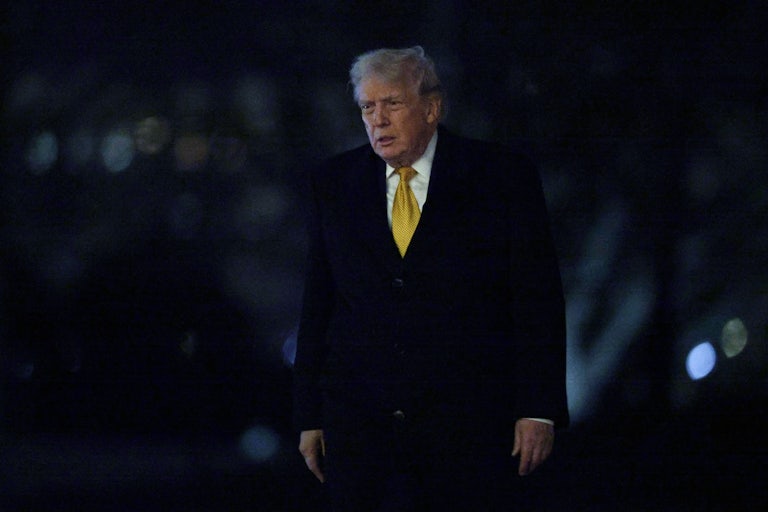
The Case for Impeaching Donald Trump

No, Democrats don’t have the votes to convict. But they should brandish their convictions in the court of public opinion.

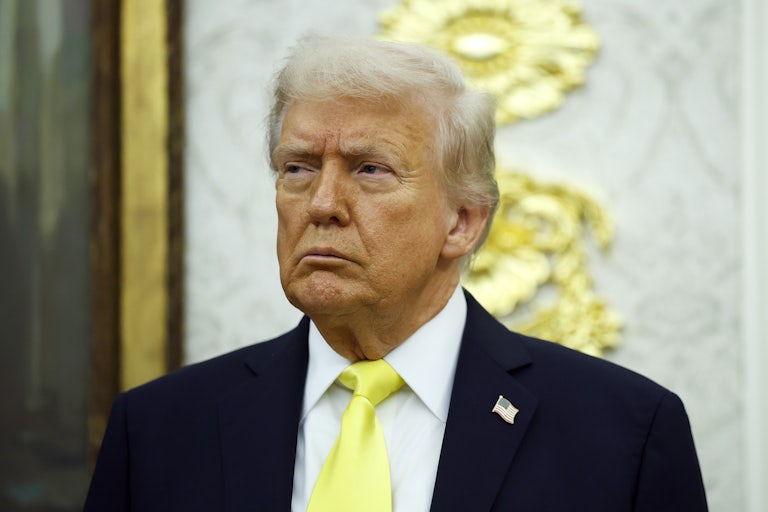
Donald Trump looking like death
Alex Wong/Getty Images

I think Philadelphia Inquirer columnist Will Bunch has summed up the past week in American life more succinctly than I ever could: “We are going to look back fondly on 2025 as ‘the sane year’” of Trump’s second term.

Here’s where we left off in 2025: Trumpism isn’t working, ordinary people are being crushed under the wheels of elite impunity, the cost of everything is going up, the administration either has no answers for it or doesn’t care, and the president is deteriorating before our eyes, dogged by obvious health concerns and the slow-rolling Jeffrey Epstein affair. And as the year drew to a close, it looked for all the world that the president—an inveterate telegrapher of his own punches—was about to launch a regime-change war in Venezuela.

When the news finally came, on January 3, that the invasion had begun, it was even more chaotic and loopy than one might have imagined. The U.S. has abducted a head of state on cocaine-trafficking charges, an offense that would not seem to warrant either military intervention or the wholesale destabilization of a state. Trump has given the strong impression that the objective was the plunder of Venezuela’s oil, but that makes very little sense from either a business or an economic perspective—and, in a weird move for an “America First” movement, it will seem to require a pillage of taxpayer money to finance. Meanwhile, the administration’s tantrums have already moved on to other targets—Greenland and Mexico among them.

Just as the nation was contending with the possibility of going to war with another country, one of Trump’s ICE goons gunned down a Minneapolis woman in cold blood. The context of this crime cannot be shorn from all the other aforementioned ones. Everything is connected: Trump’s war machine is seizing territory for his mass deportation scheme (that was another goal in Venezuela); his goons plunder the country’s mineral resources with one hand while abducting our friends and neighbors off the streets with the other (some of them to be sent to Venezuela, presumably). It’s a vertically integrated autocracy—tearing a hole in the heart of the American civic fabric while funneling wealth to his plutocratic masters.

As Trump withers in his dog-wagging fugue, casting about for sundry distractions to occupy our attention while his administration fails to deliver peace, prosperity, or liberty to the American people, the rest of us can cut through the confusion: This administration is a criminal enterprise, first and foremost. These are impeachable offenses, plain as day. They must be treated as such. And a recent report from NOTUS finds that a number of Democrats seem to share this view.

Let’s dispense with the obvious: No, there are not enough votes to convict Trump in the Senate. And it’s a heavy enough challenge to get articles of impeachment out of the House—though the passing of California Republican Representative Doug LaMalfa has shrunk Speaker Mike Johnson’s majority to 218–213, leaving us on the cusp of tantalizing possibilities. But the salient point is this: Given the devotion of Trump’s cult in Congress, there’s no way an impeachment effort will end with the removal of the president.

Do it anyway. The rule of law is meaningless if you only take it up when it’s easy. The point of doing the right thing isn’t to merely experience the catharsis of success—it’s to assert standards, uphold values; to acknowledge the existence of moral authority and answer its call for redress courageously. Trump’s lawlessness has to be opposed, if only because the times demand it. This being an election year, Democrats are in need of some simple ideas on which to anchor a national campaign. “The president is a degenerate criminal, and if you send enough of us to Washington we will bring the madness to an end” is a message Democrats should be sending. Even if an impeachment effort hits the skids, it will signal to voters that Democrats have the political courage to defend our values.

Even a doomed-to-fail impeachment effort offers Democrats some distinct advantages. Remember: Democrats are in a content-creation war with the Trump regime. The news media thirsts for conflict and controversy; Democrats going all in on an impeachment effort sets the table for a feeding frenzy. Frankly, the fact that this is never getting to the Senate for a trial should free Democrats from having to strictly tether a case to statutory realities or tailor it to the austere sensibilities of doddering senators. There’s no reason an impeachment effort can’t be a kaleidoscopic panoply of Trumpian misdeeds presented with an eye toward capturing tabloid headlines.

Regardless of whether Democrats want to pursue the formal impeachment process, the larger idea—to hinder the Trump regime by calling attention to misconduct and lawlessness—is critical to Democrats’ messaging in this election year. Their campaign should be a thorough indictment of the president, the dismantling of his credibility, and the exposure of his every misdeed. Criminality is the Rosetta Stone that translates the Trump presidency, and as I’ve said before, the Democratic leaders of the future should be ready to speak fearlessly about putting the members of this lawless cabal in jail.

So let the prosecution of the president begin today. And if the Democrats, bolstered by that message, win back the House in the November midterms, then they can impeach him in earnest next year. Even Trump himself wouldn’t expect anything less.

This article first appeared in Power Mad, a weekly TNR newsletter authored by deputy editor Jason Linkins. Sign up here.
The Nine Worst Trump Scandals of 2025

Trump’s second term has been so lurid in its corruption that it was genuinely hard to narrow this list down.

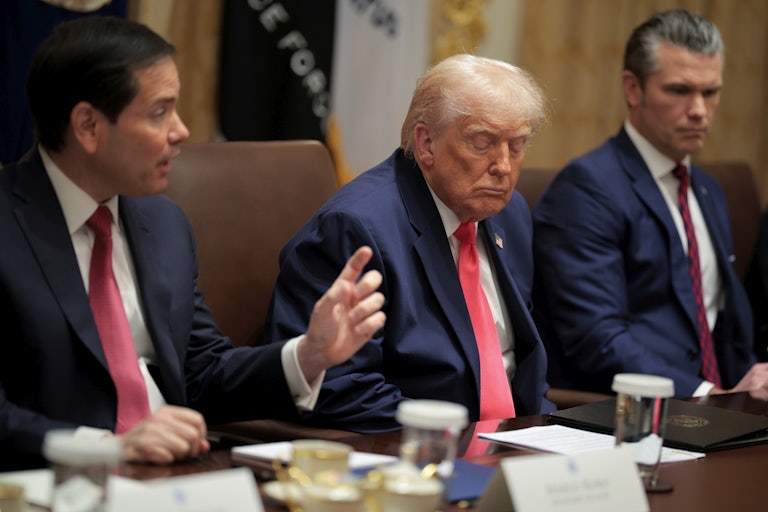
Trump looking perturbed
Kevin Dietsch/Getty Images

As longtime readers may recall, I’ve always wondered if Donald Trump truly intended to win the 2016 election. Howard Stern asked him why he wanted to take the world’s hardest job when he “only had about 10 good years left before he ‘starts to drool’ on himself”—which now seems pretty prophetic. Weeks into his first term, Trump was already giving melancholy interviews about how he missed his old life. It really seemed that his first presidential run was a goof that went sideways, to the detriment of all of us.

But as for his effort to reclaim the Oval Office? I’ve never wondered why he wanted back in. The second time out, he ran on a combination of desperation to avoid jail, a desire for revenge, and unmitigated avarice. He pretty much ran on a platform of looting the country and punishing his perceived enemies. With the gift of immunity from the Supreme Court, he spent the first year of his second term taking bigger swings at double-dealing, committing more brazen acts of corruption. There are far too many examples to do an exhaustive, let alone authoritative, list of crimes. But these are the ones that stuck with me particularly in a year of misrule.

The UAE crypto bribe: It’s not every day one of TNR’s staff writers gets to compare a scandal to Teapot Dome, but that’s how Tim Noah described the shady dealings that went down between Trump and his shadowy backers from the United Arab Emirates, who—in what’s been characterized as the largest cryptocurrency transaction in history—made a $2 billion stablecoin purchase in World Liberty Financial, which is essentially the president’s personal crypto slush fund. With quid like that, you knew that a sizable pro quo was to come. Sure enough, Trump permitted the UAE to import a larger quantity of U.S.-produced AI computer chips than it was allowed under the Biden administration. Simple enough scandal to understand, right? Well, as Noah later noted, the business press seems to not get it.

Plane and simple corruption: So, it’s kind of hard to do the whole “nothing to see here!” routine when the nothing is a luxury 747 that your Qatari friends want to off-load on the president. Trump tried to sell this gift as the new Air Force One, a generous gesture in return for all the money the United States has spent providing security for our nominal Gulf allies. The plane became the subject of a long-simmering dispute, as Democrats have attempted to block it from being used as Air Force One. Regardless, as Alex Shephard noted, the debasement in this arrangement exceeded the mere quid pro quo: “Trump wants to be treated as a king, and Qatar is playing ball.”

Death of USAID: Russell Vought, Elon Musk, and their wrecking crew of DOGE bros spent the first half of the year visiting destruction upon the civil service; the damage done is something we’ll all be feeling for a long time. But the most damnable part of their legacy may be the dismantling of foreign aid agencies like the United States Agency for International Development. A Boston University study found that the agency’s demise had “already caused the deaths of six hundred thousand people, two-thirds of them children.” “We are now witnessing what the historian Richard Rhodes termed ‘public man-made death,’” wrote the Harvard School of Public Health’s Atul Gawande.

Bombs over Latin America: It’s giving Wag the Dog, if you ask me. The administration, seemingly hot to bring back neoconservative military conquest, soft-launched its latest regime change war in Venezuela by making indiscriminate attacks on boats in the Caribbean and Pacific waters off of Central America. These attacks, all undertaken without a jot of congressional oversight and on the dubious premise that the boats were packed with fentanyl bound for the United States, were murderous on their own. But the news that the military was ordered to strike an already stricken boat in a “double tap” attack to kill any survivors has raised the specter of war crimes—and in a way that even many Republicans don’t seem ready to countenance.

Trump’s Binance buddy gets a pardon: Changpeng Zhao began this year the disgraced former CEO of Binance, the world’s largest cryptocurrency exchange, having done prison time for, as the Biden DOJ put it, “failing to maintain an effective anti-money laundering (AML) program,” violating the Bank Security Act, and allowing money to flow freely to a host of bad actors, including “terrorists, cybercriminals, and child abusers.” But Zhao, having forfeited the right to run Binance, wanted back in. So he used his connections to Trump’s family and inner circle to secure a pardon that would let him run the show again. In return, Zhao showered his attention on World Liberty Financial—using Binance’s leverage to enrich Trump’s private crypto fund. TNR’s Tim Noah was positively apoplectic about the shady arrangement.

Chips to China: Speaking of Tim Noah and apoplexy: It’s probably not great that one firm, Nvidia, has come to possess such godlike, market-moving power. Its outsize importance to the global economy had Noah fingering it as one of the major pillars to crumble, when he gamed out a potential Trump stock market crash back in October. Trump’s been doing what he can to boost Nvidia’s fortunes, however: This year, the president broke with long-standing national security tradition and announced that he was permitting the firm to sell its H200 chips to China. As The New York Times’ David Sanger noted, the deal—the fruits of “intense lobbying” from Nvidia CEO and White House gadfly Jensen Huang—raised a basic question: “If the chips that power the most advanced technology can be sold to the United States’ chief technological, military and financial competitor, where is the new line drawn?” That’s probably the least of Trump’s concerns, however: The deal also guaranteed that “25 percent of all the revenues from the sales would go to the United States,” in yet another case of this administration’s affection for fascist corporatism.

The continuing January 6 crime wave: Every once in a while, I like to check in with the people who were given presidential pardons by Trump for their crimes of sacking the U.S. Capitol and attempting to overturn the 2020 presidential election by force. Here’s one who killed a person in a drunk-driving incident. Here’s another. Here’s the guy who plotted to kill the FBI agents who investigated him for the Capitol riot. Here’s the alleged child molester who tried to buy his victim’s silence with fictitious “January 6 reparations” money. Here’s another alleged child sex predator who at least made no claims about pending reparations. Here’s a man arrested for allegedly threatening to kill Hakeem Jeffries. Here’s the guy who’s inexplicably not yet been arrested for stalking and threatening Jamie Raskin. What’s this? Another alleged child sex predator? This guy who was arrested for absconding with “industrial copper wire valued at tens of thousands of dollars” seems quaint by comparison. Anyway, there are scores of these repeat offenders, so I think we can all agree that these pardons were a spectacular idea.

ICE’s war on U.S. citizens: The administration has coupled its turning loose of January 6 criminals on our streets with the incessant plucking of law-abiding citizens off those same streets. An October report from ProPublica brought the gory details: “More than 170 cases this year where citizens were detained at raids and protests,” including 20 instances in which citizens “reported being held for over a day without being able to call their loved ones or a lawyer.” As I wrote around the same time, Trump shares (dis)credit with Supreme Court Justice Brett Kavanaugh. In his concurring opinion in Noem v. Vasquez Perdomo, Kavanaugh etched his name into infamy by contending, “If the person is a U.S. citizen or otherwise lawfully in the United States, that individual will be free to go after the brief encounter.” As ProPublica’s Nicole Foy wrote, this “is far from the reality many citizens have experienced”:

Americans have been dragged, tackled, beaten, tased and shot by immigration agents. They’ve had their necks kneeled on. They’ve been held outside in the rain while in their underwear. At least three citizens were pregnant when agents detained them. One of those women had already had the door of her home blown off while Department of Homeland Security Secretary Kristi Noem watched.

The ultimate symbol of Trumpian corruption: The fact of the matter is that the White House actually could use a ballroom. But what it’s getting, in the form of Trump’s teardown of the East Wing to make way for his planned monument to his bottomless ego, is something that ably sums up the despicable nature of this presidency and its cronies. As TNR’s Matt Ford wrote in a lengthy jeremiad on the topic, “The raw spectacle of Trump tearing a hole in the White House to hang out with his rich friends is already a potent symbol of his presidency.… At every level, the entire project may be the perfect summation of what his administration has been like for the country.” Perhaps the one good thing about the ballroom is that Democratic presidential contenders can compete with one another over who will tear it down best.

I could go on like this: And I probably should. But I would go on forever. There’s Signalgate, the firing of numerous inspectors general, and the extortion campaigns against businesses, universities, and Big Law firms. Robert F. Kennedy’s deadly anti-vaccine policies are a mass-casualty crime in the making. We’re building concentration camps and shipping people to gulags. We’re threatening Canada and Greenland. Trump’s tariffs are ruining Christmas. He stole $230 million for himself. And the only reason I haven’t mentioned l’affaire Jeffrey Epstein until now is that it’s been so ever-present in our lives that I don’t actually need to remind you about it.

But the biggest scandal of all is something Trump didn’t create. It’s this country’s piss-poor legacy of holding the powerful to account—a major factor in both Trump’s rise to power and the foundation of the era of elite impunity in which we are all mired. So whether your favorite Trump scandal made the cut here or not, keep its memory close, nurture your fury, and seek out the future leaders who will not shrink from the task of holding Trump and his enablers accountable for their howling criminality—who will push the envelope to bring retributive justice when their time in power comes.

This article first appeared in Power Mad, a weekly TNR newsletter authored by deputy editor Jason Linkins. Sign up here. Power Mad will return in 2026.
Hey, Does Anyone Want to Talk About Donald Trump’s Infirmities?

He’s clearly slipping, mentally and physically, but the political press suddenly finds it less newsworthy that we have a woefully aging president.

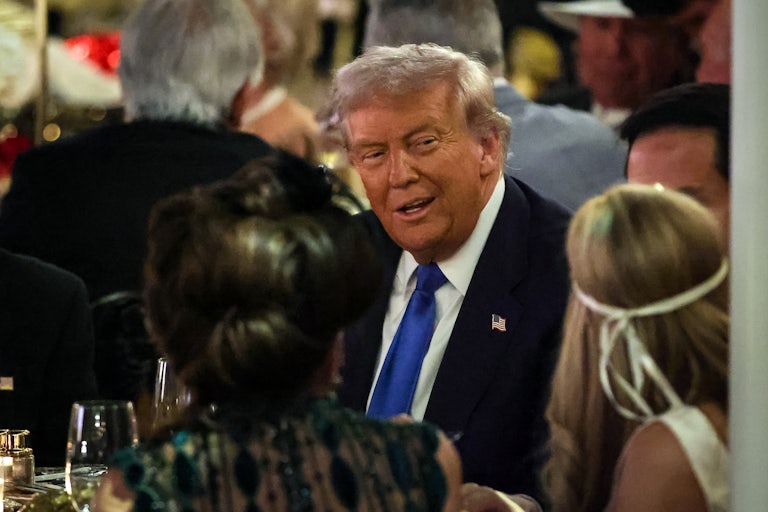
Donald Trump goes nighty-night during a cabinet meeting as Marco Rubio speaks to him.
Chip Somodevilla/Getty Images

In case you missed it, President Donald Trump fell asleep on television this week. There he was, in the middle of a meeting with the members of his Cabinet, completely set adrift on memory bliss as the pool cameras rolled, locked on his dozy face. Before you worry too much, rest assured that this wasn’t a meeting in which matters of national importance were discussed, but rather one of those now-regular occasions in which the president’s underlings gather to see who can offer him the most flamboyant praise. Still, it is rather worrying that not even these regular sessions of compliment bukkake can sustain the president’s waking interest.

Or, at least it should be worrying? I really hate to play the “age card,” folks, but back in my day (2023 and 2024), I distinctly recall that a president with apparent mental infirmities was nigh unto scandalous. Biden’s famous struggles were a national catastrophe that led many journalists to come a-ridin’ atop their high horses to bother their readers about how they got caught flat-footed by the fact that President Joe Biden, nominated at the age of 77, somehow continued to age. Why had no one warned them? (Probably because the same media, back when this all didn’t seem to matter, ritually executed the one guy at the Democratic debates who did.)

For a press so dedicated to sanewashing the Trump administration’s open sewer of corruption, the kid gloves treatment still seems the order of the day. This week, The Atlantic’s Jonathan Lemire published a lengthy exegesis of the “President Trump is increasingly isolated” variety, titled “The Bubble-Wrapped President.” In the piece, Lemire reports that Trump has “dramatically scaled back speeches, public events, and domestic travel compared with the first year of his initial term.” He is described therein as “distracted,” “out of touch,” focused on matters not “high on voters’ minds,” and showing “little willingness to acknowledge” problems gripping the country.   

The piece treats this mostly as some kind of inscrutable mystery, a tale told by the thinking-face emoji. The real story is moving between the lines: The president is fully checked out because he’s old, enfeebled, and his brain is slowly turning into pasta e fagioli. The president moldering in a narcoleptic haze as Marco Rubio yammers away at his side is the same guy who doesn’t seem to remember why he pardoned former Honduran president and celebrated drug trafficker Juan Orlando Hernández, or what part of his body was recently subjected to an MRI

There is plenty of room for the discourse to shift, however—and some evidence that it might. The New York Times treats the matter with somewhat less puzzlement than The Atlantic, noting Trump’s advanced age and planting a few red flags about his health; its piece garnered an outraged Truth Social post from Trump after publication. In one of the few articles to actually take on the matter of Trump’s obvious infirmity frontally, The Guardian’s Adam Gabbatt seems exasperated that a president who has obvious trouble “completing a thought” has “largely been saved the same examination” so regularly foisted on Biden.

If The Atlantic limits that examination to a single aside, in which Trump’s lack of acuity is likened to “the same low energy move for which [he] used to mock Joe Biden,” the latter half of the piece does at least present a compelling reason why more attention to a fully noped-out chief executive might be a matter of some alarm: The vacuum Trump is leaving in the White House needs to be filled, and it’s being filled by “enablers” rather than people who might “[moderate] some of his more extreme impulses.” Or, as someone less committed to euphemism euthanasia might put it, it’s being filled by utter ghouls: a Pentagon head who’s in over his head and spiraling out as he commits war crimes, a Health and Human Services secretary who’s bringing Lysenkoism back, an FBI director crashing out because no one brought him a cool jacket to wear—and all the rest hopped up on völkisch nationalism, pulling Black people out of their cars in Minneapolis and warring with Sabrina Carpenter.

In the days leading up to the 2024 presidential election, The New Republic’s Matt Ford tuned in to watch Trump’s campaign event at Madison Square Garden—a gritty reboot of the 1939 German-American Bund rally for fascism—and sounded an alarm about what the next Trump White House was going to look like. “The Madison Square Garden rally,” Ford wrote, “showed how much of Trumpism is about satisfying the basest, crudest, and most hateful impulses in American life—and how much his acolytes can’t wait to wield the federal government to do it.” The issue at hand is no longer one in which we worry there aren’t enough moderating figures in Trump’s life—it’s that all of the monsters Trump brought into his administration now have a free hand to run the country.

Those who served in Biden’s inner circle aren’t going to be remembered fondly, but no matter how enfeebled the president was, the country did not have the same problem we do now. The Biden White House wasn’t packed stem to stern with people dedicated to looting the countryterrorizing children, turning masked goons out onto the streets of American cities, or using the Department of Homeland Security’s social media presence to—as administration sources told Zeteo—“intentionally use popular music from vocally anti-Trump performing artists in order to trigger a negative response from a famous liberal and provide further amplification of neo-Confederate memes.”

Y’all, it really seems like the president sliding sideways into the mud puddle of his few remaining faculties as his frantic acolytes rain down pain and duplicity on everyone is something of a big story. Or at least it used to be. Perhaps one day soon, it will be a matter worthy of attention again. Because the way things are going, I’m expecting him to either fall asleep or wander off during his next State of the Union address.

This article first appeared in Power Mad, a weekly TNR newsletter authored by deputy editor Jason Linkins. Sign up here.

Epstein, Trump, and the Era of Elite Impunity

Democrats don’t need to pick and choose among the administration’s many sins. They all tell the same grim story.

Donald Trump talks with guests during a Halloween party at his Mar-a-Lago estate on October 31, 2025 at Palm Beach, Florida.
Samuel Corum/Getty Images
Donald Trump talks with guests during a Great Gatsby–themed Halloween party at his Mar-a-Lago estate, on October 31.

This week, we all moved a couple steps closer to finally getting a peek at what’s been the year’s biggest political MacGuffin: the Epstein files. The long-delayed swearing in of Arizona Representative Adelita Grijalva allowed the pro-disclosure caucus in the House to finally hit the magic number of “yea” votes on their discharge petition ordering their release; opposition in the House essentially collapsed after that, and the Senate used its “deem and pass” power to ratify the lower house’s decision in advance. The bill now goes to President Trump’s desk. He is expected to sign it into law and then attempt to use the contents to wage merciless war on Democrats.

All of this may come to nothing. There’s no reason to believe Trump’s Justice Department—which essentially operates as Trump’s own private legal counsel—will treat these materials with judiciousness. Frankly, you shouldn’t be surprised if they contain little in the way of smoking guns. Of Epstein’s culpability there can be no doubt; the rest is just suspicion. Conservatives have darkly warned their liberal counterparts: “Be careful what you wish for; what if this implicates a bunch of crusty old Democrats?”

To which I say, “Don’t threaten me with a good time.” As I’ve watched the Epstein story unravel across the media—through the shouting of lawmakers and the flood of tawdry emails dumped in the press—I’ve not been able to ignore how it’s all one big pile of rot at the center of polite society. My TNR colleague, Matt Ford, expressed similar sentiments in a recent piece, confessing that the truly despairing thing about the Epstein affair was that the whole idea of civic virtue seems to have been murdered, and in its place, a culture of elite impunity has risen.

For my part, I’m less worried about whether some Democratic Party luminary catches an Epstein stray and more concerned about whether Democrats bungle the opportunity to attack these corrupt arrangements and the presidential administration that has made them its North Star. This iron is, at the moment, particularly hot. A fresh Reuters/Ipsos poll released Wednesday found that Trump’s approval ratings had hit startling new lows, with respondents particularly “unhappy about his handling of the high cost of living and the investigation into the late convicted sex offender Jeffrey Epstein.”

Epstein and the economy—these are the twin albatrosses around Trump’s neck. The question, however, is whether Democrats will have the stomach and the sense to exploit both avenues to Trump’s ruin. It may not seem like a problem, but Democrats seem pathologically averse to multitasking, which explains why they’re making the salience of grocery prices their priority to the exclusion of all other matters. So monomaniacal is this approach that at various times over the past year, Democratic lawmakers have called other concerns “distractions”—up to and including Trump’s rampaging paramilitary forces.

Let’s give Democrats their due: Their affordability arguments passed electoral tests earlier this month. And the administration is spooked: Trump and his allies are attempting wan affordability arguments of their own. It’s been a while, but Democrats are suddenly calling the tune in Washington.

That the Epstein matter has wounded Trump at the same time is a fortunate coincidence for Democrats seeking a skeleton key to unlock a larger argument about the harm Trump’s done to our republic: The ICE goons on our street, Trump’s White House teardown, the high cost of living, the administration’s various decisions to hurt people during the shutdown, all the weird ghouls occupying executive branch positions that once went to qualified civil servants, and the forever stench of oligarchic swampwater suffusing public life—all of these issues roiling the lives and livelihoods of ordinary people lie at the nexus of elite impunity.

There are no distractions here, no options to weigh; this is all one single story—much like Epstein, powerful plutocratic interests have found their man in Trump, and together, they are driving the country to ruin for their own amusement and self-enrichment. Here’s how Ford captures it:

At its core, Trumpism is a permission structure for evil. It is the abolition of ethical norms and the erasure of moral authority. It defies checks and balances, rejecting the notion that power can be abused or corrupted because it justifies itself. Trumpism is not really about immigration, or inflation, or trade, or draining the swamp, or building the wall—it is ultimately about the dark thrill of abusing those whom its adherents consider to be inferiors, either directly or by proxy.

As I’ve noted before, Trumpism isn’t working, and people are growing angrier and angrier. According to the most recent NPR/PBS News Marist poll, Democrats have attained a 14-point lead over the GOP on the generic congressional ballot. The time to pummel these crooks is nigh, and they needn’t be precious about it. Think of it like this: Trumpism is the culmination of a crooked scheme that began nearly a half-century ago, in which the rich and powerful looted our wealth and tore up the civic fabric of this nation. Yes, like the Epstein affair suggests, it really is one big thieving cabal of plutocratic reprobates that has done us dirty. There is an opportunity now for Democrats with guts to crush these scumbags, and take back what they stole.

This article first appeared in Power Mad, a weekly TNR newsletter authored by deputy editor Jason Linkins. Sign up here.