Newsletter
Fighting Words
What got me steamed up this week

Pay Attention to What You See: Donald Trump Is Losing His Marbles

If he keeps this up, he’ll drag the entire Republican Party down with him in 2024.

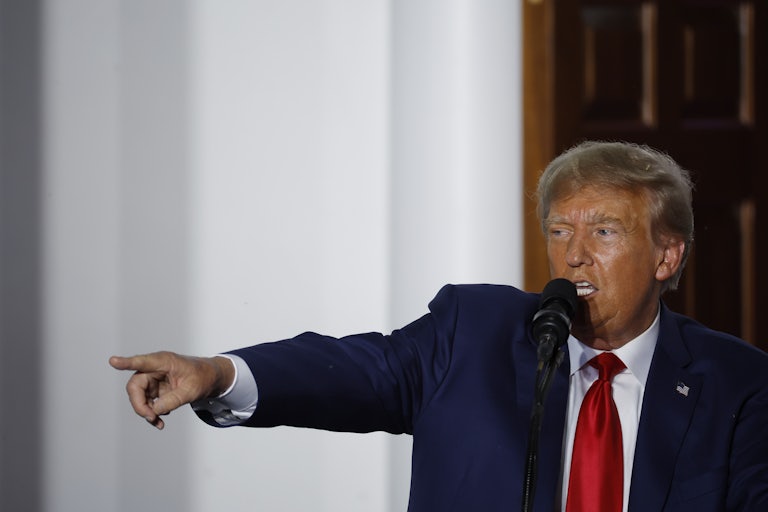
Trump “dances” at the Moms for Liberty summit
Michael M. Santiago/Getty Images
Trump “dances” at the Moms for Liberty summit in Philadelphia on June 30.

This is the kind of topic about which liberals generally don’t want good news. They want to worry. They assign to their right-wing foes a strength and formidability that they never see on their own side (I’m often as guilty of this as anybody, I confess). They lack faith in the common sense and decency of the average voter. They want, on some level, to think, or at least to fear, that disaster is around the corner.

I rise today to fight that tendency. Yes, it’s early. Yeah, it’s premature. But I’m going to say: The signs I see so far? They suggest to me that Donald Trump (a) is going to win the GOP nomination and (b) stands a very good chance of leading his party to an epic wipeout next November.

To understand this, you have to open your eyes to things that can be hard to see as they unfold in real time. But they’re there, and they tell us this: Trump is much more extreme, much more unhinged, much more exposed than he was in 2016. Pay attention to what you see.

The most recent example, perhaps small, but I think nevertheless telling, consists of his recent “truths” on Truth Social. He posted Barack Obama’s current address. Think about that. That’s an invitation to someone to go try to shoot him. And sure enough, someone did. Shortly after Trump’s post, Tyler Taranto showed up with a machete, two guns, and 400 rounds of ammunition. He appears to have reposted Trump’s post. He was arrested, and Obama’s block in D.C. is of course heavily protected, but none of that changes the fact that a former president of the United States pretty obviously was egging his supporters to commit violence against another former president.

Friday morning came the related news that federal prosecutors working on the classified documents case against Trump are facing threats from MAGA-heads. They’re posting the names of federal prosecutors online. These people’s blocks are not under heavy Secret Service protection. What if one of them gets murdered? And what are the odds, given the way Trump has riled these people up, that if he’s convicted before Election Day, there won’t be violence, at least of the generalized sort and at worst of the targeted-execution variety?

That’s the first thing. Here’s a second.

More from Trump’s Truth Social feed: “Does anybody really believe that the COCAINE found in the West Wing of the White House, very close to the Oval Office, is for the use of anyone other than Hunter & Joe Biden.” Hunter Biden wrote in his memoir that he’s been clean since 2019; but let’s face it, when one hears “cocaine in the White House,” he does leap to mind. But then, Trump throws Joe Biden in there. Who thinks Joe Biden does blow? It’s unhinged, and it’s a sign that Trump’s hold on reality, always tenuous, is vaporizing and that he’s even more emboldened now to say even more outrageous things than he said in 2016, which after all is the logic of outrage: It has to get more extreme in order to continue to have shock value. What even more unhinged thing might he be capable of saying on a debate stage next fall?

Combine these recent developments with the things we already know, we’ve already seen. I wrote in our June cover story that Trump’s toxic rhetoric far exceeded where he was going in 2016. If you can’t see the difference between “Drain the swamp” (2016, and something any right-populist could say) and “I am your revenge” (the words of a megalomaniacal authoritarian demagogue), then you need some history lessons. I think here also of the Trump we saw in that infamous CNN town hall. He was totally out of control. I kept watching that and thinking: Is there any chance, I mean any chance, that the centrist soccer mom from the Milwaukee suburbs who took a flier on him in 2016 against Hillary Clinton is going to want to see this deranged, blubbering, vain peacock back in the White House?

I know, I know. Biden’s age. The “wrong direction” poll numbers are bad. A recession could hit, although experts have backed off that concern somewhat. Still, I take all that seriously, believe me.

But I’ll tell you this. If I were a Republican, I’d be scared shitless about what Trump might do to my party next year. The presidential election won’t be a runaway, because that isn’t how it works anymore. But I’d be very worried that Trump loses all the states he lost in 2020—and by a little more than he lost them the last time—plus maybe North Carolina, which would bump Biden’s Electoral College margin up to 319–219, which in a headline sounds like a rout. And the somewhat higher margins in Arizona, Georgia, et al. would foreclose any serious attempt to cry foul. Swing voters just wouldn’t buy it.

Democrats are feeling pretty confident about retaking the House. The Senate looks a lot tougher. But if Senate candidates in purple and even a couple reddish-to-red states are wedded to a standard-bearer who looks, to your average person, not just unpreferable but outright dangerous, who knows? The normal swing-voter reflex is to think, “OK, I’ll vote Biden, but I’ll balance it out by voting for a Republican for Senate” (there aren’t as many swing voters as there once were, but they exist). I’m positing that Trump could be so bad that those voters decide en masse that now is the time to punish the Republican Party and demand that they wipe the slate clean, ditch Trump, and grow up. (And, of course, throw in the anti-Dobbs backlash, which should give Democratic Senate candidates two to four points nearly everywhere.)

I’m not urging overconfidence. Politicians should always run like they’re 10 points behind. I’m just saying: Pay attention to what you see. And what we’re seeing so far is Donald Trump being far more extreme than he was in 2016 and alienating a huge chunk of the voters who bought his snake oil back then.

This article first appeared in Fighting Words, a weekly TNR newsletter authored by editor Michael Tomasky. Sign up here.
How We’ll Defeat the Federalist Society and Take Back the Supreme Court

It’s a long fight—but it has already begun, with promising results.

NICHOLAS KAMM/AFP/Getty Images

The Supreme Court threw normal America a few bones this term, since John Roberts knew the court’s, and his, reputation was down there in Elizabeth Holmes territory. Roberts and Brett Kavanaugh decided not to kill voting rights, and those two and Amy Coney Barrett rejected the independent state legislature theory. Then, as the term drew to a close, the court reverted to the mean by ending affirmative action in colleges and allowing business owners to discriminate against LGBTQ people.

Did they fool anybody? Maybe, to some extent. But the right-wing assault on freedom continues. We already know from California and a couple other states where affirmative action has been reversed that Black enrollment at prestige universities has gone down; a tool that Lyndon Johnson put in place nearly 60 years ago is now blunted.

In future terms, this conservative majority is going to do damage on all kinds of fronts. Already on the docket for the 2023–2024 term are cases that will revisit the question of racial gerrymandering; will consider an important point of criminal due process; will determine whether the funding mechanism for the Consumer Financial Protection Bureau, or CFPB, is constitutional; and most important of all, will seek to strike down “Chevron deference,” which grants executive agencies broad authority to interpret and implement laws passed by Congress. (Striking down the deference, which the conservative majority is widely expected to do, will vastly constrict the federal government’s ability to enforce aggressive regulatory laws.)

So imagine sitting here one year from today. It’s entirely possible, I’d say likely, that the court’s conservatives at the very least will have thrown the existence of the CFPB into doubt and opened the door to endless lawsuits from people and organizations looking to cut the federal government down to size. On the Chevron challenge, captioned Loper Bright Enterprises v. Raimondo, the right will benefit from the fact that Ketanji Brown Jackson has recused herself, as she did in this week’s Harvard affirmative action case, because she participated in earlier oral arguments in the case (some justices do have scruples).

And then, someday—and we can be sure that right-wing activists are already filing the lawsuits they hope will work their way up to the Supremes—we may be saying goodbye, same-sex marriage. Adieu, right to contraception. Auf Wiedersehen, one person, one vote. This last one, which gets a lot less press than the others, will functionally destroy democracy by allowing state legislatures to draw—legally—districts that give rural people far more representation in legislatures than urban people.

The usual liberal narrative here is that this six-member majority is a mighty frigate being skippered by the unstoppable Leonard Leo, former head of the Federal Society, and we are doomed to a generation of right-wing decisions that will take us back to the nineteenth century. That might well be right. But it is not inevitable. There is a crucial distinction between recognizing a likely reality and submitting to it. The former is fine and necessary and says we still have to fight because we never know what the future holds. The latter constitutes giving up.

Joe Biden and his administration are in the former camp. Biden has named more federal judges to the bench in his first 28 months than the previous three presidents—a total of 136 “Article III” judges (federal judges nominated by the president and confirmed by the Senate). And more meaningful than the number is the type, as two-thirds of those nominees are women and two-thirds are people of color. Many are from plainly progressive backgrounds in the law.

In just the last month or so, these judges are among those confirmed:

• Nusrat Choudhury, the first Muslim American woman (and first Bangladeshi woman) to be named to the federal bench; a civil rights lawyer with the ACLU

• Natasha Merle, an African American woman out of the NAACP Legal Defense and Education Fund

• Dale Ho, an Asian American voting rights attorney

• Casey Pitts, an openly LGBTQ labor lawyer

• Hernán Vera, a Latino former staff attorney at the Mexican American Legal Defense and Education Fund

Someday, the high court will have two or three people like this, and the decisions will start breaking our way again. In the meantime, momentum is building for changing the court—at least, say, ending lifetime appointments. Ending lifetime tenure polls well and is hardly the radical measure the right makes it out to be. And most of all, liberals are casting their presidential and congressional votes with the Supreme Court in mind. It took long enough, but after Dobbs, we’re here.

Finally, it’s worth remembering that a Supreme Court decision is not the end of a fight. In many ways, it’s the beginning. Since Dobbs, the states that have moved to restrict abortion rights have dominated the headlines, and quite rightly. But abortion rights are protected in some way, shape, or form in roughly half the states. Pro-choice organizations are active on a range of fronts, working to ensure that women from red states seeking abortions can get to “safe harbor” states. And support for abortion rights has shot up in the polls.

The modern right has achieved its successes knowing that it represents a minority of the country. This is why its leaders lie all the time about their true intent. Before Dobbs, they said overturning Roe and returning the question to the states was their goal. Now we see that that wasn’t true. They want a federal ban. The presidential contenders dance around the question, but it’s pretty obvious where the movement and the base stand—and point me to one high-profile instance where GOP elected officials have defied the wishes of their base.

Pro-choice Americans are the majority. So are Americans who want reasonable voting rights protections for minorities, a fair chance for labor unions to be active, a federal government that can implement laws Congress passes, and more. The iron-willed minority has won a lot of battles, and it will win more, and the consequences will sometimes be devastating. But Dobbs was a turning point. The people have woken up. Progressives are filling the federal bench. This isn’t a story of victory yet. But neither is it one of total despair.

This article first appeared in Fighting Words, a weekly TNR newsletter authored by editor Michael Tomasky. Sign up here.
The Post-Dobbs Verdict Is Clear, and Republicans Will Pay

A year since the infamous Supreme Court decision, the conservative movement is suffering the political consequences.

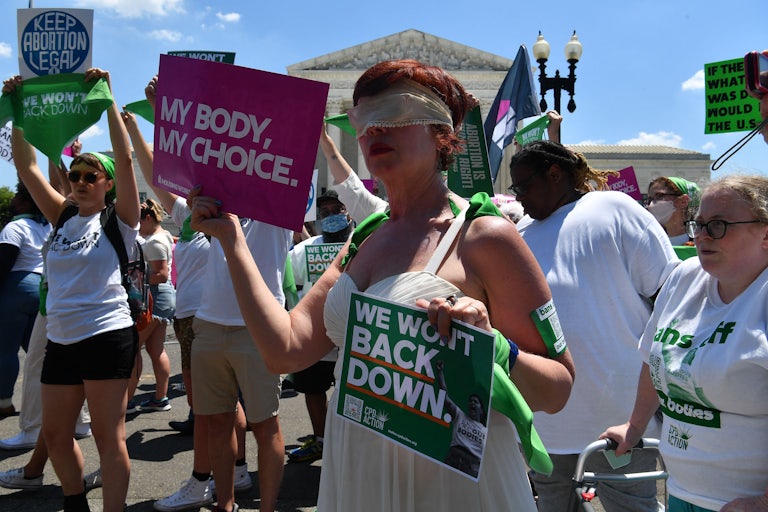
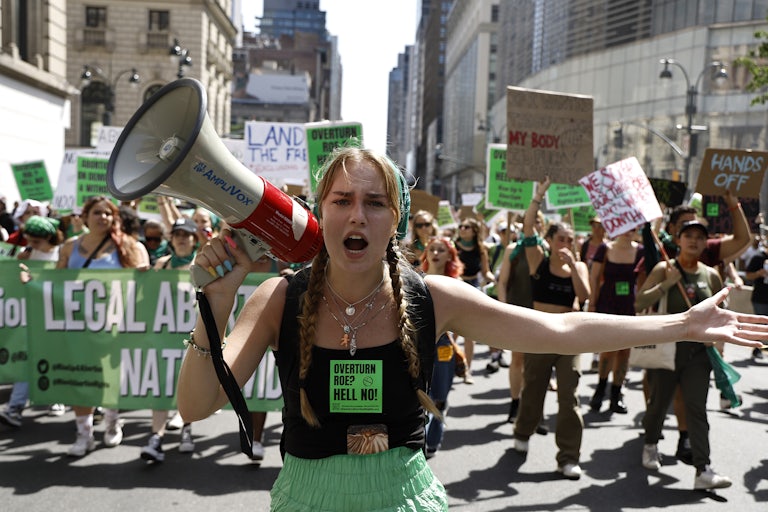
A pro–abortion rights demonstration in New York City
John Lamparski/Getty Images
An abortion rights demonstration in New York City on July 4, 2022

Saturday brings the infamous first anniversary of the Supreme Court’s Dobbs decision. Let’s begin by bearing in mind something that a lot of anti-abortion activists used to say before Roe was struck down: that the mere striking down of Roe was their goal, and all they wanted was to see the matter returned to the states.

This was a lie. As we have seen, the striking down of Roe was just the beginning—a first step in a process that they clearly hope will culminate someday, perhaps soon, in a federal abortion ban. After Dobbs, some Republican could have said: Hey, let’s take a breath here. We got our big win, but we are taking away a 50-year-old right from people, and maybe we ought to see how that shakes out.

Of course, they did no such thing. Many states rushed to pass the most extreme measures they could squeeze through their legislatures. Today, abortions are entirely or mostly banned in 14 states. Nine of those bans, according to The New York Times, include no exceptions for rape or incest. Most of these states are in the old Confederacy, but this list also includes Wisconsin, where Roe’s demise kicked in a draconian 1849 law that is still being adjudicated. 

On the plus side, 25 states and the District of Columbia have passed new protections. This includes most of the states you’d expect, along with Iowa, Kansas, and Alaska. So all is not lost—and as we’ve seen, what the Supreme Court really accomplished with Dobbs, aside from wrecking its own reputation, is to have solidified public opinion in support of protections for abortion rights. Poll after poll shows all-time-high levels of support for abortion rights.

That’s encouraging, but let’s not lose sight of what’s happening. The Times also reports that since Dobbs, 61 clinics and doctors’ offices have stopped offering abortions. Nineteen of those are in Texas (which is not only a no-exception state but also the lone state where private citizens can sue abortion providers and those who assist patients seeking abortions). That’s thousands of women, maybe millions, being denied a right to bodily autonomy that they had for half a century. Taken away overnight.

On top of that, we’re at the very beginning of a new presidential campaign, and Republican candidates are out there on the trail vowing to go even further. This weekend, there’s the Faith & Freedom Coalition’s Road to Majority Conference in Washington, in addition to a Students for Life rally on the national mall. Mike Pence, who is staking out the most extreme position on the issue, is the only candidate speaking to both, reports Politico’s Playbook. We can be sure that stern anti-abortion pledges will be front and center.

And as for the court? The great Linda Greenhouse has an interesting column in the Times today. She tells the story of how, in the 1940s, the Supreme Court switched from having upheld a Pennsylvania school district’s expulsion of Jehovah’s Witness schoolchildren because they would not salute the U.S. flag to reversing itself—while the United States was at war, no less. The composition of the court changed somewhat, but three justices who’d originally ruled against the schoolchildren changed their position on a similar case.

Why did they switch? Because they saw the hatred their original decision had unleashed. Greenhouse: “Mobs attacked individual Witnesses and destroyed their places of worship. More than 2,000 Witness children were thrown out of school, and some of their parents criminally prosecuted.” Most of America agreed that the court had righted a grievous wrong.

But that was before the era of Fox News and the Federal Society and Leonard Leo and right-wing justices flying on private planes and seeing nothing wrong with it. “So no, I don’t think the Dobbs justices are sorry,” Greenhouse writes. “They did what they were put there to do, what they wanted to do, and they were quite explicit in washing their hands of the consequences.”

But consequences are coming for the conservative movement of which those six justices are a part. They were felt already in the midterm elections, and they’re coming in a bigger way still next November. The price that’s being paid by regular Americans is tragic, and the structure of the court is such that it could take 20 years before we have a majority that reverses Dobbs. The six justices, and Donald Trump, and Republicans in Congress will come to pay a mighty price for what they’ve done to America.

The New Republic is trying to raise $10,000 to broaden our coverage of these fights for abortion rights across the country. Please see the box at the top of this article and click on Yes, I’ll Help!

This article first appeared in Fighting Words, a weekly TNR newsletter authored by editor Michael Tomasky. Sign up here.
It’s Not Joe Biden Who Corrupted Ukraine. It’s Donald Trump.

Three important questions answered about the Biden “bribe” controversy.

Chip Somodevilla/Getty Images

One of the right wing’s “skills,” such as they are, is taking one little piece of fresh information that appears and using it to breathe new life into an old and discredited allegation. Those of you with elephantine memories may recall, for example, how the late discovery of private attorney Hillary Clinton’s billing records in a storage box reignited certain questions about Whitewater, producing an orgiastic frenzy of “Aha!” journalism on the right. That these records did more to exonerate Clinton than incriminate her was something the right didn’t usually mention.

This is what is going on now with the Biden “bribery” scandal. The allegation—that Joe Biden took a $5 million bribe from Burisma, a Ukrainian energy company—is quite old. It was revived last month by Senator Charles Grassley’s office, which said a whistleblower came forward with credible information of something or other. Then the indictment of Donald Trump sent Fox and Newsmax into heart attack mode, because, you see, the Deep State indicted Trump only to divert people from the mosh pit of corruption into which Biden was quickly sinking.

Let’s go over some old facts one more time. Clip this out, magnet it up to your fridge, keep it there for Thanksgiving, make Uncle Roy read it. We’ll do this in quasi-catechism form, with three questions.

Question 1. Why did Joe Biden fire Ukrainian prosecutor Viktor Shokin?

Right-wing allegation: Because Shokin was investigating Burisma, on whose board Hunter Biden served, and was fast zeroing in on some epic corruption that had dirtied the young Biden’s hands and probably Biden père’s too.

Real-Earth known facts: Biden was sent to Kyiv to order that Shokin be fired for his failure to launch aggressive corruption investigations—including into Burisma.

Ukraine had, in early 2014, experienced the Maidan Revolution, or the Revolution of Dignity, in which corrupt, Putin-friendly President Viktor Yanukovych was ousted from power. The pro-Western Petro Poroshenko won the subsequent presidential election. He appointed one state prosecutor who failed to pursue corruption cases. That man was fired and replaced by Shokin.

But Shokin too proved lax in pursuing such cases. Ukraine was a pretty corrupt place, and apparently no one would take on the oligarchs. This hardened group included Mykola Zlochevsky, the head of Burisma. According to this report, Ukrainian anti-corruption crusaders were pushing for Shokin to probe Zlochevsky and Burisma; the British government had requested information from Shokin’s office as part of an investigation into alleged money-laundering by Zlochevsky. Shokin, according to anti-corruption activists, ignored the U.K. request and dragged his feet generally.

In other words: Burisma (and Zlochevsky) was one of several fronts on which Shokin was failing to act. Daria Kaleniuk, executive director of the Kyiv-based Anti-Corruption Action Center, was quoted as saying: “Ironically, Joe Biden asked Shokin to leave because the prosecutor failed [to pursue] the Burisma investigation, not because Shokin was tough and active with this case.”

Furthermore, it was this failure to act, not solely on Burisma but more broadly, that convinced the Obama administration, the EU, the World Bank, and the International Monetary Fund that Shokin had to go. Biden demanded Shokin’s firing on a trip to Kyiv in December 2015. Two months later, IMF head Christine Lagarde threatened to withhold $40 billion in aid unless Ukraine took strong steps to fight corruption. Shokin was finally fired the next month.

There’s a lot more, but you get the picture. There is no evidence to suggest that Biden wanted Shokin fired because he was being too zealous in fighting corruption. And there is a mountain of evidence to suggest that pretty much the entire Western world wanted Shokin fired because he was failing to fight corruption. The truth—at least as far as we know it today—is the precise opposite of what Trumpworld contends.

Question 2. Aren’t there still a lot of unanswered questions about Biden’s role?

Right-wing allegation: Oh yes, and the American people obviously need nothing less than a thorough investigation!

Real-Earth known facts: It has been investigated. By Republicans. Twice! They turned up nothing.

One investigation was undertaken by Scott Brady, the U.S. attorney for western Pennsylvania, appointed by Trump. When the FBI first got wind of the bribery allegations in 2020, Attorney General Bill Barr appointed Brady to poke around. He interviewed Rudy Giuliani, who was busy spreading these rumors, for several hours once. But whatever Brady did or didn’t do did not end up amounting to much. He closed up his investigation without so much as issuing a report.

The other investigation was conducted by Senate Republicans. It was a joint production of the Senate Finance and Homeland Security committees, chaired, respectively, by Grassley and Ron Johnson. The report found nothing. Oh, they padded it out to 87 pages with a lot of tissuey suggestions about possible appearances of conflict and such, but they found no evidence of anything involving Joe Biden. The committees interviewed 10 witnesses, Democrats noted in a counter-report, and none of them said they knew of any instance in which Joe Biden sought to alter administration policy toward Ukraine because of his son.

Oh, yeah—this report was released in September 2020. Right before the election. If they’d found something politically useful, don’t you think we’d have heard about it nonstop in the closing weeks of the election? But we didn’t, because they didn’t. Johnson conceded before the report’s release that it would have no “massive smoking guns” and commented on the “misperception on the part of the public that there would be.” Gee, who would have been responsible for that? Ron Johnson? (Among many others.)

Question 3. I seem to recall that Trump got impeached over Ukraine. Does all this have anything to do with that?

Right-wing allegation: Only that that first impeachment was the beginning of the witch hunt of poor President Trump, designed simultaneously to hide the true corruption, which was Biden’s.

Real-Earth known facts: Yes! It’s directly tied, because Trump wanted Ukraine to drum up some phony allegations about Biden. So it is Trump and only Trump who tried to corruptly influence Ukraine.

Before America got to know Volodymyr Zelenskiy as the courageous Putin resister, they knew him as the guy on the other end of the phone line in July 2019, whom Trump tried to blackmail to find dirt on Biden. He was indirect about it; he spoke the way a mob boss speaks, as he always does, you know, Nice little country ya got dere, be a shame if anything should happen to it. But his message was crystal clear. Like: “There’s a lot of talk about Biden’s son, that Biden stopped the prosecution, and a lot of people want to find out about that, so whatever you can do with the attorney general would be great.” And: “The United States has been very, very good to Ukraine. I wouldn’t say that it’s reciprocal necessarily because things are happening that are not good but the United States has been very, very good to Ukraine.” (These are exact quotes.)

No known set of actual facts suggests that Joe Biden shut down an investigation in Ukraine. The man who headed Ukraine’s top anti-corruption unit at the time told Reuters in September 2019 that there was indeed an investigation of Burisma going on at the time, but it was “up in the air, so to speak.” And he also said that the period being investigated was 2010 to 2012—years before Hunter Biden even joined the board.

Is it possible Joe Biden took a bribe? Look, the pope smoking dope on the Cape of Good Hope is possible. But it, like Biden being corrupt, doesn’t match any set of known facts, after a Ukrainian investigation, a Senate investigation, and an investigation by a U.S. attorney all turned up bupkes. We do know, however, that another U.S. president did behave corruptly toward Ukraine. It’s the guy who’s sitting down in Florida awaiting his third and fourth indictments.

This article first appeared in Fighting Words, a weekly TNR newsletter authored by editor Michael Tomasky. Sign up here.

The Trump Indictment: He’s Had this Coming for Years

There are things we know about the indictment, and things we don’t know. But there’s One Big Truth: This feels like justice coming.

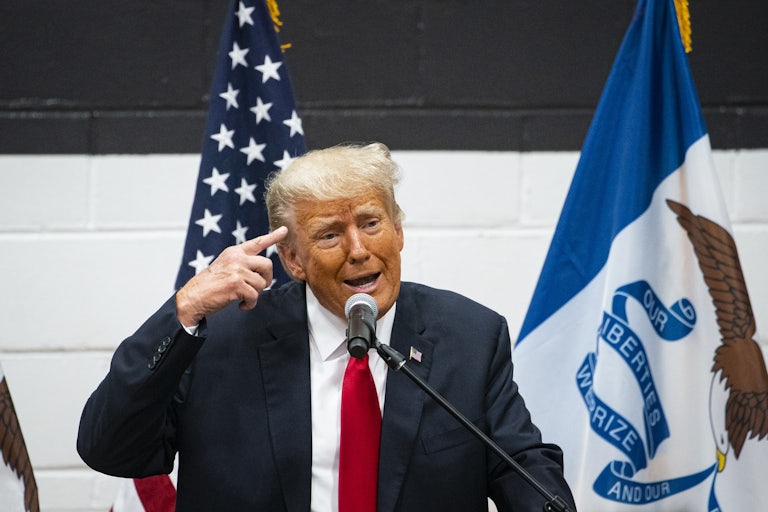
Trump in Grimes, Iowa
Al Drago/Bloomberg via Getty Images
Trump in Grimes, Iowa, on June 1

So Donald Trump has been indicted on seven counts related to the classified documents he took to Mar-a-Lago, the charges reportedly including violation of the Espionage Act, making false statements, and obstruction of justice. Here are some other things we know, and some things we don’t know.

We know: This is historic. A never-before development for a 247-year-old democracy that has historically shown extraordinary deference to its presidents and ex-presidents. Trump and his defenders will twist this to suggest that he’s being attacked by a weaponized “deep state.” On planet Earth, it means that Trump singularly may have (even he is still presumed innocent!) violated laws and norms that everyone else followed.

We know: There is a real and undisputed record of Trump ignoring polite requests from the FBI to cooperate in their investigation into the matter, and later stonewalling the bureau when it decided it had to stop being polite.

We know: Despite Trump’s ridiculous protestations, his flagrant disregard of classification laws makes this case very different from those of Mike Pence and Barack Obama and, most saliently, Joe Biden. Biden’s situation has not yet been resolved, and that may take some time. But it seems likely that some aides made some mistakes, and that’s what the probe will find, as it just did with Pence (I’m obviously no fan of Pence, but he, like Biden, is not a blatant lawbreaker). It will be important to keep pounding on this distinction, because Trump will hammer on it.

We don’t know: precisely what these seven counts entail and spell out. Obstruction of justice is reportedly present in those seven counts. And that’s the big deal—if Trump had said okay, you’re right, sorry, and returned the documents? Probably no case.

We don’t know: what’s in the documents Trump kept.

We don’t know: how seriously he may have compromised U.S. intelligence gathering or sources.

We don’t know: when this may go to trial. In federal court in Washington, it takes a year. In south Florida, it could all happen much faster, on the “rocket docket.” The Manhattan judge on Trump’s first indictment, brought by Manhattan DA Alvin Bragg, has already set a March 24 trial date—the thick of the later presidential primaries. What if this goes to trial around the same time? And remember, there is probably at least one more indictment coming, down in Georgia.

The key thing here is what’s in the documents. That’s where public opinion will say: Yes, this was a justified and necessary action by the federal government, or no, this is political. We know that about 35 percent of the country will view this as a witch hunt. I think a bit more, say 45 percent, will view it as justified. But that leaves 20 percent—a 20 percent that includes a lot of Trump voters. U.S. special counsel Jack Smith, who seems like one bad dude, knows what’s in the documents. I doubt he’d uncork an indictment if the documents featured talking points of condolence for the ambassador of Mongolia upon the death of the head of state.

In other words: What Trump did here is alarming, in terms of law and process. It’s also, maybe, an open-and-shut case. Former Attorney General Eric Holder told MSNBC’s Chris Hayes on Thursday night: “This is not a particularly difficult case.” That may be, legally. But politically, the American people will want to see that what Trump did was genuinely reckless. My bet is that Smith has that political horse sense. We’ll soon see.

But the bottom line here, and the One Big Thing that we know above all else? Donald Trump has had this coming. For years. This feels like justice coming.

It’s not just that he mocked and ignored the law for decades when he was in the scuzzy world of New York real estate, although it is that, to some extent. But it’s much more: He became, by means fair or foul, the president of the United States. Presidents have obligations to the people—all the people—that no one else in our system has. They have to, or certainly should, embody the best of our traditions. They should, like Biden does, genuinely and from the heart, venerate the Americans who gave their lives for this country. I have very mixed feelings about a lot of our wars. But I want the president, who by the bye is also the commander in chief, to humble himself before the memory of people who died in them. I do not want him to call them suckers and losers, as Trump did.

And they have to revere the law. This has been a given, throughout our history—until Trump. Well, Dick Nixon, but once he was caught, he, too, admitted he was wrong and surrendered power. Only Trump knows and respects no law. He got away with that when he was in the inherently sleazy business of slapping his name on casinos. But the presidency of the United States is not an inherently sleazy business. Or at least it’s not supposed to be. Trump made it that. If there is any justice left in this country, he will die in a jumpsuit that matches his cratered skin.

This article, which has been updated, first appeared in Fighting Words, a weekly TNR newsletter authored by editor Michael Tomasky. Sign up here.