Breaking News
Breaking News
from Washington and beyond

Republicans Want to Punish Divorced People to Fund Tax Cuts

House Republicans are trying to find ways to save money.

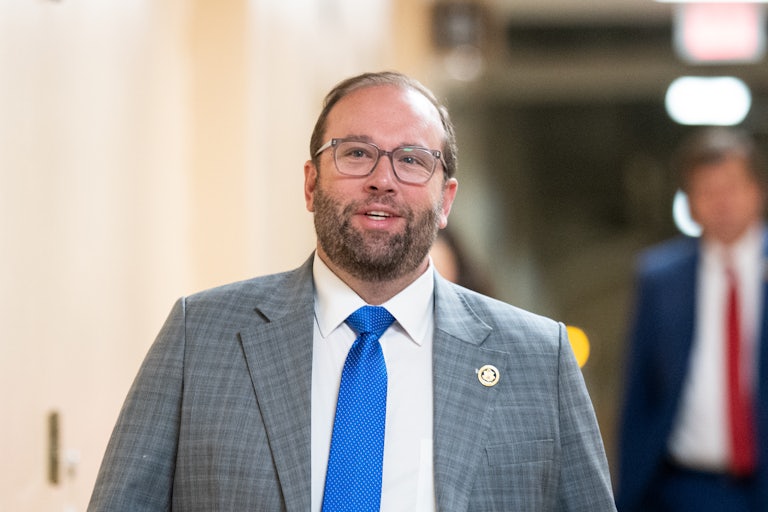
House Ways and Means Committee Chair Jason Smith speaks during a hearing
Bill Clark/CQ-Roll Call, Inc/Getty Images
House Ways and Means Committee Chair Jason Smith

Republicans are considering removing “head of household” as an option for filing status on U.S. tax returns as part of their plan to extend Donald Trump’s 2017 tax plan.

The House Ways and Means Committee released a menu-like list of possible options for funding the extension, which will likely benefit corporations and raise the national deficit by as much as $15 trillion. One solution would “eliminate the Head of Household filing status.”

The head of household status was designed to benefit single parents who take on the primary responsibility of caring for a dependent, allowing them to be charged lower rates on more income. For example, in 2025, the 12 percent tax bracket begins at $11,925 for single filers, but $17,000 for head of household filers, according to the Tax Foundation.

Some believe that this creates what is known as a “marriage penalty,” meaning that if you want to get married, your tax rate will increase. Well, it seems that’s just not going to work for the pro-family Republican Party, which is set on seeing all those unmarried cat women not-so-happily wed to hyper-masculine MAGA men!

But removing this status will likely hurt another group of vulnerable people: divorcees with children. It could be especially problematic for anyone considering getting a divorce, but trapped by financial circumstances.

The change could save as much as $192 billion over 10 years, according to the list.

That’s not the only bad money-making idea Republicans are mulling over: they also pitched raising the threshold for government funded free school lunches to save $3 million, taxing tuition scholarships, and cutting Medicaid matching programs, which could potentially cause states to cut benefits and restrict eligibility.
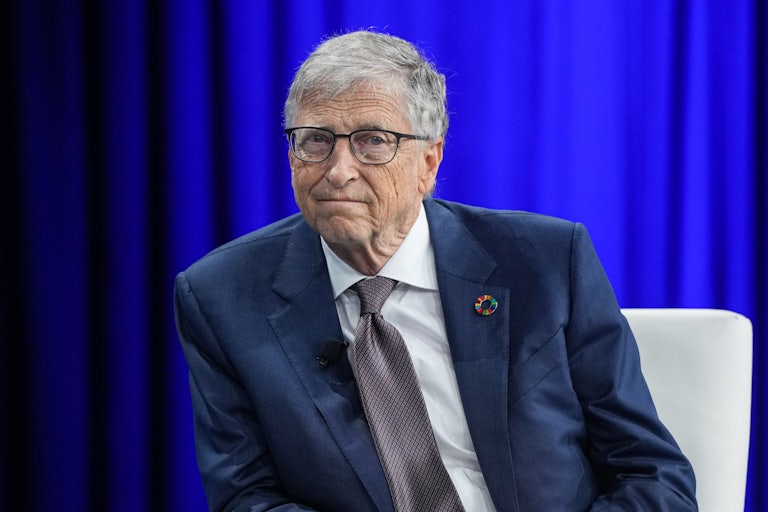

Bill Gates Becomes the Latest Billionaire to Bow Down to Trump

Add the Microsoft CEO to the long list of billionaires trying to land in Trump’s good graces.

Bill Gates
John Nacion/Getty Images

Another billionaire chooses Trump. This time, it’s the historically liberal Microsoft co-founder Bill Gates.

Gates told The Wall Street Journal that he was “impressed” by the president-elect.

“I had a chance to go have a long, and actually quite intriguing dinner with him,” Gates said in an interview with The Wall Street Journal. He noted that he talked to Trump for three hours, along with Trump aide Susie Wiles and Gates’s aide Larry Cohen.

“I spoke a lot about HIV, and that the foundation’s literally working on a cure for that. We’re at an early stage, and so he, in the Covid days accelerated vaccine innovation, so I was asking him if maybe the same kind of thing could be done here, and we both got … pretty excited about that,” said Gates. He also noted that they got excited talking about a cure to polio. “I felt like he was energized and looking forward to helping to drive innovation.… I was frankly impressed with how well he showed a lot of interest in the issues I brought up.”

It’s a stunning remark from Gates, one of the richest people in the world, who previously said he donated more than $50 million to Kamala Harris’s presidential campaign. The news of the meeting comes after Trump claimed last month that the billionaire was begging to have a meeting with him.

It also comes after Elon Musk has entered Trump’s inner circle, and other billionaires trail closely behind. Meta CEO Mark Zuckerberg and Amazon founder Jeff Bezos are expected to sit together with Musk on the dais at Trump’s inauguration on Monday, as is TikTok CEO Shou Zi Chew. This rallying of tech heavyweights around the incoming president, even in the face of his right-wing base, only reaffirms what Trump has been saying over and over again: Everybody does want to be his friend.

Trump Fans Are Pissed Over New Inauguration Plans

Apparently some people wanted to freeze their butts off for Donald Trump.

Chairs are set up on the National Mall ahead of Donald Trump’s inauguration
Kayla Bartkowski/Getty Images

Donald Trump’s supporters were feeling a little left out in the cold Friday after the president-elect announced his inauguration ceremony was moving indoors due to predictions of severely low temperatures.

In two interviews Friday, MSNBC spoke with a few disappointed MAGA fans on the streets of Washington, D.C., who were coming to terms with the fact that they would not be able to watch Trump be sworn in on the steps of the U.S. Capitol.

“I mean, we came all the way to Washington from Oklahoma, and you know, now we’re not going to see it?” said one man. “We might as well have stayed home and watched it on TV!”

“It’s actually something we’ve been looking forward to for historical purposes, and being a part of it, that’s once in a lifetime,” a different man said. Another man with him chimed in, “Absolutely!”

“Made all the plans, all the arrangements to come up and be a part of this event,” the first man continued. “And all of a sudden to hear that it’s being indoors, that’s—”

“We’re prepared for the weather!” interjected the second man.

While Trump’s fans aren’t pleased, everyone else just thinks it’s funny that the man obsessed with crowd size might have a severely underwhelming turnout.

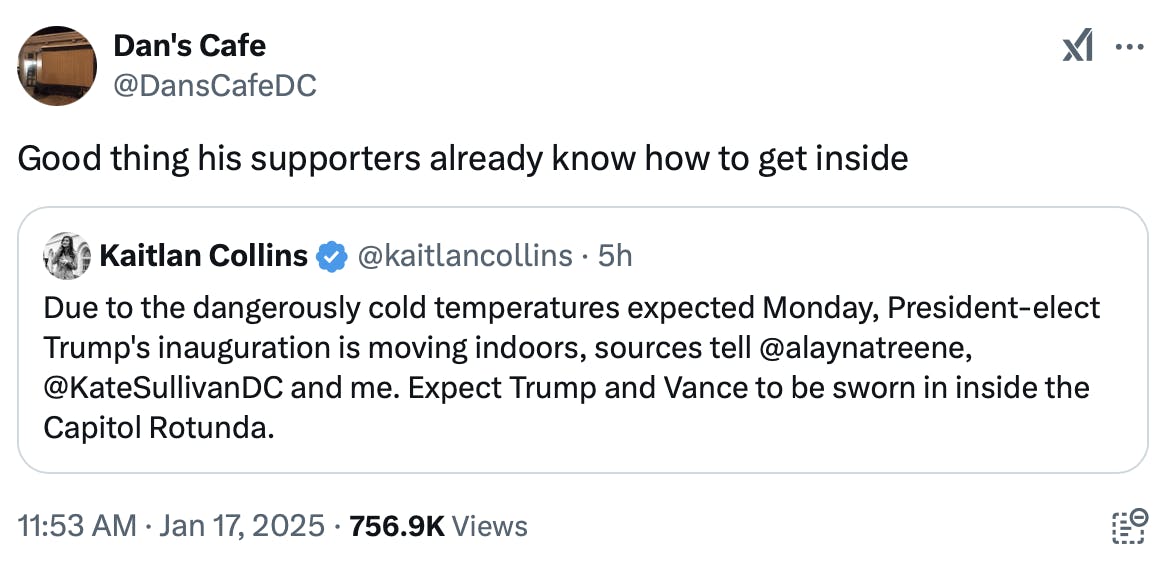
Dan’s Cafe, a local Washington bar, noted on X that for Trump’s fans, the walls of the U.S. Capitol never presented much of a barrier to entry.

Screenshot of a tweet
Screenshot

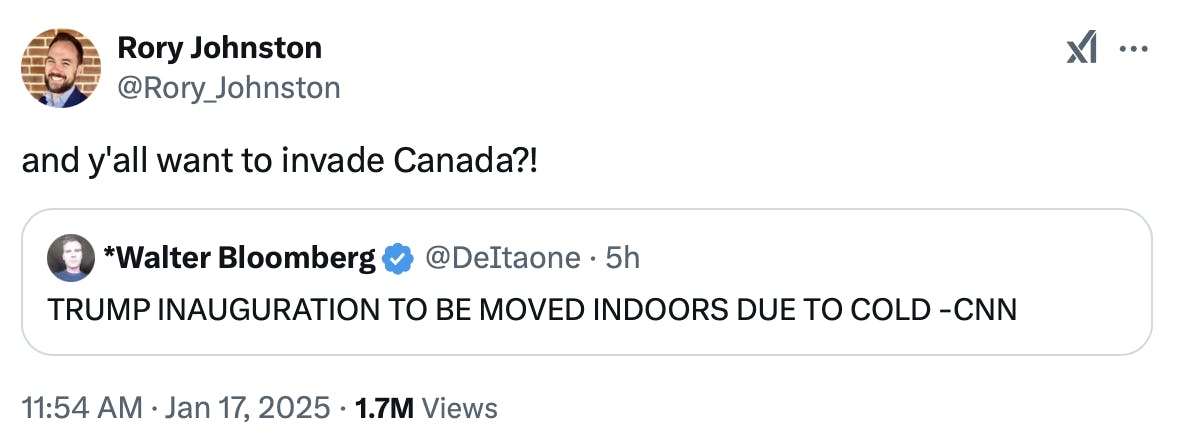
Others were shocked by Trump’s apparent lack of resilience.

Screenshot of a tweet
Screenshot

While others thought it seemed very unpresidential to avoid the cold.

Screenshot of a tweet
Screenshot

TikTok CEO Tries Sucking Up to Trump After Supreme Court Upholds Ban

TikTok is making one last appeal to Donald Trump’s ego after the Supreme Court left the app’s fate in his hands.

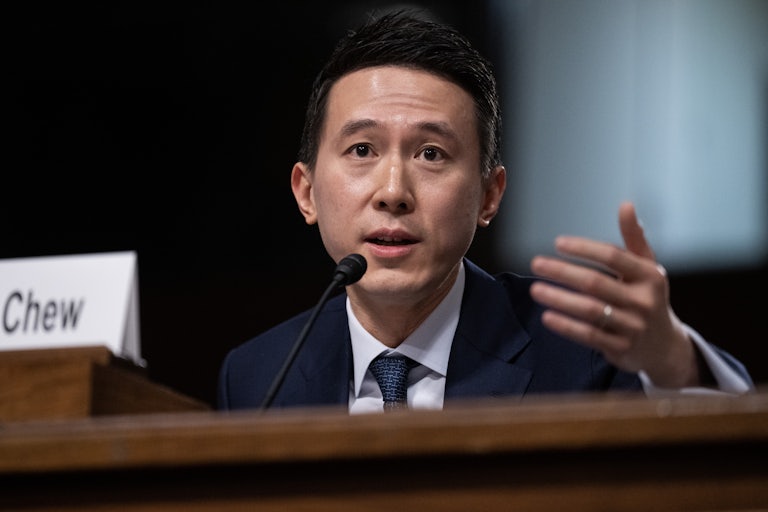
TikTok CEO Shou Zi Chew
Tom Williams/CQ-Roll Call, Inc/Getty Images

Following the Supreme Court’s decision to uphold a federal law that effectively bans TikTok, the social media platform’s CEO is trying to butter up Donald Trump.

Shou Zi Chew posted a video to the platform Friday thanking the president-elect “for his commitment to work with us to find a solution that keeps TikTok available in the United States.

“We are grateful and pleased to have the support of a president who truly understands our platform—one who has used TikTok to express his own thoughts and perspectives, connecting with the world and generating more than 60 billion views of his content in the process.”

@tiktok

Our response to the Supreme Court decision.

♬ original sound - TikTok

By specifically mentioning Trump and his fan base on the app, Chew appears to be making a last-ditch effort to save TikTok in the U.S., with the service scheduled to shut down on Sunday if the platform’s China-based company does not divest. The actual language of the law technically just requires the platform to be removed from app stores so new users can’t download it.

President Biden said Thursday that he wouldn’t enforce the ban during the last few days of his presidency, leaving its interpretation and implementation to Trump. The president-elect has said in recent months that he opposes a ban, going against his own previous position and what used to be near-universal opposition to TikTok on the right.

A ban on TikTok may not even be effective in deterring China from collecting the personal data of Americans, and conservative Supreme Court Justice Neil Gorsuch, while voting to uphold the ban, questioned its wisdom. But right now, the app may be functionally useless by Sunday, unless it’s sold to an American owner in the eleventh hour. Perhaps Trump has his own plans for TikTok that involve its CEO pledging allegiance to him like Elon Musk and Mark Zuckerberg.

Republicans Reveal Dark Plan to Let Kids Go Hungry to Fund Tax Cuts

Republicans released a list of options for their reconciliation bill.

House Ways and Means Committee Chair Jason Smith walks in the Capitol
Bill Clark/CQ-Roll Call, Inc/Getty Images
House Ways and Means Committee Chair Jason Smith

Republicans are looking to gut and slash federal programs in order to afford an extension to Donald Trump’s 2017 tax plan.

The extension, which overwhelmingly benefits corporations and could add as much as $15 trillion to the national deficit, would arrive at the expense of dozens of popular federal programs. But perhaps most egregious among the penny-pinching proposals is a plan to literally take food away from hungry children by nixing free school meal plans made available to some of the poorest families in the country.

Raising the threshold of eligibility for schools to receive the Community Eligibility Provision could save the government $3 billion over a span of 10 years, according to a menu-like list released by the House Ways and Means Committee intended to serve as cutting options for the House reconciliation package.

“The Community Eligibility Provision (CEP) allows the nation’s highest-poverty schools and districts to serve breakfast and lunch at no cost to all enrolled students without collecting household applications,” the proposal reads. “Instead, schools that adopt CEP are reimbursed using a formula based on participation in other specific means-tested programs, such as SNAP and TANF. Currently, schools can qualify if 40 percent of students receive these programs. This proposal would lift that to 60 percent.”

It shouldn’t take much to argue that taking food away from children is a bad thing. But data shows that food insecurity has been on the rise in the U.S. for the last several decades, and it has seen a considerable spike since the pandemic, according to the USDA. It affects roughly one in seven American households, according to data from the Food Research and Action Center, affecting an estimated 47.4 million people across the country.

A 2013 survey of K-8 public school teachers by No Kid Hungry found that six in 10 teachers across the nation knew that their students were regularly coming to school hungry. Teachers in the same study reported that 80 percent of students were coming to school hungry one or more times per week and that “most or a lot of their students” relied on school meals as their “primary source of nutrition.”

And there are immediate educational benefits to supplying children with meals: A 2018 study published in the National Bureau of Economic Research found that students who received the subsidized lunches were far less likely to need disciplinary action, such as school suspensions. Other studies have suggested that more breakfasts and lunches could improve academic performance or their health.