Newsletter
Power Mad
A weekly review of the rogues and scoundrels of American politics

Every Democratic Candidate Must Have an Answer for This Question

The Supreme Court’s conservative majority is trying to drive the party to extinction. What do they plan to do about it?

WASHINGTON, DC - FEBRUARY 20: The US Supreme Court as seen through a car's reflection on February 20, 2026 in Washington, DC. The Supreme Court struck down the legality of President Trump's tariffs in a 6-3 ruling.
Aaron Schwartz/Getty Images

Recall, if you can stomach it, the late summer months of the 2024 presidential campaign. The political press was churning out (accurate) stories about how Vice President Kamala Harris was distancing herself from some of the bolder policy proposals she’d previously backed, and many of the left were in a froth over it. But I paid it little mind. Timidly pivoting to the center was nothing new for Democratic presidential candidates, and what was the point of big policy proposals anyway? For that matter, what was the point of small policy proposals? As I noted at the time, Harris and her fellow Democrats had a bigger problem: They weren’t going to get to enact anything without the approval of Chief Justice John Roberts and at least four of his colleagues.

Disappointingly, Harris largely ducked what was—and is—the fight of the Democrats’ lives: the court’s wholesale elimination of the party’s ability to govern. The conservative bloc, through what I would charitably describe as chicanery, has locked down American life for the foreseeable future. They essentially possess veto power over any legislation or executive order not to their liking, and they are now moving in the direction of stripping Democratic voters of their electoral power. This is an existential crisis that affects every Democrat running for federal office, and as we barrel toward the midterm elections and then into a presidential campaign, it’s incumbent on Democrats to explain how they will confront this challenge. Or to put it another way: How will they change the Supreme Court? Because it cannot persist in its current form.

Naturally, if you ask Roberts, he will tell you this is all overblown. This week, he whinged about the public’s low opinion of the court, saying, “I think they view us as truly political actors, which I don’t think is an accurate understanding of what we do.” As The New Republic’s Matt Ford noted, it’s hard to see what a hypothetical high court filled with avowedly naked partisans would have done differently than these allegedly non-political actors, whose every move is laser-focused on delegitimizing and eliminating the GOP’s political competition.

The Roberts court has dismantled the Democratic Party in a number of ways. One was its 2024 ruling in Loper Bright Enterprises v. Raimondo, which did away with a judicial doctrine known as Chevron deference that allows the executive branch to respond nimbly and autonomously to laws passed by Congress. Its elimination essentially allows the high court to undercut the actions taken by the administrative state to carry out laws. This is specifically bad for a party that actually uses the federal government to facilitate policy, rather than using the federal government to destroy the federal government.

But the Supreme Court has put its finger on the scale for Republicans in even less ambiguous ways in recent years. The conservative majority’s embrace of what’s known as the “major questions doctrine” has added a new layer of imperviousness to its reign of Calvinball terror. That doctrine, which is a very recent invention of the conservative legal movement, allows the justices to overturn a federal regulation if they believe Congress didn’t “speak clearly” enough when authorizing it. If you’re wondering what that means, well, it means whatever a majority of justices think it means: Over time, the major questions doctrine has allowed the justices a wide range in applying subjective and malleable criteria to rule against regulations.

The Supreme Court, by the way, has never applied the major questions doctrine to a Republican president’s actions—though Roberts, Amy Coney Barrett, and Neil Gorsuch did contend in a concurring opinion that it should have been applied to Trump in the recent case that struck down the president’s tariff regime. In every other instance, the major questions doctrine has provided a facially neutral jurisprudential scheme to derail Democratic presidents. Democrats have also, in recent years, been sabotaged whenever the court issues a shadow docket ruling, whereas lately those unsigned rulings keep siding with Trump. As Ford recently noted, leaked Supreme Court memos have shone a new light on how the conservative justices’ shadow docket dabblings have gone from being “a simple administrative mechanism [to] a major roadblock for progressive governance.”

As if kneecapping the Democratic Party’s ability to govern isn’t enough, the court’s ruling in Louisiana v. Callais has effectively eliminated the safeguards in the Voting Rights Act that ensured the rights of Black Americans to participate in electoral politics. Ford wrote that the ruling all but ensures that “Black representation in Congress will … plummet, further tilting the House map in favor of the GOP.” True enough, within days, Republican-controlled legislatures began the process of dismantling majority-minority districts.

To Ford’s mind, Democrats find themselves facing some pretty stark choices to confront a Supreme Court that has gone to such lengths to annihilate their party: “Since the Supreme Court as currently constructed cannot be trusted to protect the egalitarian republic that, as Kagan noted, Union soldiers and civil rights activists fought and died to build, sufficient justices must be appointed to it to remedy the problem.”

To pack the court, or not pack the court? This is a question that Democrats have been at pains to avoid. And to be fair, they may have other options besides the nuclear one. They could engage in jurisdiction stripping to limit the court’s ability to interfere with liberal governance. They could reform the court in other ways beyond simply nominating four new justices to turn the tide: Pete Buttigieg has floated the idea of a 15-member court split among conservatives, liberals, and ostensible neutrals. Other lawmakers have proposed we simply abolish lifetime appointments.

I could spend several more paragraphs sketching out solutions to end the misrule of an illiberal court, but the time has come for Democrats to step forward and announce what they plan to do about it. The party is no longer on a collision course with the Roberts court—the collision has happened; the wreckage is in the road. To do anything, now or in the future, Democrats will have to undo the grievous harms that imperil their party’s ability to function. In these upcoming election cycles, if Democratic candidates don’t have serious ideas of how to solve this problem, then they are not serious Democratic candidates.

This article first appeared in Power Mad, a weekly TNR newsletter authored by deputy editor Jason Linkins. Sign up here.
Here’s a Better Idea Than Trying to Assassinate the President

Cole Allen squandered his life on a hopeless mission to change the course of history. Let’s learn from his mistakes.

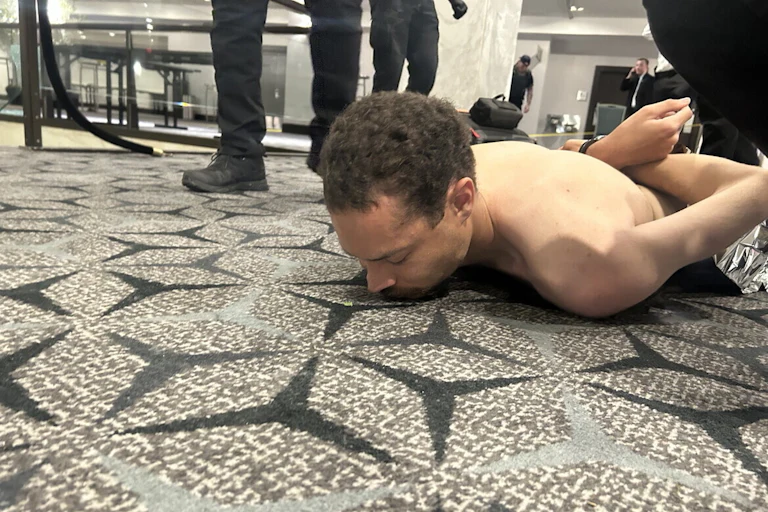
Cole Allen being restrained after the incident at the White House Correspondents’ Dinner on April 25
President Donald Trump/Truth Social/Anadolu/Getty
Cole Allen being restrained after the incident at the White House Correspondents’ Dinner on April 25

Cole Allen, the 31-year-old California man who, by his own admission, armed himself and attempted to breach the security at this past weekend’s White House Correspondents’ Dinner, was officially charged this week with attempting to assassinate the president. The case—at least what’s been publicly disclosed—is still quite murky; questions remain about whether Allen even fired his gun in the bowels of the Washington Hilton Hotel. Still, the takeaway, to me at least, is clear: You should not try to assassinate the president.

I know, this is probably not something that you need to be told. Murder is, after all, inherently immoral and a criminal act to boot. Murdering the president of the United States also comes with a high degree of difficulty given his 24/7 protection by a posse of well-trained armed guards. In just about every conceivable scenario, you will likely fail and you will definitely not be able to go back to living your previous life. Still, there are some additional things to consider that are specific to the Trump era itself: whether killing the president won’t make matters much worse, and whether there is a better way to channel your discontent.

Allen is an unusual would-be assassin. There’s nothing about him that reminds me of any number of mass shooters of recent vintage. There’s no air of glory-seeking; no meme-sludge in his rhetoric. In his manifesto, he spends quite a bit of time apologizing to various people in his life for betraying their trust and takes no evident pleasure in the task he’s put himself to doing. (He also seems prematurely disdainful of the security measures that ultimately foiled his plot.) What’s most unique, and perhaps most troubling, is that his decision to try to take the president’s life is, as TNR contributor Elizabeth Spiers noted on Bluesky, rooted in a sense of moral injury.

The Huffington Post’s David Wood, who has written extensively about how soldiers often suffer from moral injury after their tours of duty have concluded, describes the condition as the “sense that [one’s] fundamental understanding of right and wrong has been violated, and the grief, numbness or guilt that often ensues.” In his manifesto, Allen wrote, “I am a citizen of the United States of America. What my representatives do reflects on me. And I am no longer willing to permit a pedophile, rapist, and traitor to coat my hands with his crimes.” For all intents and purposes, he is saying that he is implicated in Trump’s evident corruption and misrule. “Turning the other cheek when *someone else* is oppressed is not Christian behavior,” he wrote, “it is complicity in the oppressor’s crimes.”

This is perhaps the most worrying part of this story—that there might be others out there who feel this way, and who might be compelled to take the same action. These are the natural consequences of our current age of elite impunity, in which a corrupt president transforms the government into an instrument of self-dealing and revenge, and justice is perceived as slow in arriving, if it arrives at all. Allen spends a considerable amount of time in his manifesto building the moral scaffolding necessary to accommodate his decision to travel to Washington, D.C., to dole out a quick dose of accountability. Based on his writing, I think he works harder than most would-be mass shooters to illuminate a humane logic for his actions. I still think he draws all the wrong conclusions.

One thing that Allen gets badly wrong is the idea that killing Trump might have provided a short cut to putting things right. I think many people believe this about the efficacy of political violence, even if they would never engage in it themselves. But I’m unconvinced, at least as it pertains to Trump, because MAGA is something of a cult movement, steeped in its own byzantine mythology and awash in conspiratorial thinking. The one thing you probably don’t want to do if you want to bring the country back from the brink of this madness is to give this movement a martyr.

At the moment, MAGA is cracking up under the weight of the Trump administration’s many failings. As Greg Sargent noted about a recent Fox News poll, Trump’s coalition is contracting: “On both his general approval ratings and many major issues, his numbers among voter groups that have reliably supported him in the past are awful. They’re also terrible among the non-Trumpy groups that he pulled into the coalition in 2024.” It seems the worst possible thing anyone can do is interrupt this free fall. Don’t shoot a man who’s busy shooting himself in the foot.

Had Allen been successful in his attempt to kill Trump, he might have altered the thermostatic chemistry of the electorate, goosed Trump’s support, and brought back morally affronted fence sitters who were ready to leave Trump behind. It also might well have touched off a wave of political violence in the other direction—which was a thing he really should have considered before he acted. As it is, I worry that TNR contributor Ana Marie Cox is correct that Cole’s attempt will bond Trump and the White House press corps together in a shared trauma, further eroding the latter group’s already withered sense of duty in holding the administration accountable, thus exacerbating the original problem.

So, at the risk of stating the obvious, don’t attempt to—or even daydream about—assassinating the president. The best path to thwarting Trumpism lies in the deliberations of lawful democracy. This is not a path that favors quick fixes and instant gratification. We must organize in numbers to boot Trump and the GOP from power and install leaders who can command a majority to put things right, up to and including possible impeachment and putting people in jail.

On a more personal note, I was saddened to read that Allen felt alone in his grave misgivings. While he enumerated a community of people surrounding him—family, friends, work colleagues, his church—he separated himself from what sounds like a vibrant network of people rather than seeking them out. Had he done so, he might have found a better path to take that might have relieved his moral injury and contributed much more to the anti-Trump cause.

Around the same time Washingtonians were preparing for this weekend’s White House Correspondents’ Dinner, I was catching up with an acquaintance from Minneapolis, who was giving me an intimate view of what it’s like to participate in anti-ICE resistance in the Twin Cities. Her phone was a warren of group chats and text chains in which concentric orbits of organized citizens went about the daily business of protecting their neighbors and keeping watch over their neighborhoods. In Minneapolis and St. Paul, democracy is a well-oiled machine with regular training sessions from skilled political organizers.

One thing she mentioned about those trainings has stuck with me after the events of Saturday night. The trainers told the people they were organizing that sometimes they’d end up on the front lines of ICE violence—that they’d bear witness to some terrible sights, see things that would make them angry. The trainers, she said, made it clear that anyone who did not think they could handle these circumstances without succumbing to violent, retributive impulses needed to find some other role—that there were plenty of other ways they could help where their despair or anger wouldn’t get the better of them.

Given the success of this faction of Trump resistance, we’d do well to heed this advice. There are plenty of things we can do, right now, to fortify our communities and protect our neighbors—to materially impact the lives of others for good, find fellowship along the way, and absolve any sense of moral injury that may be creeping into our psyche. It’s more lethal to Trumpism long-term if we organize in opposition than it is to grab a gun and take a run at the president. I’m sorry that Allen couldn’t find his way to this realization. He might have done some good.

This article first appeared in Power Mad, a weekly TNR newsletter authored by deputy editor Jason Linkins. Sign up here.
Trump and the White House Correspondents’ Dinner Deserve Each Other

People really seem worked up about the president ruining this weekend’s big party. But you can’t ruin something that’s already rotten to the core.

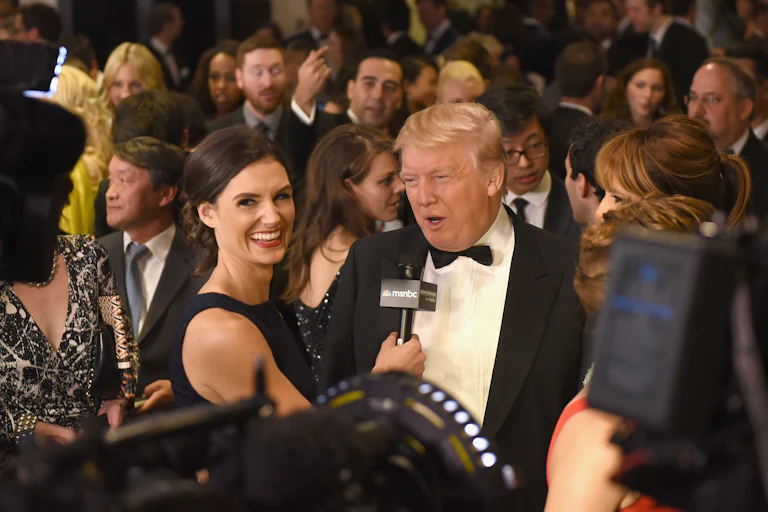
Donald Trump attends the 101st Annual White House Correspondents’ Association Dinner at the Washington Hilton on April 25th, 2015 in Washington, D.C.
Larry Busacca/Getty Images
Donald Trump attends the 101st Annual White House Correspondents’ Association Dinner at the Washington Hilton on April 25, 2015, in Washington, D.C.

Make ready the orchestra of tiny violins, everyone! This weekend, Washington, D.C.’s greatest collection of reprobates and dweebs will gather at the Washington Hilton for the annual tribute to meretriciousness that is the White House Correspondents’ Dinner. Alas, there is bad news to report: President Donald Trump will be ruining the affair by attending it, after several years of ruining it by not attending it. As a result, people are so upset that they’re calling for this weekend’s big party to be called off entirely.

It almost goes without saying that Trump’s personal opinions on free speech put him at odds with the theme that the White House Correspondents’ Association concocted for its annual bacchanal: a celebration of the First Amendment. A few weeks ago, Trump threatened to jail journalists over coverage of an Iranian airstrike on a U.S. fighter jet. Meanwhile, Paramount has decided to invite to its table Federal Communications Commission head Brendan Carr, who has spent the last year launching spurious probes into various news organizations for unfavorable coverage of the Trump administration.

As if that were not enough open hostility, The Daily Beast reported on Wednesday that Trump plans some sort of “revenge attack” speech against the press corps Saturday night, after which he intends to turn tail and run home. The WHCA’s response to these aggressions seems maximally ineffectual by design: Its members will wear “pocket squares or pins touting the importance of the First Amendment.”

But should we regard the journalists into whose punchbowl the president is pissing as worthy and capable guardians of those freedoms? Or, honestly, guardians of anything? It was at last year’s party that Axios reporter Alex Thompson, upon winning the Aldo Beckman Award for Overall Excellence, rode in on his high horse to perform a ritual admonishment of those in attendance for not properly covering the story of President Joe Biden’s advanced age. “Being truth tellers,” he chastised, “also means telling the truth about ourselves. We, myself included, missed a lot of this story and some people trust us less because of it. We bear some responsibility for faith in the media being at such lows.”

Well, since we once again have an infirm and mentally dysfunctional man running the country that few in the media seem worried about, it’s worth asking if anyone in the D.C. press corps actually learned anything. It’s also worth answering: not really. While The New York Times, notably, has gone long several times on Trump’s decline in recent months, good luck finding similar reporting from the likes of Axios.

I’m not the only one with knives out for the WHCD, though Washington Monthly’s Bill Scher has a decidedly different reason for calling for the dinner’s cancellation. “An event celebrating the free press should not spotlight Donald Trump, the biggest threat to the free press,” he writes. Scher is certainly right to criticize the WHCA for the way it has “reconfigured the event to make it more to Trump’s liking, chucking the comedian slot and, instead, naming as headliner Oz Pearlman, described by The New York Times as the ‘manosphere’s favorite magician.’” But the lion’s share of the piece—which begins with Scher’s “confession” that he’s a “fan” of the event—is devoted to making the chummy party seem aboveboard, for the purpose of suggesting that it’s Trump’s presence that, finally and at last, has created something truly odious.

Cue the self-serving justifications. “I always view such events as opportunities for source-building, vetting of coverage ideas and networking,” argues NPR’s Eric Deggans. “I may be having fun with my colleagues from NPR, but I’m also low-key working my beat.” I have heard variations on this idea from all sorts of reporters over the years. Maybe things are different when you’re on the media/celebrity beat, but I don’t find this argument compelling for political reporters. If you broke a story because you attended the dinner, tell your readers—they deserve to know that you’re not just there collecting selfies and canapés. Here’s a fun fact: President Barack Obama executed the hit on Osama bin Laden on White House Correspondents’ Dinner weekend, almost as if he knew the best time to run a secret special op was when every reporter would be nearby, basking in their own self-regard. (A better-sourced Dwayne “The Rock” Johnson famously scooped everyone on the bin Laden raid.)

At least The Atlantic’s Paul Farhi is willing to state up front that the fête was extremely tacky long before Trump became president. “Even in the best of times, the [dinner] is an awkward and ethically fraught affair,” he writes: “The evening is promoted as a celebration of journalism and the First Amendment, but it has always been a bit of an embarrassment.” It’s actually a little under-sung just how bad the dinner was during its supposed halcyon days of the Obama administration. As Meredith Shiner wrote in Rolling Stone back in 2022, it was during this period that the WHCA really rammed its head up its own ass by making “celebrity the end goal of public service” and setting the stage for the parade of horribles to come. As Shiner observes:

Of course, it also should be noted that [Trump’s] attendance at the dinner in 2011—and Obama’s joke about him during his set—helped fuel the hate fire for his own White House run. Nothing about the grossness of this one weekend of cocktail parties or Democrats wanting to be cool by association invalidates the much more significant grossness of how media and celebrity normalized Trump, helped him attain power, and profited off keeping him there.

In this way, having Trump in attendance at this year’s dinner isn’t some troubling aberration. It’s really the logical end point of the whole affair; the apotheosis of Official Washington and its trashy pretentions. Far from canceling the dinner, let’s make it mandatory that Trump, his Cabinet, and all media elites attend, so we can bar the doors and force them to answer for their sins against our civic fabric.

This article first appeared in Power Mad, a weekly TNR newsletter authored by deputy editor Jason Linkins. Sign up here.
The Media’s Groundbreaking Discovery: Anti-Corruption Is Good Politics

The chattering classes have belatedly stumbled upon a way to defeat authoritarianism. Now if they can only practice what they preach.

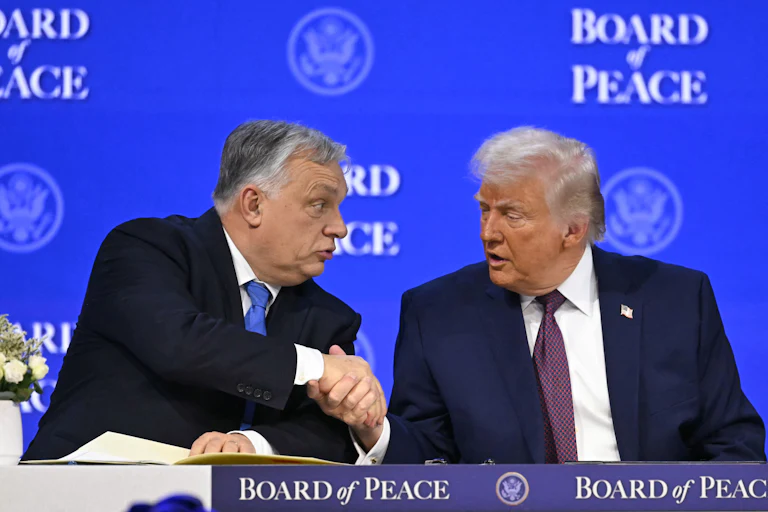
Hungary’s Prime Minister Viktor Orbán shakes hands with Donald Trump at the “Board of Peace” meeting during the World Economic Forum annual meeting in Davos.
Fabrice Coffrini/Getty Images
Hungary’s Prime Minister Viktor Orbán shakes hands with Donald Trump at the “Board of Peace” meeting during the World Economic Forum annual meeting in Davos.

Good news has been something of a precious commodity of late, what with the Trump administration still engaged in its slop-conflict with Iran and the president himself taking to depicting himself as a messianic figure online. But in last weekend’s elections in Hungary, Péter Magyar and his Tisza party resoundingly defeated international fascist darling Viktor Orbán and his far-right Fidesz minions. Tisza did so well in these elections, in fact, that they will have the numbers to enact crucial constitutional reforms and undo at least some of the damage of 16 years of authoritarian rule. As a side note, Orbán’s defeat is a black eye for his stateside backers, including Vice President JD Vance, who had personally stumped for the defeated strongman in the waning days of the campaign.

This was, in other words, a good outcome for freedom-loving people everywhere and a result that will hopefully yield further fruit. But there is one by-product that’s truly been a puzzlement. Across the media landscape, the chattering class has assayed the election and made what is—to it, anyway—a fresh discovery: What if political corruption is bad? And what if campaigning against corruption is a winning issue?

The Washington Post’s edit board said that “the main reason for Orbán’s fall was endemic corruption” and the fact that he had constructed “a mafia state.” The Wall Street Journal’s William Galston similarly enthused that Magyar’s focus on “a handful of issues—cronyism and corruption, economic stagnation and inflation, and decaying public services” was a “lesson for Democrats.” And The New York Times edit board, in a piece titled “Here’s How to Defeat Trumpism,” highlighted the fact that Magyar “made corruption a core campaign issue,” and then confidently intoned, “It is easy enough to imagine an American version of this strategy.”

It’s something of a marvel to have so many people so confident in their public declarations that they’ve finally cracked this code, several years after it might have been a useful insight. Trump, who will never be on a ballot again, is corrupt—and maybe that’s his Achilles’ heel! As someone who was trying to explain the depths of Trump’s corruption and the importance of safeguarding the constitutional bulwarks against a president using his position to enrich himself before Trump’s first inauguration, I can only say that these folks are a little late to the party.

It’s extremely cute that so many media elites have decided that this is a lesson Democrats need to learn when, in fact, many Democrats have actually already figured it out. Here, for example, is Georgia Senator Jon Ossoff, speaking in September 2025 to Pod Save America: “Vast sums of corporate and billionaire money in our political system—with or without Trump—are why ordinary people are so ill served by elected officials and by Congress.… If we don’t solve this problem, even once we put Trump back in the box in the midterms and once he’s gone, the country will still be in deep trouble.”

Ossoff is one of 120 Democratic candidates who long ago signed onto End Citizens United’s “Unrig Washington” pledge, which asks candidates to support three agenda items: a total ban on congressional stock trading, a refusal of corporate PAC money, and a promise to undo the damage of the Citizens United ruling and to crack down on dark money in our politics. Maybe everyone at the big newspapers missed this. Notably, NOTUS—the upstart publication that’s lately been eating The Washington Post’s lunch—took stock of the scene two months ago and found that “Democratic candidates are leaning into anti-corruption messaging this cycle, seeing it as an opportunity to emphasize what they see as excessive corporate influence, unethical stock trading and shady behavior from their opponents.”

Democrats coming out against corruption in the Trump era isn’t even this recent a phenomenon. The Washington Post’s editors would do well to occasionally read their own newspaper’s reporting: As their own Mike DeBonis reported in the run-up to the 2018 midterms, anti-corruption was a major plank in the Democratic Party’s (successful) campaign.

So what, if anything, has been holding Democrats’ efforts back despite this being such a robust line of attack on Trumpism? Well, as the aforementioned NOTUS report noted, “Democrats were seen as more corrupt than Republicans by a five-percentage point margin in a 2025 battleground poll by End Citizens United.” There’s no doubt that some of this was a self-inflicted wound: There’s been significant intraparty resistance to a ban on stock trading, for instance. And the party has been slow to deal with its own corrupt members—like letting noted sleaze-pump Bob Menendez hang around the Senate until his crimes finally became too comical to tolerate.

Still, for the public to have the opinion, in 2025, that the Democrats were more corrupt than a party whose leader enmeshed himself in several Teapot Dome–level scandals in that same calendar year—including the creation of an unaccountable crypto slush fund to facilitate all manner of quid pro quo exchanges—suggests that the same media that’s recently tripped over the idea that corruption is a bad thing has impeded the public’s ability to see this for themselves.

It’s absolutely the case that we would know very little about Trump’s crimes were it not for the reporters who’ve ferreted out all these important stories. But where the mainstream media falls down on the job is its lack of civic impulse to properly paint Trump and his enablers as agents in a de facto criminal enterprise. And just as the media has indulged in sanewashing the president’s demented ravings, so too has it sanded off the edges of Trump’s corrupt practices. The way Trump’s story gets told, serial violations of the Constitution become mere “departures” from previous norms; his mafioso-like demands of the international community aren’t described as extortion—Trump is simply being “transactional.”

Just this week, days after the Associated Press joined their peers in the post-Orbán Great Corruption Awakening, they reported at length about how the Trump White House is basically a racket of double-dealing, favor-trading, and self-enrichment. Somehow, the word corrupt doesn’t appear in the article. There are no plain-English explanations of the historic criminality, either—merely allusions alongside laughable denials from various Trump spokespersons. In fact, the AP’s main concern, per their headline, is that the “Trump family deal spree could open [the] door for future presidents to profit from office.” This is the View From Nowhere at work: What if the criminal president we have now corrupts a future president?

Look, I think it’s great that so many media elites have woken up to the fact that political corruption is a great civic evil, and that Trump is politically corrupt. But by the transitive theory of equality, that means Trump is a great civic evildoer, and a media that can’t tell that truth—and which instead seeks to obscure it—is this corrupt president’s brilliant ally. I’m hoping this will change, but I rather think that the people who possess the means to shape the discourse back into something that reflects reality, and actually help restore our once flourishing democracy, all lack the guts to join this fight. Hopefully, as in Hungary, we will end up not needing them.

This article first appeared in Power Mad, a weekly TNR newsletter authored by deputy editor Jason Linkins. Sign up here.

“TACO” Trump Is a Dangerous Mirage

“Trump Always Chickens Out” has been fashioned into a dig at the president over the years. But the gibe is obscuring some difficult truths.

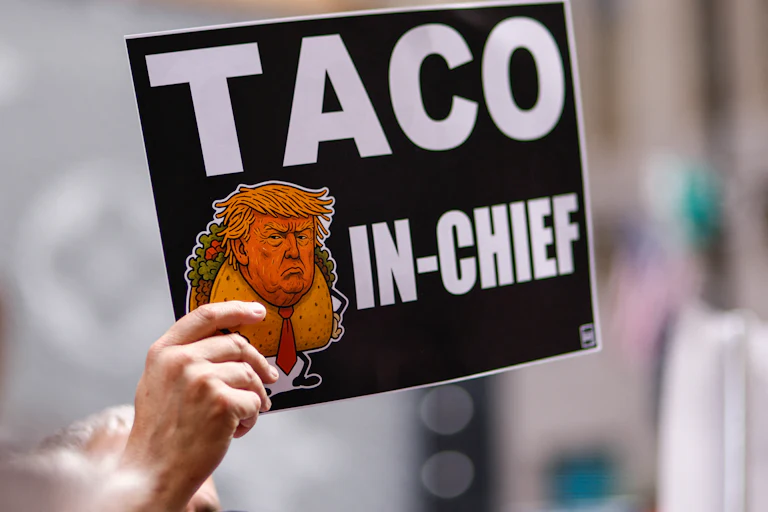
A person holds a sign with an image of Donald Trump as Taco in Chief as people demonstrate during a Labor Day “Workers over billionaires” rally outside Trump Tower in New York City on September 1, 2025.
Kena Betancur/Getty Images

Most of us were duly alarmed on Tuesday morning when the president of the United States threatened to end a civilization by 8 p.m. Eastern time. It seemed entirely possible that if Iran did not “Open the fuckin’ Strait,” as Donald Trump put it, he would drop a tactical nuke on Tehran or do something slightly less apocalyptic but nonetheless genocidal. When a feebleminded lunatic runs the world’s most well-funded war machine, it’s best to worry and risk being accused of overreaction. The problem is that a significant swath of Americans aren’t alarmed enough.

I am speaking of the “Trump Always Chickens Out” maxim that has taken root since the beginning of Trump’s second term. This refers to the persistent belief that Trump is perpetually climbing down from his most dire threats—a paper tiger forever on the verge of folding. TACO theory always gives you the out when it comes to worrying about Trumpian misrule. It also gives Trump’s opponents an easy shorthand for insulting him and making themselves feel better. But it’s worth questioning whether TACO actually has much merit. Off the top of my head, I’m guessing that an untold number of obliterated Iranians may take issue with this contention.

It’s fitting that the TACO meme was largely birthed by Wall Streeters, operating under the shield of plutocratic wealth and chronic naïveté that is intrinsic to the financial services sector. As the Huffington Post reported back in May 2025, the term was cooked up by the Financial Times’ Robert Armstrong to refer to how the markets reacted to “the president’s tendency to announce massive tariffs, causing the markets to plunge, only to back off days later, causing them to rise again.” A certain swath of investors were using TACO theory to do some heavy-duty buckraking. As Ted Jenkin, the president of Exit Stage Left Advisors, told the New York Post, the strategy worked like this: “Once he delivers bad news, investors are buying those stocks when they are beaten down waiting for him to chicken out and watching those stocks rebound in value.”

Over time, TACO morphed from a form of tariff-whispering to a sort of catch-all delusion for markets to pretend that the damage Trump is doing to the economy never really has to be priced in. But it also expanded beyond the concerns of Wall Streeters to become a comforting security blanket anytime Trump either seems to be on the brink of doing something catastrophic or has backed down from escalations.

The Trump administration has actually grown pretty adept at managing and manipulating the TACO theory to its own advantages. Earlier this year, the ouster of Customs and Border Protection commander Greg Bovino, the real-life version of Sean Penn’s character in One Battle After Another, was widely depicted in the press as a sort of chickening out: Trump was forced to retrench in the face of widespread public horror over the administration’s deadly operations in Minneapolis. But under the new management of border czar Tom Homan, the terror machine kept running in the city for several more weeks. Similarly, at the Department of Homeland Security, Kristi Noem’s dismissal in favor of Markwayne Mullin was seen as a setback for the administration, but really it just traded new excesses for old ones. If you were sitting there thinking that the temperature had been lowered or the administration had been chastened, you got played.

It may be comforting to think that in Iran, Trump once again chickened out. After all, a civilization threatened on Tuesday has made it to the end of the week, and there’s a two-week hold on all the proposed war crimes in Trump’s latest atrocity pitch deck. If you’re of the mind that any of this is true, check yourself. Trump has not chickened out; he’s already gone all in: This war of choice has bequeathed a mountain of casualties, tons of destruction, and economic ramifications that will linger for years. What you think looks like a cowardly retreat is actually Trump flailing. He is not in control of the situation, and the danger is far from over.

Also not over: the aforementioned buckraking. Trump’s TACO cycle continues to be fodder for insider trading and market manipulation. Trump’s late-March threat to “obliterate [Iran’s] various POWER PLANTS, STARTING WITH THE BIGGEST ONE FIRST!” was followed by a belligerent response from Iran and a hasty Sunday-show appearance from Treasury Secretary Scott Bessent to head off any market volatility on Monday morning. Trump retreated from his threats in an early morning missive on Monday, citing the phantasmal success of nonexistent diplomatic discussions. But as FT reported, people were getting rich behind the scenes: “Traders made bets worth half a billion dollars in the oil market about 15 minutes before Donald Trump’s post touting ‘productive’ talks with Iran sent the price of crude tumbling and ignited volatility in other assets.”

Once you crack open the shell of this TACO, what you’ll find isn’t a source of reassurance or a fun gibe to toss in Trump’s direction. It’s all the same misrule, criminality, and corruption. Paul Krugman, who credibly argues that these insider trades are tantamount to treason, bottom-lines it in this way: “You can’t trust a corrupt government to protect national security. And our government is now utterly corrupt: It’s hard to find a single senior official, from the president on down, who treats public office as a grave responsibility rather than an opportunity for personal self-aggrandizement and profit.”

As the events of this week prove, life under these arrangements is scary and frustrating. We bear the cost of Trump’s belligerence and suffer psychically as he swings from one unimaginable threat to the next. Meanwhile, insiders get to manipulate the mass media and the markets to further their authoritarian political goals and self-enrichment. This TACO party is proving to be extremely profitable for an elite few, but I’d bet you won’t be invited to it anytime soon.

This article first appeared in Power Mad, a weekly TNR newsletter authored by deputy editor Jason Linkins. Sign up here.