Breaking News
Breaking News
from Washington and beyond

Texas Top Court Has Horrific Judgment Over Failed Reproductive Surgery

The Texas Supreme Court told a woman she could not collect financial damages over her doctor’s negligence.

A pro-reproductive rights protester stands outside the Texas Supreme Court
Suzanne Cordeiro/AFP/Getty Images
A pro-reproductive rights protester stands outside the Texas Supreme Court building in Austin on June 24, 2022.

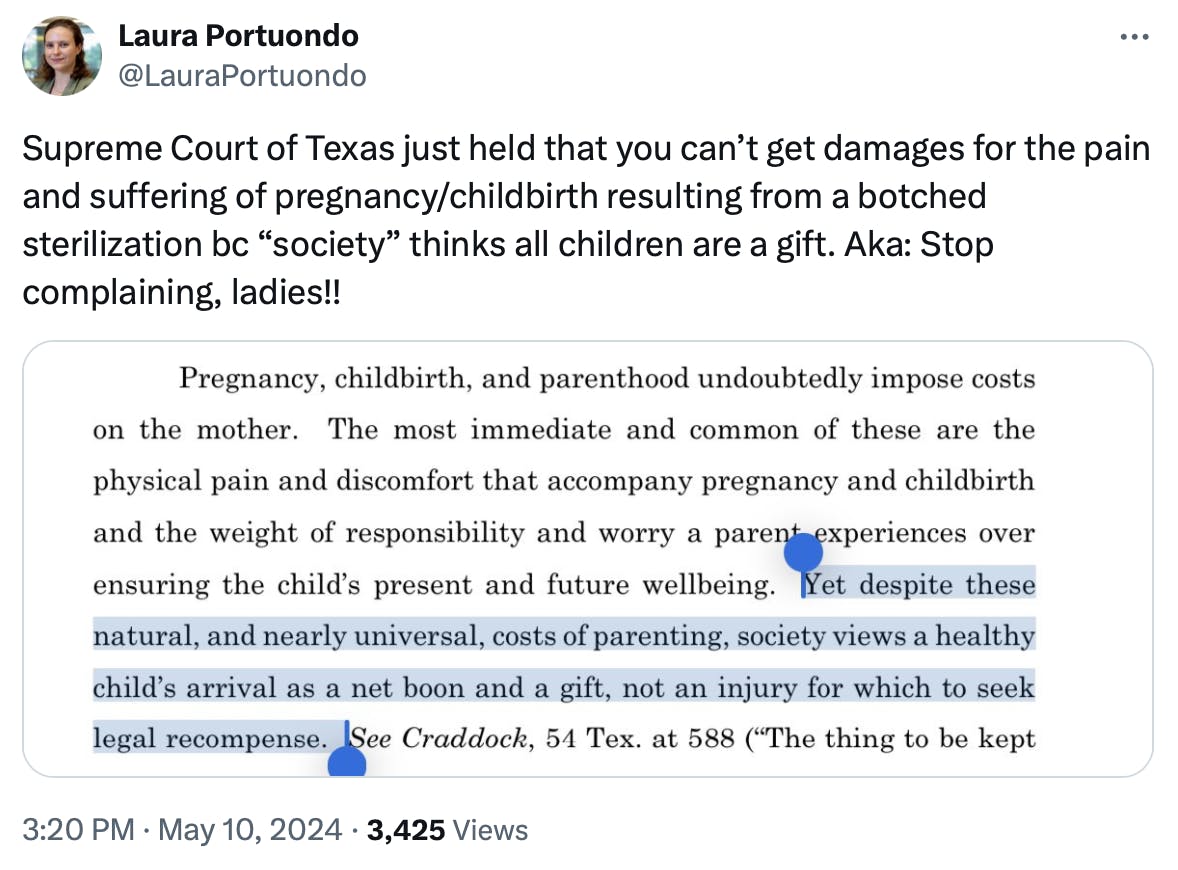
The Texas Supreme Court ruled Friday that an El Paso woman who gave birth despite supposedly receiving a tubal ligation can’t sue her medical provider because “society views a healthy child’s arrival as a net boon and a gift.”

The nine-member court, whose members are all Republican, ruled unanimously that Grissel Velasco could not seek damages from Dr. Michiel Noe and his medical practice, Sun City Women’s Health Care, for medical expenses, physical and mental harms, and the costs of raising her now 8-year-old girl.

“Texas law does not regard a healthy child as an injury for which a parent must be compensated but, rather, as a life with inherent dignity and profound, immeasurable value,” wrote Justice Rebeca Huddle.
Screenshot of a tweet
Screenshot

Under Texas law, a parent could only recover damages, such as medical expenses, from during the pregnancy, delivery, and afterward—nothing more, Huddle said.

Huddle cited the fact that Noe had reimbursed Velasco $400 for the cost of the tubal ligation, a sterilization procedure in which a woman’s fallopian tubes are cut and tied to prevent pregnancy, and that her pregnancy was covered by the federal Children’s Health Insurance Program.

Velasco’s lawyer, Jose Lopez, said in a statement that the ruling had “taken away a patient’s voice and choice and has immunized the negligent doctor from civil liability.”

The ruling fits right along with Texas’s extreme laws on abortion, which include a near-total ban passed in 2021. Last summer, a group of women sued the state over the law and one woman vomited while telling the story of how she was forced to give birth to a baby that died shortly after delivery.

Anti-abortion activists in the state want to execute women and minors who seek abortions or in-vitro fertilization. And the state’s attorney general, Ken Paxton, has threatened to prosecute doctors and hospitals for carrying out abortions, even if a court orders one out of health concerns. All of this seems to indicate a forced birth-or-else policy in the state.
Read about the state of reproductive health in Texas:

Kristi Noem Got Herself Banned From Parts of Her Own State

Five of South Dakota’s Indigenous tribes are imposing a hilarious penalty on the governor.

Kristi Noem looks forward
John Lamparski/Getty Images

South Dakota Governor Kristi Noem is no longer welcome in 16 percent of her home state.

The MAGA Republican has been banned from the territories of five of the nine Sioux tribes in her state for derogatory comments she made at a town hall in March, accusing the community of failing their children.

“Because they live with 80 percent to 90 percent unemployment,” Noem said at the time. “Their kids don’t have any hope. They don’t have parents who show up and help them. They have a tribal council or a president who focuses on a political agenda more than they care about actually helping somebody’s life look better.”

On Tuesday, the Sisseton Wahpeton Oyate Tribe became the fifth tribe to pass a resolution barring Noem. They join similar actions taken by the Oglala, Cheyenne River, Standing Rock, and Rosebud Sioux tribes, which have so far banned the state’s executive leader from 13,000 square miles of land—approximately 90 percent of the state’s Indigenous-owned territory.

“As tribal leaders, it is our duty to honor the voice or the wishes of our people, and that’s who we work on the behalf of,” Sisseton Tribal Chairman J. Garrett Renville told local station KELO. “The people at this time would like that in place until there was a formal apology.”

Native tribes have had a strained relationship with Noem since she took office in 2019. Since then, Noem and South Dakota’s Indigenous population have disagreed over the construction of the XL Keystone pipeline and the removal of Native American histories from South Dakota’s education standards. Noem also violated the tribes’ sovereignty during the Covid-19 pandemic, undermining tribal efforts to enact lockdowns and quarantine zones while the state’s infection count skyrocketed.

“Governor Noem claims she wants to establish meaningful relationships with Tribes to provide solutions for systemic problems. However, her actions as Governor blatantly show otherwise,” the Rosebud Sioux Tribe said in a news release in April after issuing their own ban.

Noem doesn’t seem to have a lot of backers in her corner anymore. The South Dakota governor alienated millions of Americans when she revealed in her latest book, No Going Back, that she shot and killed her puppy. Some of the people disgusted with the canine execution included some of her strongest allies, including Donald Trump, who has reportedly removed Noem from his shortlist of candidates to become his vice president over the anecdote.

Trump Allies Have a Horror Movie Plan to Clear Out Death Row Prisoners

The infamous Project 2025 includes a plan to purge prisons.

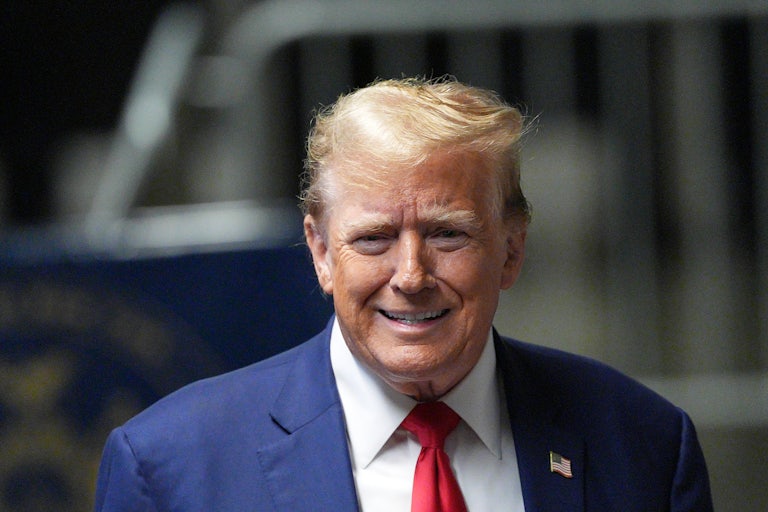
Donald Trump smiles
Curtis Means/Pool/Getty Images

If Trump wins the 2024 presidential election, Republicans and conservatives want criminals to die—literally. 

Project 2025, a coalition of conservatives and Republicans, released a document last year laying out its policy wish list for all of the government. Hidden deep within the playbook, on page 554, is a plan to execute every inmate on federal death row—and add more criminals to it with the help of the Supreme Court, HuffPost reported Friday. 

Right now, there’s a federal moratorium on executions that was restored shortly after Biden’s election. The Trump administration had ended it in 2019 with the first federal execution in nearly 13 years and the tacit approval of the Supreme Court. The federal government would execute 13 inmates before Trump’s term ended, the most in a single year since 1896. Now it seems the rest of the GOP plans to pick up where the Trump administration left off. 

The next administration should “do everything possible to obtain finality” for every prisoner on federal death row, which currently includes 40 people, says the plan, written by Gene Hamilton,  a former official in Trump’s Department of Justice and the Department of Homeland Security.

“It should also pursue the death penalty for applicable crimes—particularly heinous crimes involving violence and sexual abuse of children—until Congress says otherwise through legislation,” Hamilton continues, writing in a footnote that this could require a new Supreme Court ruling, “but the [Justice Department] should place a priority on doing so.”

It’s unclear if Trump will strictly abide by this conservative playbook. The fact that he has trouble articulating his plans coherently suggests that it’ll be up to the people he surrounds himself with. If he appoints Cabinet members who are longtime Republican operatives, or even hard-right advisers such as Stephen Miller, it seems likely. 

Here’s Why Trump Keeps Changing His Opinion About TikTok

Allies of the Republican presidential nominee are increasingly involved with the Chinese media industry.

The TikTok logo
Silas Stein/picture alliance/Getty Images

Donald Trump is—once again—trying to backpedal on his opinions about TikTok.

The presumed GOP presidential nominee is trying to argue that it wasn’t conservatives who originally pushed to ban the popular social media platform, but rather President Joe Biden.

“Just so everyone knows, especially the young people, Crooked Joe Biden is responsible for banning TikTok,” Trump wrote on Truth Social, before cooking up a novel conspiracy that Biden is removing American access to the platform in a bid to help one of its social media rivals, Facebook.

“He is the one pushing it to close, and doing it to help his friends over at Facebook become richer and more dominant, and able to continue to fight, perhaps illegally, the Republican Party. It’s called ELECTION INTERFERENCE,” Trump said.

It’s at least the third instance in which Trump has conveniently forgotten how hard he fought during his own administration to ban the Chinese-owned app. Long before Biden signed the effective ban—which is purportedly about national security—into law, Trump attempted to eradicate TikTok via an executive order before he left office in 2020. He claimed that the video-sharing platform “[threatened] the national security, foreign policy, and economy of the United States.”

And the flipped script comes at an opportune moment for the presidential candidate. Major Republican donor Jeff Yass, whom Trump appears to be courting, reportedly owns a 15 percent stake in TikTok. Trump’s former campaign manager Paul Manafort, who is reportedly trying to rejoin Trump’s team, has new business ties to the Chinese media industry.

Another of Trump’s allies, former Treasury Secretary Steven Mnuchin, revealed his own plans to acquire the social media company via an investor group just a day after the ban passed with overwhelming bipartisan support in the House.

“I think the legislation should pass, and I think it should be sold,” Mnuchin told CNBC in March. “It’s a great business, and I’m going to put together a group to buy TikTok.”

ByteDance announced shortly after Biden signed the ban—which gave TikTok an ultimatum to either sell its I.P. to an American owner or stop operating within the U.S.—that the company doesn’t “have any plans to sell.”

Read more about Trump's shifting support:

Virginia Schools Stop Virtue Signaling, Bring Back Confederate Names

The Shenandoah County school board voted to reinstate the Confederate names of its schools.

A statue of Stonewall Jackson in Charlottesville, Virginia
Ryan M. Kelly/AFP/Getty Images
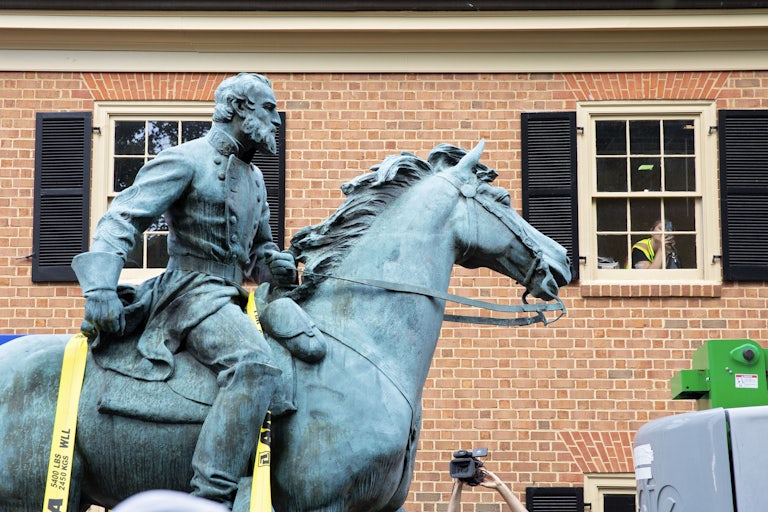
A statue of Confederate General Stonewall Jackson, whose name will be reinstated on a high school in Quicksburg, Virginia

After removing Confederate names from two of its public schools during the summer of 2020, a rural Virginia county has become the first school district in the country to reverse such a change.

Shenandoah County’s school board voted early Friday morning to reinstate the names of three Confederate officers on two schools, after a meeting that lasted for hours prompted by years of pushback, The New York Times reported. According to the Times, school board meetings were filled with local residents who said the name changes were secretive and rushed through and said they resented cultural shifts being forced upon them.

Four years ago, during protests against racial injustice across the country, the board voted 5–1 in a virtual meeting to change the names of Ashby-Lee Elementary and Stonewall Jackson High. The schools were renamed the next year as Honey Run and Mountain View. But backlash in the county, which is 90 percent white, led to a revote in 2022 that resulted in a tie.

“When you read about [Stonewall Jackson]—who he was, what he stood for, his character, his loyalty, his leadership, how Godly a man he was—those standards that he had were much higher than any leadership of the school system in 2020,” Tom Streett, one of the board members, said Friday before he and the rest of the board voted 5–1 to restore the names.

The protests across the United States during the summer of 2020 against racial injustice resulted in changes ranging from new school curricula about the country’s racial history to name changes such as those in Shenandoah County. In the years since, though, the right wing has pushed back on any changes to the pre-2020 status quo, from denying that systematic racism exists to inventing the specter of “critical race theory” to prevent any mention of racism in schools or school policy, even winning school board elections on the premise. The result has been a decimation of public education in America.