Breaking News
Breaking News
from Washington and beyond

Ron DeSantis Booed at Vigil for Victims of Racist Shooting in Florida

What exactly did the Florida governor think was going to happen here?

Ron DeSantis
SERGIO FLORES/AFP/Getty Images

Florida Governor Ron DeSantis was loudly booed while at a weekend vigil for victims of a racist mass shooting in Jacksonville.

A white man opened fire in a Dollar General store in a predominantly Black neighborhood on Saturday, killing three people, all of whom were Black. The shooter, who then killed himself, used a Glock handgun and an AR-15 semiautomatic rifle, at least one of which was painted with a swastika. Jacksonville Sheriff T.K. Waters said the shooter “hated Black people” and acted alone.

DeSantis attended a vigil Sunday night. But when he tried to give a speech, the crowd began booing him so loudly that he was drowned out. Some people also shouted “Black Lives Matter!” and “Black history matters!” This was a reference to DeSantis’s administration blocking an AP African American Studies course and rewriting the state’s Black history curriculum, which now requires teachers to tell students that enslaved people learned valuable skills from slavery.

Jacksonville Councilwoman Ju’Coby Pittman stepped in and told the crowd to stop, saying, “It ain’t about parties today. A bullet don’t know a party.”

But the boos for DeSantis are understandable. In addition to his attacks on Black history, the governor has signed multiple bills this year that make it easier for people to access firearms. In April, DeSantis signed a law that would allow people to carry concealed loaded guns without any permits, training, or background checks. A month later, he signed a law preventing credit card companies from tracking firearm and ammunition sales, making it harder to track suspicious weapons purchases.
“Rich Men North of Richmond” Singer Says It’s Ironic His Song Was Played at GOP Debate

Oliver Anthony singer says he wrote the song for the very people on that stage.

Screenshot/YouTube

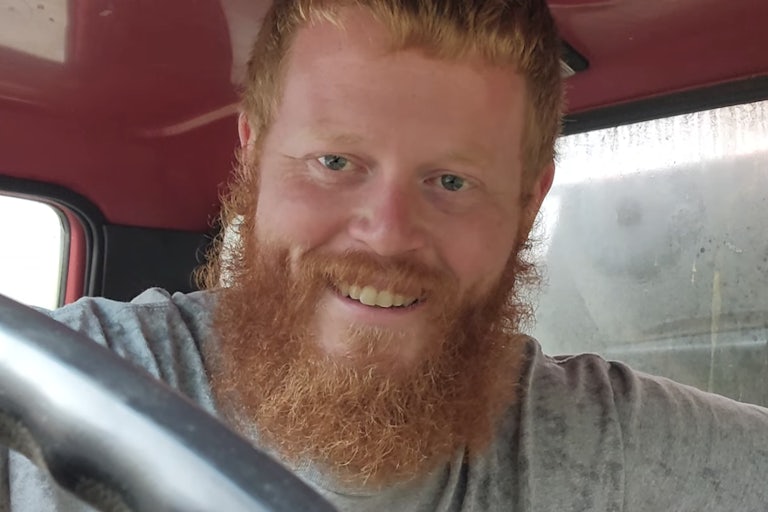
The first Republican presidential debate started on an odd note—literally—when the moderators played a song called “Rich Men North of Richmond” for the candidates. The singer and songwriter, Oliver Anthony, thinks it’s extra weird they used his song.

“I wrote that song about those people,” he said in a YouTube video posted Friday, referring to the candidates. “It’s aggravating seeing people on conservative news trying to identify with me like I’m one of them.”

He also addressed how many conservatives have embraced the song as a new right-wing protest anthem. “The one thing has bothered me is seeing people wrap politics up in this,” he said. “It’s aggravating to see certain musicians and politicians act like we’re buddies, like we’re fighting the same struggle here.”

As of Friday, “Rich Men North of Richmond” is number one on the Billboard Hot 100 music chart. The song decries the rich and powerful who exploit working classes.

Despite Anthony’s protests, the debate moderators, Fox News anchors Brett Baier and Martha MacCallum, told Politico Friday they got his permission to use the song.

The song also does have a vein of QAnon conspiracy theory running through it, as well as extremist political undertones. In “Rich Men North of Richmond” and in other songs of his, Anthony appears to embrace popular conservative talking points and conspiracies.

In one line of “Rich Men North of Richmond,” Anthony judges the grocery purchases of overweight “welfare queens.” He also makes references to human trafficking and people taking advantage of children, a clear reference to the QAnon conspiracy theory that Democrats and Hollywood elites run a global sex trafficking ring. And in another song, released Wednesday, Anthony says the U.S. is on the cusp of a new world war—something to which right-wing leaders have also alluded.

Companies That Try to Union-Bust Will Be Forced to Recognize Union, NLRB Says

The National Labor Relations Board just made it a whole lot harder to union-bust.

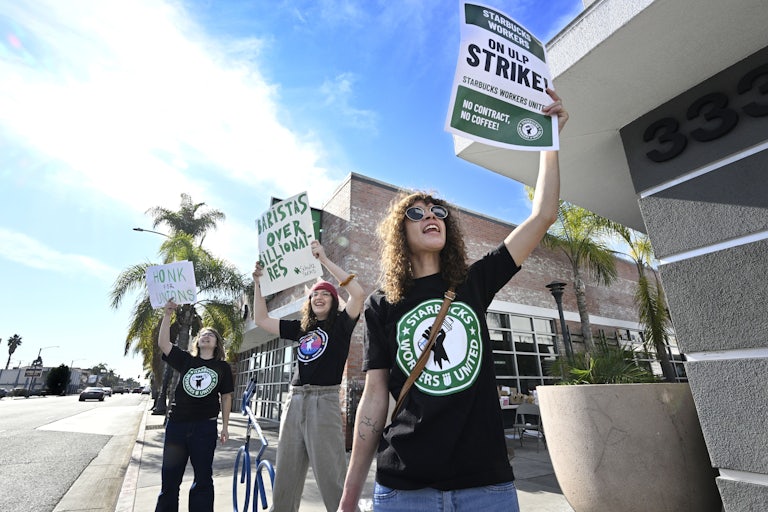
Starbucks workers protest with signs that read "Baristas over billionaires," "Honk for Unions," and "Starbucks Workers on ULP Strike."
Brittany Murray/MediaNews Group/Long Beach Press-Telegram/Getty Images

The National Labor Relations Board issued new rules Friday that will make it easier for workers to form unions—and much more difficult for companies to stop them.

The new unionization process framework is part of a decision in a case between Cemex Construction Materials Pacific and the International Brotherhood of Teamsters. If a majority of workers ask a company to recognize their union, under the new rules, the company must now immediately either recognize the union or petition the NLRB to hold a union election.

However, if an employer who seeks an election commits any unfair labor practice that would require setting aside the election, the petition will be dismissed, and—rather than re-running the election—the Board will order the employer to recognize and bargain with the union,” the NLRB said in a statement announcing the ruling.

Essentially, if a company tries to union-bust, it will instead be forced to automatically recognize the union and start negotiating with them.

“The Cemex decision reaffirms that elections are not the only appropriate path for seeking union representation, while also ensuring that, when elections take place, they occur in a fair election environment,” NLRB Chair Lauren McFerran said in the statement. “An employer is free to use the Board’s election procedure, but is never free to abuse it—it’s as simple as that.”

The decision comes near the end of a banner season for workers’ rights. Earlier this week, Teamsters ratified a historic contract with UPS. The so-called “hot labor summer” has also seen Trader Joe’s workers, Alamo Drafthouse Cinema employees, and students and interns start to unionize. Screenwriters and actors who are members of SAG-AFTRA have been on a historic strike for months.

Ohio Republicans Sneak in Sinister Change to Abortion Ballot Language

Republicans are betting their fearmongering will work when people read the new ballot language at the polls.

Justin Merriman/Getty Images
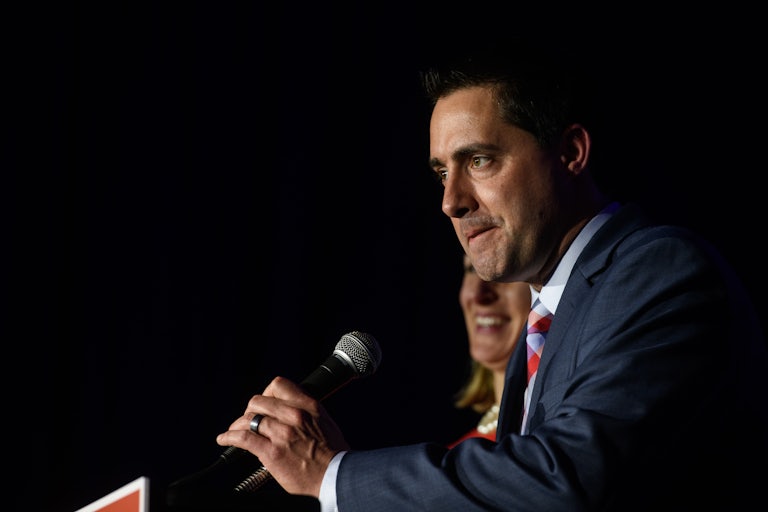
Ohio Secretary of State Frank LaRose

Ohio Republicans are trying once more to thwart an amendment that would enshrine abortion rights in the state constitution, this time by amending the ballot initiative language to be more extreme.

The Ohio Ballot Board voted 32, along party lines, on Thursday to reject using the full text of the proposed amendment on the ballot in November. Instead, the ballot will have a summary of the proposal written by Republican Secretary of State Frank LaRose, using language such as “unborn child” instead of “fetus.” The summary also removes all mention that the amendment would protect non-abortion forms of reproductive health.

The full text of the amendment has not changed. The amendment would allow people to decide for themselves about all reproductive health, including abortion, contraception, fertility treatments, and miscarriage treatment. The state could only restrict abortion access after a doctor determines the fetus is viable or could survive outside the uterus. Even then, abortions can be performed if the patient’s health or life is at risk. The text also explicitly states that the state cannot “burden, penalize, prohibit, interfere with, or discriminate against” someone exercising their reproductive rights.

Still, the summary language is sure to sway some people at the polls. In addition to replacing the word “fetus” with “unborn child,” the summary also uses the phrase “pregnant person” instead of “pregnant woman” and refers to the procedures as “medical treatment” instead of a “decision.”

The new text makes two other crucial changes: First, it says that “citizens of the State of Ohio” cannot infringe upon reproductive rights, instead of the state, making it appear as if state officials could still intervene. The summary also says the amendment will “always allow an unborn child to be aborted at any stage of pregnancy, regardless of viability if, in the treating physician’s determination, the abortion is necessary to protect the pregnant woman’s life or health.” In doing so, the summary invokes the right-wing bogeyman of “late-term abortions,” a term designed to make it seem that pro-choice policies border on infanticide.

These changes are a clear attempt to make the amendment seem far more extreme and dangerous than it actually is. LaRose said the full amendment text will still be available at election boards and on posters at voting stations, but people will need to know to look or ask for this extra information. All they’ll have in the actual voting booth is LaRose’s summary.

Lauren Blauvelt, co-chair of Ohioans United for Reproductive Rights, slammed the summary as “propaganda.” Even one of the Republican Ballot Board members, anti-abortion Senator Theresa Garavone, warned that the amendment’s true nature would now be “hidden behind overly broad language.”

But Blauvelt was confident that the pro-choice side would prevail in November. She may well be right. Republicans have already tried once—and failed spectacularly—to block the abortion amendment. Ohio voters in early August overwhelmingly rejected an amendment to raise the threshold for ballot initiatives to 60 percent of votes, which would have paved the way for minority rule in the state. What’s more, A USA Today Network/Suffolk University poll released in July found that 58 percent of Ohioans support enshrining abortion rights, while just 32 percent oppose it.

Poll: Most Americans Want Trump to Stand Trial Before Election

Most people—including independents—want a trial before November 2024. That’s just more bad news for Trump.

Joe Raedle/Getty Images

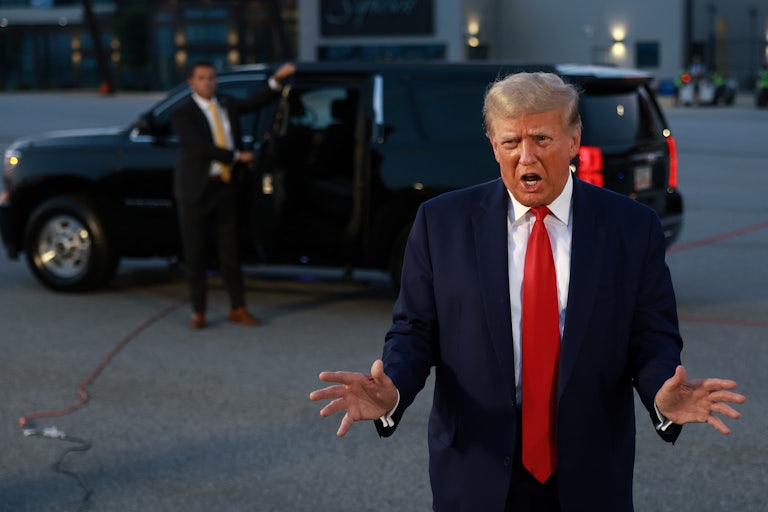
An overwhelming majority of Americans believe Donald Trump should stand trial before the 2024 election, according to a new Politico Magazine/Ipsos poll published Friday.

Roughly three in five people, or 61 percent of poll respondents, think the federal trial on Trump’s attempt to overthrow the 2020 election should take place before the general election in November 2024.

The poll, which surveyed 1,032 Democratic, Republican, and independent adults, is more bad news for the Republican Party’s front-runner. Trump has thus far spun his indictments as a “witch hunt” and painted himself a victim, not a perpetrator. 

In the new poll, nearly 90 percent of Democrats want an early trial date for Trump, while a third of Republicans agree. But what’s really damning are the responses from independents, a group Trump sorely needs to secure the presidency.

Sixty-three percent of independents said Trump should stand trial before the general election, a sharp increase from the 48 percent who responded to a similar question Politico/Ipsos asked in June, following Trump’s indictment in the classified documents case. This shows that independent voters are taking Trump’s attempt to overturn the 2020 election quite seriously.

There are other damning numbers for Trump as well. The poll found that a majority of Americans believe that the federal 2020 election subversion case was based on a fair evaluation of the evidence, including 64 percent of independents. Additionally, roughly one-third of independents said that a conviction in the Department of Justice’s election case would make them less likely to support Trump.

The poll also showed that about half of the country (51 percent) believes Trump is guilty in both the Justice Department’s case on the 2020 election and the case out of Fulton County, Georgia, on overturning that state’s election results. A slightly higher 52 percent of respondents believe Trump is guilty in the Justice Department’s classified documents case.