Breaking News
Breaking News
from Washington and beyond

Elon Musk’s Twitter Poll Results Are In: The People Don’t Want Him as CEO

Musk asked in a Twitter poll if he should step down as CEO. People overwhelmingly said “yes.”

Nathan Stirk/Getty Images

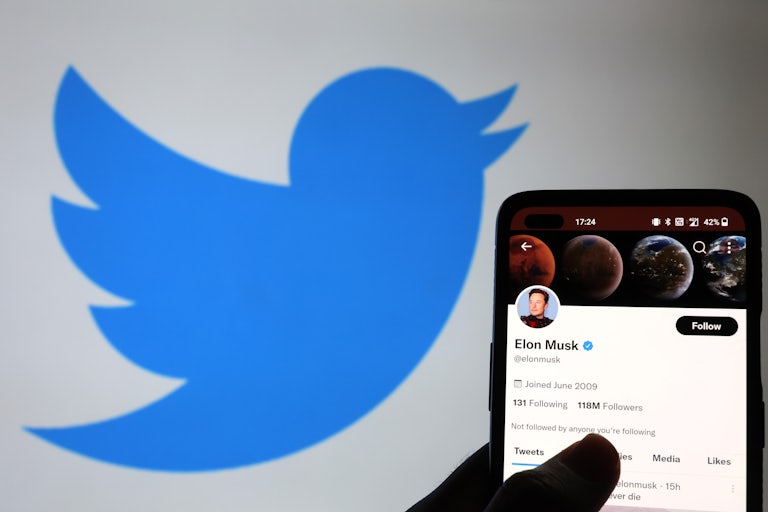
Since taking over Twitter, Elon Musk has made a habit of governing by poll. But he may wish he had held off on the latest one.

Musk asked his followers Sunday night if he should step down as head of Twitter, promising to “abide by the results” of the poll. The poll closed Monday morning, and the results are clear: More than 17.5 million people voted, with 57.5 percent saying “yes” and only 42.5 percent saying “no.”

Musk’s purchase of Twitter in late October has been rocky, to say the very least, and many analysts assumed the deal started as a joke that then went too far. It’s been rumored that Musk never wanted to take the company’s reins in the first place and has been looking for a way out.

Since taking over, Musk has fired almost all of the top executives and the entire board of directors, as well as nearly half the company’s workforce. Many other employees have quit. Advertisers have left the platform in droves due to Twitter’s increasingly lax content moderation rules.

Meanwhile, hate speech has flourished and Nazis are being allowed back on the platform. Musk seems to be governing by whim rather than following a business plan.

It’s gotten so bad that Massachusetts Senator Elizabeth Warren sent a letter over the weekend to the board chair of Tesla, which Musk founded, questioning whether he was qualified to continue leading the electric vehicle company.

In her letter, Warren cited reports that Musk had improperly reallocated Tesla funds and employees to Twitter to keep the social media platform afloat, and warned that he could have Tesla overpay for advertising space on Twitter to fill the void left by other companies.

And on Friday, the European Union threatened to impose sanctions on Twitter after Musk suspended multiple journalists’ accounts.

Unfortunately More on Elon

Congress Has Days to Prove Whether It Cares About Afghans

The Afghan Adjustment Act would help tens of thousands of Afghans who remain in legal limbo. And the deadline for Congress to pass it is coming up.

Bonnie Jo Mount/The Washington Post/Getty Images
Veteran James Powers talks with young Afghan refugees during an event promoting the Afghan Adjustment Act on October 23, in Billlings, Montana.

As the government scrambles to put together final touches on a bill to fund the government, the fate of countless Afghans hangs in the balance.

Tens of thousands of Afghan evacuees residing in the United States remain in limbo, without a certain path to permanent residency. Even more Afghan allies have been left behind since the U.S. military withdrawal last August.

Advocates have spent the better part of about a year and a half lobbying for the Afghan Adjustment Act, a bill that would expand the special immigration visa program to include previously omitted groups of people who aided the U.S. military, establish pathways to resettle allies still trapped in Afghanistan, and provide a pathway to permanent legal residency for the tens of thousands of evacuees now in the U.S. Advocates now seek to attach the bill to the government’s omnibus spending package.

The bill boasts bipartisan support in both chambers of Congress but has stalled for months, to much-warranted frustration. “Afghans have been let down by the entirety of this war,” said Arash Azizzada, co-founder of Afghans for a Better Tomorrow.

It took one year for Congress to even introduce the Afghan Adjustment Act, but it was produced promisingly, with bipartisan support out of the gate. But five months later, Congress has not included the bill in the continuing resolution or the defense spending bill, nor has it just passed the bill on its own. Even before the act was a standalone bill, advocates lobbied Congress to attach the measures to a May Ukraine-focused spending bill to no avail.

Despite bipartisan support in both chambers, the bill still falls short of a guaranteed filibuster-proof majority. This week, The Wall Street Journal editorial board endorsed the bill, and numerous other senators came out in support of the act: Republicans Roger Wicker and Jerry Moran and Democrats Patrick Leahy and Jeanne Shaheen. All this signals the last-second momentum that could perhaps finally push the legislation over the top—not a moment too soon.

On Thursday, the Senate passed another one-week continuing resolution to keep the government afloat through December 23. Final spending allocations for the government omnibus are said to be unveiled as soon as Monday.

“If there’s a failure to keep the promise to Afghans, it will be a bipartisan failure. Both parties own what comes next,” said Azizzada.

January 6 Panel Considering at Least Three Criminal Charges Against Trump, Including Insurrection

The January 6 committee will soon vote on recommending the charges to the Department of Justice.

Joe Raedle/Getty Images

The House select committee investigating the January 6 attack on the Capitol will vote Monday on whether to recommend three criminal charges against former President Donald Trump to the Department of Justice.

According to Politico, the panel will be considering a report from a subcommittee that recommended at least three possible charges against Trump: insurrection, obstruction of an official proceeding, and conspiracy to defraud the United States government.

The panel could conceivably recommend other charges as well, but there is no indication one way or the other for the time being.

Monday’s decisions follow the continual crime circus surrounding and trailing Trump. Earlier this month, Trump’s namesake organization was found guilty on numerous charges of tax fraud and related crimes connected to a 15-year scheme that gave top executives off-the-books lavish perks, enabling them to evade taxes.

Congress legally can’t force the Justice Department to pursue prosecutions, but the department has ramped up its own investigations into the former president. Trump is also still under investigation for seizing classified documents after he left the White House.

Meanwhile, the New York attorney general is also pursuing a $250 million civil lawsuit into whether Trump’s asset valuation statements were indicative of fraud. Among financial penalties, Trump and his family could be barred from leading business operations in New York ever again.

Even Trump’s Allies Think His NFTs Are Dumb: “I Can’t Take This Anymore”

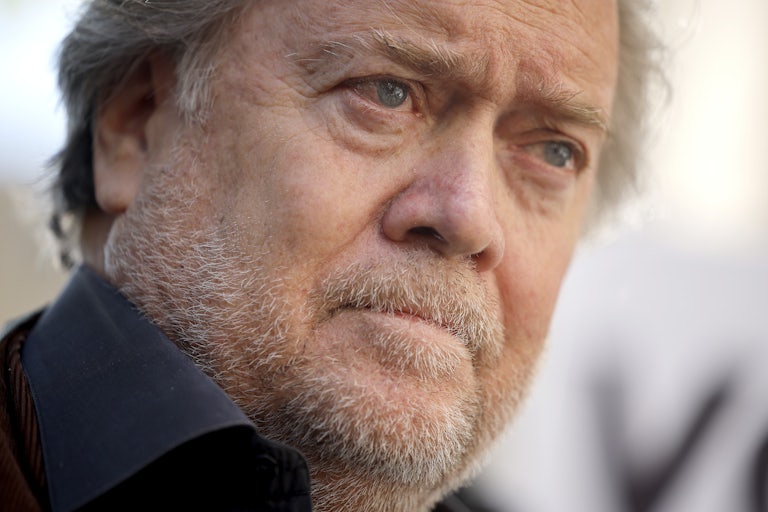
Steve Bannon, Sebastian Gorka, and Steve Cortes, all former Trump advisers, criticized the NFT announcement.

Chip Somodevilla/Getty Images

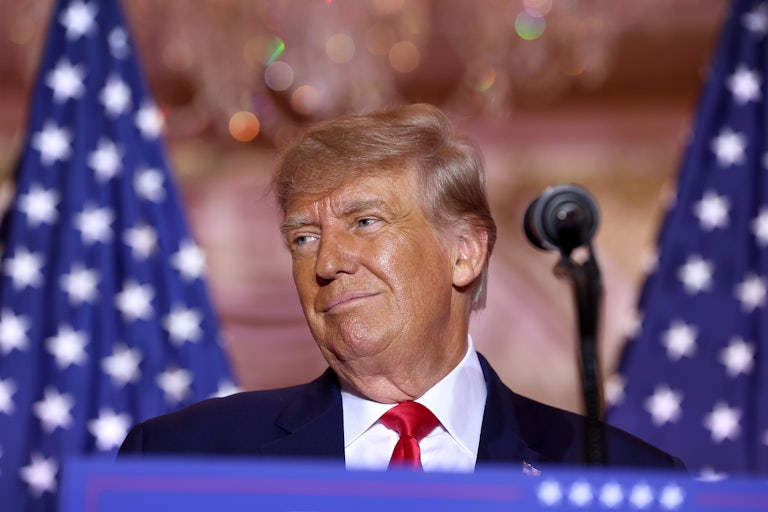
After former President Donald Trump announced his latest venture into NFTs in a very odd grade-school-styled infomercial, many across all the political spectrum have been clowning the former president’s new pursuit.

Trump wasn’t even safe from his most stringent fans: his ever-loyal former advisers.

On his show The War Room, former chief strategist Steve Bannon led a discussion with former Trump operatives Steve Cortes and Sebastian Gorka on the announcement. “I can’t do this anymore,” Bannon started.

Bannon insisted Trump is “one of the greatest presidents in history,” and that he still loves the people working for Trump, but urged that whoever signed off on Trump’s NFTs project be fired (assuming Trump himself didn’t gun for it).

“We’re at war. They ought to be fired today,” Bannon asserted. “And hey, you don’t have three harder-corers than Cortes, Bannon, and Seb Gorka.”

Gorka echoed Bannon, saying that “whoever wrote that pitch should be fired” before continuing that “I don’t want them making the presidential napkins for Mar-a-Lago.”

Gorka continued on his tirade, describing Trump in kingly terms. “The president’s war chest is pretty strong right now. We’ve got two years until the actual, you know, inauguration.”

“We don’t have time to waste. If you want to do this kind of stuff, have a peon do it—get somebody who’s recognized in the MAGA world to put their face to this thing and do it,” Gorka said, as if he and his company were all not themselves simply playthings and tools at Trump’s disposal.

Trump’s allies notably avoided assigning any real culpability to Trump. In the same breath they hail Trump as the best (and presumably brightest and strongest and maybe even handsomest) president ever, so too do they suppose his NFT project is a recommendation from nameless aides or advisers rather than the man himself.

If the NFTs really were Trump’s idea, it’s hard to imagine him being pleased by his most loyal minions saying the idea is so bad that it warrants getting “fired.”

EU Threatens Sanctions After Twitter Bans Journalists: “There Are Red Lines”

After Elon Musk’s Twitter banned several journalists, the European Union is threatening to introduce sanctions.

Nathan Stirk/Getty Images

Spending his Thursday banning accounts he didn’t like, lying about why, and tweeting more cry-laughing emojis in response to users who support him, it was just another day for Elon Musk.

And just another day for Musk means another case of legal trouble. On Friday, Věra Jourová, the European Commission’s vice president for values and transparency, put Musk on notice for his suspensions of journalists, warning that “there are red lines. And sanctions, soon.”

The warning comes after Musk on Thursday banned several journalists for an unclear new standard against doxxing (one that doesn’t seem concerned with, for example, LibsOfTikTok targeting schools, teachers, individuals, and children’s hospitals).

On Wednesday, Twitter had suspended @elonjet, an account tracking Musk’s private jet.

Musk accused the banned journalists, most of whom were reporting on this news, of “doxxing” him, or using private information to identify his real-time location.

“As I’m sure everyone who’s been doxxed would agree, showing real-time information about somebody’s location is inappropriate, and I think everyone on this call would not like that to be done to them,” Musk said on a live Twitter Space call hosting tens of thousands of listeners Thursday night.

Musk has muddied the waters on this supposed doxxing standard, as those who reported on the @elonjet story were not explicitly sharing any real-time location data on Musk, nor is the location of a private jet necessarily connected to an individual’s “real-time” location.

The Space was hosted by a handful of journalists, including now-banned Drew Harwell of The Washington Post. After Harwell pointed out that he never shared Musk’s real-time location, so it’s not clear why he was banned, Musk abruptly left the Twitter Space.

Soon thereafter, Musk nuked the Twitter Spaces feature entirely, cutting off the conversation journalists were having about his action. (Musk claimed it was just in response to a “Legacy bug,” and that it “should be working” Friday.)

All the while, Musk faces numerous other self-imposed legal problems. Musk has garnered a San Francisco city complaint after he allegedly turned office space into bedrooms. He faces numerous class-action lawsuits related to mistreatment and haphazard layoffs of employees.

Outside of Twitter, Musk’s medical device company Neuralink is under investigation for vicious animal abuse, and Tesla is under criminal investigation over the company’s “self-driving” cars that keep crashing.