Life in a Warming World
A weekly reckoning with our heated planet—and the fight to save it

The V.P. Candidates’ Terrible Responses to Hurricane Helene

One thing that needs to be said about this week's debate: Answers that bad, about devastation that severe, should be a scandal.

Vance speaks as Walz listens.
Bloomberg/Getty Images
Senator JD Vance and Minnesota Governor Tim Walz at the vice presidential debate

In Tuesday night’s vice presidential debate, moderator Norah O’Donnell asked JD Vance about the death toll from Hurricane Helene, while referring to the research showing that climate change intensifies the rainfall from these storms. “What responsibility,” she asked, “would the Trump administration have to try and reduce the impact of climate change?”

Vance, after expressing horror over the loss of life, moved on to what one might charitably call the substance of his response: If, “just for the sake of argument,” he said, carbon emissions really were driving climate change, the goal should be “to reshore as much American manufacturing as possible, and you’d want to produce as much energy as possible in the United States of America because we’re the cleanest economy in the world.” (We are not.)

Tim Walz responded by saying that “my farmers know climate change is real,” but then he too shifted his focus to American manufacturing, citing “the E.V. technology that we invented,” “the largest solar manufacturing plant in North America,” and “jobs all across the country” created by the Inflation Reduction Act. When O’Donnell followed up by asking about Trump calling climate change a hoax, Vance pivoted again to the need to make solar panels in the U.S., not China; Walz touted record oil and gas production.

Of the swing voters who participated in The Washington Post’s focus group, 13 thought Vance had the better answer, while only nine thought Walz did.

TNR’s Kate Aronoff has written previously about the strange difficulty that Democrats have demonstrated in crafting a compelling narrative around climate change and climate policy. The presidential debate between Kamala Harris and Trump, she wrote, “should be a cautionary tale for how stupid and dangerous it is for Democrats to keep taking on Republicans’ talking points as their own.”

And the horrifying reality of Hurricane Helene, she wrote earlier this week, exposes the moral insufficiency of portraying global warming as primarily a narrative about American manufacturing: “Next to images of entire downtown areas half-submerged in floodwaters, or homes moving faster than a river tube, touting the administration’s successful boost of the construction of manufacturing facilities rings hollow,” Kate wrote. “Framing climate action primarily as a good-news story in which the U.S. will come to dominate green export sectors overlooks the very real pocketbook struggles the climate crisis is already causing.”

Researchers at Lawrence Berkeley National Laboratory have already estimated that climate change “caused over 50 percent more rainfall during Hurricane Helene in some parts of Georgia and the Carolinas,” due to laws of physics dictating that warmer air holds more water vapor. Before Helene made landfall, the storm traveled over Gulf waters that were significantly warmer than average. And this is part of a broader trend. As Inside Climate News reported this week, “The amount of rain in the most intense rainstorms has increased 37 percent in the Southeast since 1958.”

In the past few days, news outlets have reported some of the stories from the communities deluged with Helene’s increased rainfall: a 75-year-old man calling for help for seven hours before falling into the floodwaters, as horrified friends and family watched; two grandparents stranded on their roof before drowning, along with with their 7-year-old grandchild; a mother and her 1-month-old twin boys killed by a tree falling on their mobile home. There was an American manufacturing angle in there as well: the factory employees who were left holding onto pipes on the back of a truck that eventually flipped, leaving them to the mercies of the raging floods. One of the workers is confirmed dead; another told reporters their managers ordered them to keep working as the waters rose.

Over 160 people have now been confirmed dead. Millions are without power, and at least 400,000 people have seen their water systems fail and are now without potable water except for what is being distributed by relief teams—the true number is likely higher, since 1,293 water systems are either “non-operational,” only semi-operational, or of unknown status, according to the Environmental Protection Agency. Restoring water access in Asheville, North Carolina, could take “weeks.”

The question of what responsibility politicians have to address this devastation and prevent it in the future can be answered many ways. Congress could cancel its long recess and return to Washington to pass the supplemental disaster funding it left out of a bill last week. Policymakers could start rethinking home insurance as the first line of defense in these disasters: Most of the homes affected by Helene didn’t have flood insurance because it’s not included in regular home insurance. Moreover, the insurance industry doesn’t have the best track record in states feeling the effects of climate change, such as California and Florida, where premiums are rising. Some insurers have simply abandoned these states altogether.

Major infrastructure investments could make communities more resilient in the future, and as these severe weather events become more common, we also might want to make sure that people affected by them aren’t disenfranchised because of difficulties voting in the aftermath of these disasters. Then there’s the underlying problem: Unless the world starts burning fewer fossil fuels, this will only get worse.

But that’s not what people heard Tuesday night in the vice presidential debate. Instead, the vice presidential candidates argued about who would create more jobs and eat China’s lunch. If politicians can’t talk seriously about climate change even in the wake of a “biblical” disaster wiping out areas once described as “climate havens,” when will they?

Good News

The U.K.—the ultimate coal nation—has shut its last coal-fired plant, becoming the first G7 country to close the book on coal power.

Bad News

A new analysis finds that the destruction from hurricanes and tropical storms has a long tail: “Death rates in affected states remain elevated for 15 years after a storm makes landfall,” The Washington Post reports.

Stat of the Week
40 trillion

That’s how many gallons of rain dropped on the Southeastern United States in just five days, thanks to Hurricane Helene and the storm that preceded it, according to one calculation

What I’m Reading

As climate change helps mosquitoes spread disease, critics push for alternative to pesticides

As mosquito populations rise and spread, bringing West Nile and other diseases with them, a lot of areas are looking to reduce their numbers. The typical way to do that is by spraying pesticides that kill adult mosquitoes—“adulticide,” Diana Kruzman reports. But there’s reason to worry about the effects that spraying endocrine-disrupting pesticides might have on vulnerable humans like pregnant women and children, let alone the rest of the ecosystem. There could be another way, Diana Kruzman reports at Grist:

Some governments are also experimenting with releasing genetically modified mosquitoes into the wild to breed sterile offspring, reducing mosquito populations. Nanopesticides, which are less toxic to mammals but still affect mosquitoes, are also a promising area of research. However, advocates say that the most proven way to deal with mosquitoes is by reducing their ability to breed—by clearing away pools of standing water and utilizing larvicides—and educating the public to protect themselves using long clothing and repellents.

Feldman pointed to the success of programs in cities like Boulder, Colorado, and Washington, D.C., as proof that adulticides don’t need to be a major part of mosquito control efforts. The agency responsible for tracking and preventing the spread of West Nile virus in the nation’s capital, for example, does not use adulticides; instead, the D.C. Department of Health concentrates its efforts on larviciding, even handing out free larvicides for residents to apply in their own neighborhoods. Boulder, meanwhile, utilizes an explicitly “ecological” approach; boosting biodiversity, local officials have found, can lower populations of disease-carrying mosquitoes by forcing them to compete for resources with other species of mosquitoes as well as other kinds of insects.

Read Diana Kruzman’s full report at Grist.

This article first appeared in Life in a Warming World, a weekly TNR newsletter authored by deputy editor Heather Souvaine Horn. Sign up here.
How the GOP Became the Party of Pet Slaughter

What is it with Republicans and dog killing?

Kevin Roberts raises a hand while speaking
Bloomberg/Getty Images
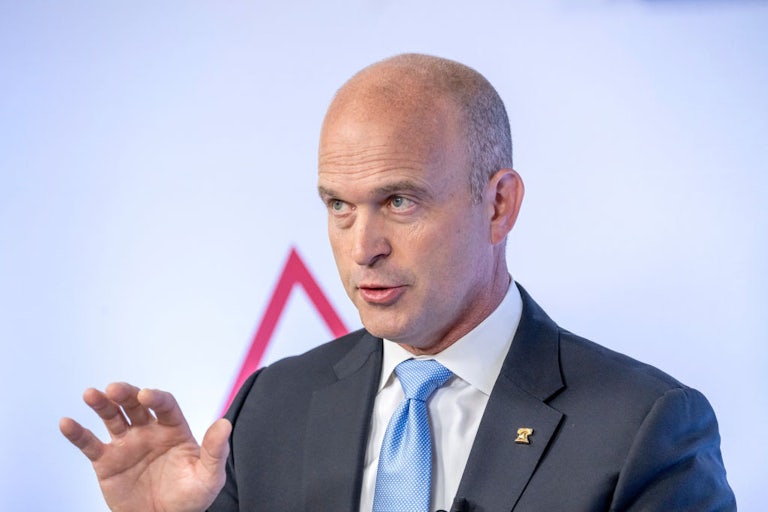
Heritage Foundation president Kevin Roberts, who denies that he killed his neighbor's dog with a shovel in 2004

Heritage Foundation president and Project 2025 architect Kevin Roberts stands accused this week of killing his neighbor’s dog with a shovel circa 2004. Three people who knew Roberts during his time at New Mexico State University told The Guardian that they remember Roberts telling them that he had killed the dog because it was barking too much. Three more people reportedly recall hearing the story at the time from those colleagues. Guardian reporter Stephanie Kirchgaessner also tracked down Roberts’s neighbor, who said that his dog, Loca—he provided a photo—indeed disappeared around 2004, when the neighbor was 16.

Killing a teenage neighbor’s pet out of irritation and then telling co-workers about it might seem like a whole new level of bizarre, even for this already surreal election cycle. Roberts, however, denies it, calling the allegation “patently untrue and baseless.” In some ways, that denial is the most unusual part of this whole story.

Had Roberts confirmed that he killed a dog, he would hardly be the only prominent conservative in recent years to treat such an act as a badge of honor. The most striking example is Kristi Noem, who stunned the country this spring by bragging in her book about shooting her 14-month-old puppy and a family goat, portraying the story as an example of her grit and fortitude. (The dog, apparently, was hard to train and killed some chickens while off leash. The goat was “mean.”) The book was widely seen as an attempt to burnish her credentials for Trump’s V.P. slot. In response to the widespread backlash, Noem dug in, insisting that these were the sorts of tough calls necessitated by country life.

The episode made for lots of late-night satire. But if you cast your memory back a bit further, you can kind of see where Noem got the idea that killing animals and boasting about it was a form of informal right-wing résumé building, akin to knocking back bourbon after work to prove you can hang with the boys.

I’m not talking about Mitt Romney—the strangely ubiquitous comparison made in news coverage of Noem’s book. Romney may have strapped his dog to the roof of his car using a windshield-equipped crate in 1983, but he did not kill his dog, nor did he intend to kill his dog, and he bristled at those comparing him to Noem—which makes sense, because Romney’s conservatism has never been the sort for which animal cruelty functions as an in-group signifier. (If Mitt Romney had killed his dog, it would have seemed incoherent and try-hard, because he’s just not cowboy-coded.)

The better example of this trend would be Montana Governor Greg Gianforte, who has repeatedly incorporated questionably legal violence into his “rugged Westerner” brand. While Gianforte first made headlines for assaulting a human reporter in 2017, he also illegally killed an underage elk in 2000, and then received a written warning in 2021 for trapping and shooting a collared Yellowstone wolf without having taken Montana’s required (and free) wolf-trapping certification course—which covers, among other things, trapping ethics. Trapping critics argue that there is no such thing as humane trapping, given that the trapped animal may suffer for hours or even days. But Gianforte campaigned on the issue, saying that “the effort to stop trapping in Montana is an attack on our heritage.”

Gianforte again made headlines in 2022 when he shot and killed a researcher-monitored mountain lion that hunting dogs had pursued up a tree. This time, the killing was legal, although there was some dispute about whether the dogs had kept the mountain lion up a tree for hours before the governor arrived to shoot it—just as there was some question, with the wolf trapping, about whether the governor had been called from far away to finish off the trapped animal.

Gianforte, whom Trump has called “my guy,” falls into a category of Republican politician that has grown more prominent over the past two decades: the hunter that even other hunters express misgivings about. In 2003, Vice President Dick Cheney participated in a so-called “canned hunt,” shooting pheasants that had been raised in captivity and then released specifically for this event. “I don’t see anything terribly wrong with it, but I don’t think it should be confused with hunting,” Sid Evans of the hunting magazine Field & Stream told The New York Times.

The Republican Party at this point was losing its animal-friendly vibe in general. While Nixon was a staunch conservationist, and George H.W. Bush banned ivory imports to protect African elephants, the younger Bush proposed reversing the ban on importing hunting trophies of endangered species into the U.S., and later named a top lobbyist for the trophy hunting organization Safari Club International as acting director of the U.S. Fish and Wildlife Service. (Bush received the organization’s “Governor of the Year” award in 2000, over the objections of the Humane Society.)

In the 2008 election, vice presidential candidate Sarah Palin’s support for aerial wolf gunning—a practice deliberately designed to give hunters the advantage and thin out wolf numbers—was denounced by animal lovers but lauded by her supporters, who loved her “frontier femmeidentity politics. After the 2008 election loss, Palin ritualistically pardoned a Thanksgiving turkey but gave an interview in front of a man decapitating the other birds. The show Sarah Palin’s Alaska routinely featured graphic footage of the governor and her family hunting and gutting animals.

Then, of course, there were the Trump children. In 2011, Donald Trump Jr. and Eric Trump traveled to Zimbabwe with a safari firm that Zimbabwean conservationists later said was not registered in the country. They killed an elephant and leopard, among other animals, posing with the dead bodies. “I AM A HUNTER I don’t hide from that,” Trump Jr. tweeted when the photos surfaced the following year. In late 2019, ProPublica reported that Trump Jr. had received “special treatment” during a trip to Mongolia, shooting an endangered argali sheep, for which he was retroactively given a permit after meeting with Mongolia’s president. (The hunting trip was later reported to have cost American taxpayers over $75,000.)

The Trump administration, incidentally, also oversaw the reversal of policies banning the imports of lion trophies into the U.S., and re-legalized controversial hunting tactics like killing wolf pups and using bait to kill bears and wolves in the Alaska wilderness—mere months after the Safari Club had auctioned off a seven-day Alaskan deer and sea-duck hunt with Trump Jr. as part of its annual convention.

This isn’t a comprehensive list, because the examples are too numerous to recount. In 2022, Trump’s former secretary of the interior, Ryan Zinke, posted a picture of himself pressing a hot cattle brand into a strapped-down calf during his congressional campaign. As Jan Dutkiewicz and Gabriel Rosenberg memorably wrote for The New Republic last year, meat eating is now so entrenched as a masculinity marker on the American right that vegetarian men minding their own business are now mockingly referred to as “soy boys.”

It wasn’t a foregone conclusion that willingness to kill animals would become a kind of right-wing purity test. In the 2012 primaries, noted animal lover Newt Gingrich attacked Mitt Romney over the dog-on-car episode. Gingrich was similarly unimpressed by Noem’s dog-killing story. Yet the Gingrich-like voices are increasingly drowned out by the Noems, or by Ron DeSantis decrying the horrors of meat that hasn’t come specifically from a dead animal.

So maybe Kevin Roberts bragged at work about killing his kid neighbor’s dog with a shovel, or maybe he didn’t. At this point in the history of American conservatism, he’s going to have a tough time convincing people to give him the benefit of the doubt.

Good News/Bad News

The Atlantic Ocean’s system of currents—which drive many of the weather patterns agriculture and ecosystems depend on—might not be quite as close to collapse as previously feared. A new study suggests that a key indicator, the Florida Current, isn’t slowing as much as researchers thought, once shifts in the earth’s magnetic field are taken into account.

The U.S. is not, contrary to President Biden’s claim at the U.N. on Tuesday, on track to cut emissions by 50 percent by 2030.

Stat of the Week
7/9

Seven of the nine “planetary boundaries” keeping life on earth stable may now have been crossed, according to the Potsdam Institute for Climate Impact Research.

What I’m Reading

In Praise of Climate Virtue Signaling

In recent years, politicians have tried to portray the climate crisis as something that can be solved without major behavioral shifts, worried about sounding preachy or alienating voters. Matt Reynolds at Wired has mixed feelings about that:

I think about this dynamic a lot when it comes to food, and particularly alternatives to beef, which has an outsized carbon footprint compared with almost any other foodstuff. A lot of people hope that making plant-based burgers cheap and tasty will be enough to switch vast numbers of meat-eaters over to the plant-based side. When I hang out at alternative protein conferences, no one wants to talk about the morals of eating meat, although I suspect that is a major motivator for many of the people there. They assume that argument won’t win over any converts to pea protein burgers or whatever.

Maybe they’re right. But I suspect that if we ignore the moral component of climate decisions, we drastically limit the whole scope of our climate ambition. It’s not that morals should make up the whole or even a significant part of our decisionmaking, and we shouldn’t expect people to be morally consistent either. Morality isn’t the whole part of the climate story, but it’s not exactly a footnote either.

Read Matt Reynolds’s full piece at Wired.

This article first appeared in Life in a Warming World, a weekly TNR newsletter authored by deputy editor Heather Souvaine Horn. Sign up here.

What If Kamala Harris Is Wrong About Voters’ Climate Views?

Voters’ preferences haven’t changed much since 2020, when Biden ran on a much more aggressively pro-climate platform. So why is Harris tacking so far to the right?

Kamala Harris at a discussion hosted by the National Association of Black Journalists in Philadelphia
Jim Watson/Getty Images
Kamala Harris at a discussion hosted by the National Association of Black Journalists in Philadelphia on Tuesday

When running for president in 2020, Joe Biden pledged to end subsidies to the fossil fuel industry, ban all new oil and gas drilling (including fracking) on public lands, spend $2 trillion on clean energy and infrastructure, and rejoin the Paris climate accord. Multiple environmental groups dubbed it the “most ambitious climate platform in history.”

In Kamala Harris’s acceptance speech at the Democratic convention last month, she mentioned climate change only once. When asked about it during the presidential debate, she responded that “I am proud that as vice president over the last four years, we have invested a trillion dollars in a clean energy economy while we have also increased domestic gas production to historic levels,” and elsewhere she bragged about being “the tie-breaking vote on the Inflation Reduction Act, which opened new leases for fracking.”

Why is Harris so much more reluctant to talk about the climate crisis than Biden was in 2020? Why is she so much more reluctant than she herself was in 2020? And why is she embracing the so-called “all of the above” approach to energy, portraying clean energy as a complement to fossil fuels rather than an eventual substitute?

One answer I’ve repeatedly seen suggested is that she’s responding to voter preferences, and voters care less about climate change in 2024 than they did in 2020. “Fewer Americans today see climate change as a ‘very serious problem’ than they did three years ago,” The Hill reported in May, based on a Monmouth University poll. “Democrats see talking about the environment as a lose-lose proposition,” The Washington Post reported in August. (And rightly so, the piece seemed to suggest, finishing with a quote from a voter who said, “The environment is not my top thing.… Sorry.”) Bill McKibben, trying to divine Harris’s climate positions after Biden withdrew from the race, acknowledged that “since most of what we know about her stands on energy and climate date from the 2020 primaries, it’s important to remember the context. We were pretty near peak-Greta … and polls were showing that the number one issue for many Democratic voters was climate change.”

But it’s not clear that voters actually do care less about climate in 2024. (It would be remarkable if they did, given that we continue to smash temperature records and severe weather records and the home insurance industry seems to be fleeing entire states now.) The Yale Program on Climate Change Communication and the George Mason University Center for Climate Change conduct some of the most comprehensive annual surveys on American public opinion on climate change. When I asked YPCCC director Anthony Leiserowitz whether he was seeing numbers suggesting people care less about climate change today than they did in 2020, he observed that, on the contrary, voters’ views on whether global warming should be a major presidential priority have “been pretty consistent among all party/ideological groups at least back to 2018/2019.”

The liberal Democrats making up the party’s base now claim global warming as their fourth-highest priority. But that’s actually not a big shift from ranking it second or third, for example, and it doesn’t seem to be because they care less. Rather, abortion (their current second-highest priority) seems to have become especially urgent for respondents after Roe was overturned, and “free and fair U.S. elections” (their top priority) likewise—presumably after Donald Trump’s attempt to overturn the 2020 election.

Have voters, then, grown more fond of drilling and fracking, in a way that would explain Harris’s shift? Also no. “In 2022,” Leiserowitz wrote to me via email, “‘energy independence’ did shoot up considerably as a voting priority, but that was almost certainly driven by spiking gas prices at the time. Its voting priority has since dropped back to 2020 levels.” The same pattern was observed in voters’ support for expanding offshore drilling or drilling on public lands. “I don’t see anything in these numbers that suggests American voters are now more supportive of ‘all of the above’ than they were in 2020,” he wrote.

So why is the Harris campaign hitting this message so conspicuously? One possibility, previously discussed in this newsletter, is that they’re playing to Pennsylvania—the state most likely to decide the 2024 election. This explanation has some intuitive appeal: Although Biden would have been eyeing Pennsylvania in 2020 as well, the Harris-Trump race in Pennsylvania is much tighter right now than it was at this time in 2020.

But there are problems with this story too. Leiserowitz pointed to a prominent New York Times report this week that suggested that low natural gas prices, not fracking policy, are the “big energy issue” in the state right now, while Pennsylvanians remain worried about fracking’s effects on groundwater.

Perhaps a more persuasive explanation for the difference between Biden 2020 and Harris 2024 has to do with primaries. Facing Bernie Sanders in the 2020 primary seemed to draw Biden leftward on climate change. Harris, by contrast, didn’t face a Democratic primary in 2024. (And notably, when she competed in the 2020 primary, she favored banning fracking.) Primaries require candidates to court the party’s base, rather than centrists and swing voters.

If part of the narrative around Harris’s silence on climate change is that voters care less than they did in 2020, the second part of the narrative is that her silence doesn’t really matter. “I am not concerned,” Governor Jay Inslee told the Times when asked about this, espousing the common view that Harris’s job right now is to beat Trump and that “when she is in a position to effect positive change, she will.” The Times also quoted Biden climate adviser Gina McCarthy saying, “Nobody’s worried about how many times she talks about climate change.”

While campaign promises don’t determine governing, they do frame the window through which the governing is evaluated. Biden ultimately retreated from several of his climate campaign promises, but the fact that he had promised to end drilling on federal lands was part of why his administration’s lease auctions and speedy approval of drilling permits got as much attention as they did. Should Harris win in November, there won’t be any such climate pledges to hold her to.

The Harris camp may consider that a plus, of course. But it could cause problems down the road: As TNR’s Kate Aronoff has repeatedly observed, Democrats have struggled to tell a compelling story about climate change and the policies that could ameliorate it. That makes it hard, she writes, for them either to win big in elections or to build support for their climate policies. At some point, party leaders will have to start drafting and testing a better strategy—and given climate scientists’ increasingly frantic warnings these days, sooner would be better than later.

Good News/Bad News

Bill McKibben interviews an analyst from Sustainable Energy Africa for his newsletter “The Crucial Years,” and concludes that solar panel adoption in the developing world may quietly be skyrocketing due to how cheap the panels have gotten.

Inside Climate News reports on NASA’s effort to “revive” commercial supersonic air travel, despite projections that the supersonic planes would burn anywhere between three and 10 times as much fuel as conventional planes.

Stat of the Week
662%

That’s how much higher the emissions from Big Tech’s data centers likely are than officially reported, according to new analysis by The Guardian.

What I’m Reading

These states tried, and failed, to cut food waste. One succeeded.

Food waste accounts for half of all food-system greenhouse gas emissions globally, according to the U.N., and in the U.S. emits the equivalent of 50 million cars on the road per year. California, Connecticut, Rhode Island, Vermont, and Massachusetts were the first five states to pass laws tackling food waste. But of those, only Massachusetts’s law worked, according to a new study. The Post’s Anna Phillips explains why:

The study identified several factors that could explain Massachusetts’ success.

First, the state had built the most extensive network of food-waste-composting sites, making it relatively simple and affordable for businesses to divert food from landfills and incinerators. Massachusetts’ law had no special exemptions and was easy for business owners to understand. Massachusetts also increased the cost of not following the rules and had conducted the most compliance checks.

“By contrast, there is almost no enforcement in other states,” the study’s authors wrote. The effect of [the] other four bans, or lack of effect, “suggests widespread noncompliance with US food waste bans—i.e., that food waste is still being landfilled despite the bans,” they wrote.

Read Anna Phillips’s full report at The Washington Post.

This article first appeared in Life in a Warming World, a weekly TNR newsletter authored by deputy editor Heather Souvaine Horn. Sign up here.

Is Keeping Quiet on Climate Really Harris’s Only Option?

The emerging Democratic consensus is that talking about climate policy is a bad bet for winning the election. Then again, Democratic consensus has been wrong before.

This zoomed-out shot shows the convention all with thousands of attendees, Kamala Harris on stage, and video of her projected above.
Al Drago/Bloomberg/Getty Images
U.S. Vice President Kamala Harris during the Democratic National Convention in Chicago on August 22

In her speech accepting the Democratic nomination for president last week, Kamala Harris gave the biggest existential crisis of our lifetimes roughly the same amount of time as a recollection of her parents playing Miles Davis: She mentioned it exactly once. In fact, it didn’t even get its own sentence. “The freedom to breathe clean air, and drink clean water and live free from the pollution that fuels the climate crisis” (emphasis added) was listed among many other “fundamental freedoms” under threat in the 2024 election.

Media outlets have been noticing this tendency of the Harris campaign—and they’ve also been reporting that this strategy might be fine, actually.

“Harris Goes Light on Climate Policy. Green Leaders Are OK With That,” read a New York Times headline on a story in which Washington Governor Jay Inslee says, “I am totally confident that when she is in a position to effect positive change, she will.” In other words: Harris needs to win first. Winning, so the wisdom goes, means not alienating swing voters with too much fracking talk. Politico, meanwhile, noted that climate activists who have protested the Biden administration’s drilling record “are pursuing a new strategy with his would-be successor: Get Kamala Harris elected now, ask questions later.”

“Democrats see talking about the environment as a lose-lose proposition,” reported Maxine Joselow for The Washington Post. “If they call for curbing fossil fuel production to fight global warming, they risk alienating voters in Pennsylvania, a pivotal swing state where natural gas powers the economy. But if they tout record U.S. oil production that has helped lower energy costs, they risk angering young voters.” While climate policy polls well, Joselow wrote, “of 28 issues, global warming ranks 19th in importance to registered voters.” The piece concludes with a Philadelphia woman saying to canvassers from the Environmental Voter Project: “The environment is not my top thing … sorry.”

Is it true that Harris needs to keep quiet about climate and environmental policy in order to win? Honestly, who’s to say? Some polls have indeed found that voters are less concerned about the climate now than they were in 2020—a bonkers conclusion given that 2024 is so far the hottest year on record, with experts increasingly abandoning the idea that global warming can be limited to 1.5 degrees Celsius (2.7 degrees Fahrenheit). But there you have it!

What’s striking, though, is the implicit fatalism of this retreat into conventional wisdom, in an election that has already proven fatalists, and their conventional wisdom, about as spectacularly wrong as they’ve ever been. Harris could still lose in November, to be sure, but a lot of people thought there was zero chance of off-ramping Joe Biden even though he struggled to complete sentences in the first debate, and many others doubted that the party could unite behind someone else.

Several writers at TNR have questioned whether “running scared” on climate and the environment is really the best, or only, option. Kate Aronoff sees parallels between the sidelining of the climate crisis at the convention and the sidelining of pro-Palestinian delegates and activists. “Discussing either the climate crisis or Israel’s war on Gaza in any convincing fashion requires specifics,” she wrote. “Who, exactly, is spewing all of those heat-trapping emissions? And who is taking all those innocent Palestinian lives? More importantly, ending all of that suffering—from global warming and war alike—requires a willingness to challenge the forces responsible for it with more than words. The convention showcased a party that isn’t willing to do any of this.” Whatever the “short-term benefits” of avoiding divisive topics, she added, “continuing to avoid them promises not just to prolong suffering, but invite calamities that there’ll be no turning back from.”

Liza Featherstone points out that there could actually be ways to win more voters while talking about the environment. One of RFK Jr.’s “few appealing causes” she wrote, was “his passion for fighting toxic pollution,” particularly as it affects human health. In the wake of his exit from the 2024 election—and baffling endorsement of Donald Trump, whose record on pollution is not at all in keeping with RFK Jr.’s views—the Harris campaign may have an opportunity, Liza wrote, to pull former RFK voters away from Trump while doing the right thing: “RFK Jr.’s concerns with the toxins in our bodies and environment are crucial and have broad popular resonance. Harris should immediately take them on board.”

In general, it’s always a little hard to tell whether the electorate’s ambivalence about a given issue is about the issue itself, or how it’s been presented to them. There’s little doubt at this point that the Inflation Reduction Act—the Biden administration’s signature piece of climate legislation—is a bust in terms of its campaign usefulness, even if it succeeded in its stated goals. But its limitations as a sales pitch were pretty clear from the get-go. After all, if you want a sound bite–able case for how fighting climate change can quickly and materially improve voters’ lives, a law called the “Inflation Reduction Act” that functions in large part via byzantine tax incentives ain’t it.

The Harris campaign is operating on an unprecedentedly compressed timeline, and maybe it’s too late to come up with a climate messaging strategy that defies conventional wisdom by seeking to persuade voters rather than just mirroring current polling. But clearly there are opportunities for such persuasion. A few elections ago, the idea that 62 percent of likely voters would support legal accountability for oil and gas companies over their role driving climate change—and almost half, per a recent Data for Progress poll, would support prosecuting them for homicide—would have been unthinkable. So yes: The Harris campaign may be right that talking about climate change and the environment would lose them Pennsylvania. But it’s also hard to know what American voters might support if their politicians made a compelling pitch.

Good News/Bad News


On the one hand, countries aren’t making anywhere near enough progress toward their emissions-reductions targets. On the other hand, a new study published in the journal Science claims to have found 63 cases where policies really did work to reduce emissions, Grist’s Kate Yoder reports.


Another recent study in Science does not give as much cause for optimism. Fisheries aren’t being managed sustainably, and fish population numbers have been overestimated, a team of ecologists found. “Among over-fished stocks,” the lead author wrote, “we estimated the number of collapsed stocks was likely 85% larger than currently recognised.”

Stat of the Week
$3 million

That’s how much the American Fuel and Petrochemical Manufacturers is paying, Axios reports, for an ad attacking Kamala Harris for her purported “ban on most new gas cars,” targeting voters in the key swing states of Michigan and Pennsylvania, as well as in Wisconsin, Montana, and Nevada.

What I’m Reading

Two states become first in U.S. to ban use of PFAS in firefighters’ protective gear

Long-lasting PFAS chemicals are often used to make fabrics stain- and water-resistant, and for years they’ve been used in firefighters’ equipment in particular. But they’ve also been linked to a wide variety of serious health problems, and evidence has emerged over time that firefighters may be at particular risk given their consistent exposure to the substances. Last week, Massachusetts joined Connecticut in banning firefighting gear sold in the state from containing PFAS, starting in 2027 (Connecticut’s ban will take effect in 2028). The Guardian’s Tom Perkins reports some of the extraordinary efforts that went into lobbying the state for this legislation:

Diane Cotter, the wife of a Worcester fire department firefighter, Paul Cotter, helped spearhead the Massachusetts effort. Paul developed prostate cancer, which is linked to PFAS exposure, about 10 years ago, when he was 55 years old.

Her crusade started in 2019 when she mentioned her husband had prostate cancer at a lunch with other wives of local firefighters.

“Almost every wife at the table lifted up their head and said: ‘Me too,’” Cotter said, noting that most of the women were only 35 to 55 years old. She described herself as “naive” at the time, armed with “only an expired hairdresser’s license” but willing to take on a then unfriendly firefighter union, state government, chemical industry and turnout gear industry.… She was invited to the bill signing last week, a moment she described as “surreal”.

Read Tom Perkins’s full report in The Guardian.

This article first appeared in Life in a Warming World, a weekly TNR newsletter authored by deputy editor Heather Souvaine Horn. Sign up here.

A.I. Is Making a Record-Hot Summer Even Grimmer

You mean to tell me that we’re burning through electricity for this chatbot garbage?

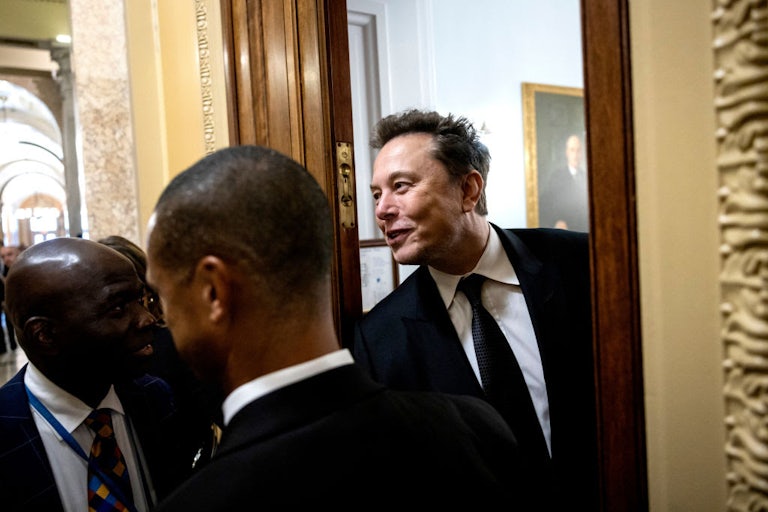
Elon Musk leans out of a doorway, smiling.
Bloomberg/Getty Images
Elon Musk at the U.S. Capitol in Washington, D.C., on July 24

Beneath the deluge of election news, two remarkable statistics made smaller headlines this past week. First, the National Oceanic and Atmospheric Administration confirmed that last month was the hottest July on record, following the hottest June on record, in what is so far the hottest year on record. Second, the U.S. Energy Information Administration reported that, in the first half of 2024, the U.S. added more electrical generation capacity than they have in two decades: 20.2 gigawatts, with another 42.6 gigawatts planned for the second half of the year.

You might be inclined to interpret this as good news: After all, 59 percent of that new capacity seems to be coming from solar power. But this is being added to what existing plants already generate. Existing plants scheduled for retirement—coal, natural gas—aren’t being phased out as quickly as you might expect. In fact, coal and natural gas plant retirements slowed in this same period, with only about 5.1 gigawatts retired as opposed to 9.2 in the same period last year.

The current electrical generation boom, Bloomberg reports, seems largely to be responding to the increased demand from “data centers and artificial intelligence.”

Liza Featherstone has previously written at TNR about the staggering environmental toll from artificial intelligence, including so-called generative A.I.—you know, the awkward-creepy chatbots that sometimes deliver an eerily coherent answer that’s fit for a fifth grader’s science paper, and other times spit out utter gibberish. (Or the image tool that allowed Donald Trump to claim that Taylor Swift had endorsed him for president. She hadn’t.)

The understandable fixation with the cultural and political consequences of this kind of technology, Liza wrote in March, risks “obscuring the more direct, physical problems with the technology,” like its rapacious water and electrical consumption. The International Energy Agency’s predictions for A.I. energy use by 2026 would be the “equivalent of adding a new heavily industrialized country, like Sweden or Germany, to the planet.” Simultaneously, Liza pointed out, data centers will be sucking up raw materials that are urgently needed for the clean energy transition: like lithium, for example.

As the world was baking this summer, Big Tech was doing its darndest to kill any goodwill people might have for its A.I. projects. In June, Meta notified European users that its privacy policy was changing, allowing the company, in the words of the nonprofit organization that subsequently filed complaints in 11 European countries, “to use years of personal posts, private images or online tracking data for an undefined ‘AI technology’ that can ingest personal data from any source and share any information with undefined ‘third parties’” with “no option of ever having it removed.” (Meta has been training A.I. on U.S. users’ public posts for a while now.)

Microsoft A.I. CEO Mustafa Suleyman then did one better. In an interview later that month, he insisted that anything on the “open web” was fair game, counting as “freeware”—a statement many understandably found exploitative and hypocritical.

During the Olympics, Google ran a dystopian ad in which a father, instead of helping his track-and-field-obsessed daughter compose her own fan letter to her Olympic hero, had Google’s generative A.I. tool, Gemini, “help” her instead. Viewers found it distasteful, and Google pulled the ad.

And it almost goes without saying that Elon Musk’s A.I. venture, Grok-2, was a bust: Mere weeks ago, lacking appropriate content controls, it quickly flooded the social media site now known as X with violent and sexual images of Disney and other copyrighted cartoon characters.

So here we are, in a record-hot summer in a record-hot year, with coal plants being kept online in part to meet the increased demand from bumbling A.I. technology. It would be one thing if that demand were coming from, say, the sudden adoption of electric vehicles by tens of millions of Americans. It’s another thing entirely if the energy transition were to be slowed by Big Tech stealing people’s personal life updates or generating graphic images of Goofy.

Good News/Bad News


A federal judge ruled that the National Marine Fisheries Service during the Trump administration did not properly account for the risks from oil spills to endangered species in the Gulf of Mexico, and that the federal government has to do more to protect marine life from offshore drilling.


Akielly Hu at Grist reviews the many signs that the Supreme Court’s overturning of the Chevron doctrine is already starting to slow or reverse the implementation of climate and environmental policies, such as the U.S. Air Force now saying they now can’t be required to clean up the drinking water they contaminated with PFAS.

Stat of the Week
1.6 degrees Celsius

Limiting warming to 1.5 degrees Celsius (2.7 degrees Fahrenheit) above preindustrial levels—for years considered a vital goal for avoiding climate-related disasters—is going to be very, very hard, a new study says; the new best-case scenario may be 1.6 degrees.

What I’m Reading

Here’s how much cropland could be freed up if Americans ate half as much meat

TNR has run lots of pieces on the environmental cost of meat consumption. But a new study shows that cutting meat consumption by half might free up land that altogether would be about the size of South Dakota:

The organization argues that if those acres weren’t used to grow crops, they could instead be transformed into carbon sinks or used to restore threatened ecosystems. That would deliver climate benefits on top of the reduction of animal agriculture’s more direct emissions sources: manure and cow burps.

The U.S. currently devotes a tremendous amount of land to agriculture: Over 60 percent of land in the contiguous U.S. is used for agriculture, and 21 percent of that is cropland. A majority of the nation’s cropland—78 percent—is used to raise crops that are primarily used to feed animals.

Read Frida Garza’s full report at Grist.

This article first appeared in Life in a Warming World, a weekly TNR newsletter authored by deputy editor Heather Souvaine Horn. Sign up here.