Breaking News
Breaking News
from Washington and beyond

“The Worst Time of My Life”: A Buffalo Blizzard Hero Speaks Out

A Q&A with Shaquille Jones, the New Yorker who pitched in to save lives as a destructive winter storm ripped through his community.

Joed Viera/Getty Images
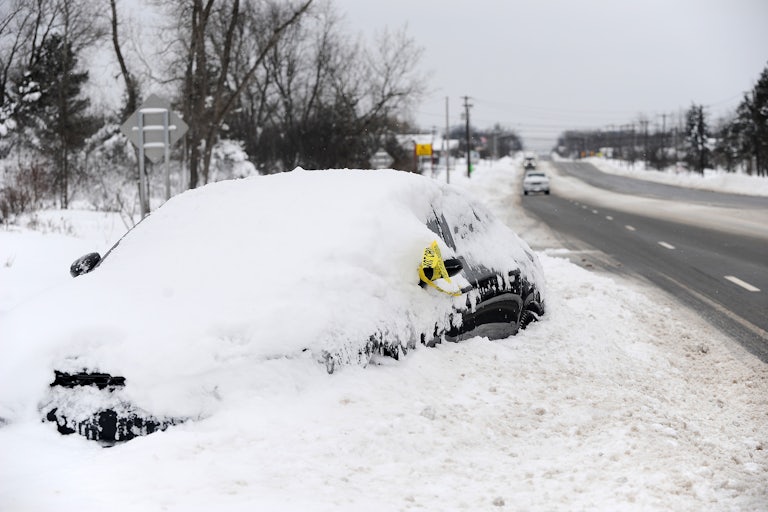
Vehicles are seen abandoned in heavy snowfall in downtown Buffalo, New York, on December 26.

As a calamitous blizzard devastated upstate New York, leaving at least 39 dead and thousands without power, government agencies fell short, leaving citizens to largely fend for themselves and each other. One of these citizens was Shaquille Jones: Days after being stuck in the snow himself for 18 hours—on the cusp of fatal frostbite—he chose to do his part helping others in his community by delivering supplies, serving as an ersatz taxi driver, and wielding his jumper cables on the behalf of hundreds of his neighbors. He even helped save a snowed-in couple and their 1-year-old baby, who was in dire need of a ventilator. At one point during his rounds, someone with authority finally arrived on the scene—to tow away the truck he had borrowed for his mission. (Jones was forced to pay out of pocket to get it back).

I was able to reach Jones by phone on Friday morning; he took me through what he saw as he operated in what amounted to a winter-weather war zone—scattered bodies, abandoned and snowed-in vehicles, and little institutional help to find anywhere.

This interview was edited for length and clarity.

Take us through your past week.

My mom, sister, and two nieces were getting food for the storm, and they got stuck. I borrowed a buddy’s truck to come down and get them, and then we got stuck. I called the police maybe after two hours. They said they were sending someone to help us. At this time, the snow was—you couldn’t be out there; it was ridiculous, you couldn’t see anything, you couldn’t do anything. So we sat there for about another two hours. So we’re four hours in, and I called again; they’re like, “We’re sending someone, we’re sending someone,” and nobody came. So, seven hours rolls around: “We’re sending someone”; 10 hours roll around: “We’re sending someone”; 15 hours roll around: “We’re sending someone.” 

Finally, here’s 18 hours. We’re still sitting there, and the snow is covering the doors, so we can’t get out and it was almost going to cover the windows. At this moment, we had to make a decision: We’re gonna either sit here and we’re gonna die in this car—because we’re freezing—or we’re gonna get out and try to run for it. We’re either going to sit there and die, or die trying to get to help. My sister has a broken leg, she was on crutches. My niece, for some reason, had no coat on. So at this moment, we get out of the car, it’s about four o’clock in the morning. The snow was still coming down, it was a whiteout; you can’t see anything. It was really bad. We had to get out the window, slide down the snow, and we walked for 20 minutes to the hospital in minus 20 degree weather with 80 mph wind.

The doctor said if we were out there at least one more minute, I would have died because my blood flow had stopped because it was so cold. We had frostbite, we had to get wrapped, it was horrible.

We stayed in that hospital for a day and a half, two days. I got a buddy to finally come pick me up, he got me home to my family on Christmas Day about maybe five or six in the morning. After my kids were done opening their gifts, I decided to go back out. I haven’t seen them for days after that. I’ve been out rescuing people that needed to be rushed to the hospital because the police said they are not coming.

So I’ve rescued hundreds of people, saving them, getting them to help, seeing people 50 years old, 90 years old in the house for hours with no heat, frostbitten; a baby that I saved was on a ventilator that had no electricity; they were hand-pumping their baby to have them breathe. That was by far the worst thing I’ve ever had to do in my life: pump a baby while walking through snow to try to get them to some type of electricity. We opened up a building for heat and food and baby clothing. I have not taken money from anyone. I done it all for free. They were asking me if I could put up my cash app for donations for food, so I did do that and [went] to the supermarket and got a bunch of food, diapers, you know, any supplies that can help out. We have been delivering ever since. 

I went back up to the truck that I borrowed. And they just took it, right before I pulled up. I had to pay $350 to get the truck back. The truck was damaged, I have to pay for out of pocket. It was the worst week of my life.

Wow. And that tow fee—here you are, trying to help the community, and you come back to that.

Yeah, the thing about that is I don’t believe that they care. The way New York State went about even ticketing people with the driving ban and stuff like that is beyond me. How could you do this to people after a natural disaster? Why would you? I understand you have to get paid, I understand you’re running a company. But come on, I mean 300-some odd dollars. That’s insane.

I understand others began to help you as well, right? Who were they, and how did they get involved? What have you been doing together?

Well, first of all, one of them was a stranger I’ve never met in my life. He came down to Buffalo inside the storm the same day I got stuck and got into the hospital, he came down to try and rescue me. And this is a guy that I have never met in my entire life. He heard that I was stuck, and he said, “Man, I’m going to get this guy no matter what.” This guy didn’t have a dime in his pocket, and I didn’t know this. If he would have told me this, I would have told him not to come, but this guy made an effort when nobody else made an effort. I’m just so grateful for him. His name is Tayron Knight from Niagara Falls. He’s been with me ever since. A guy whose nickname is JC, that’s my wife’s cousin. A Buffalo Police officer that came out after we got to the baby—he’s been going ever since. And it was about four or five of us. Pharoah Page from Buffalo, New York, who opened up his skating rink for heat, and groceries, and food for the people to come. So, it is good people that I had involved with me—thank God, because at first I was alone, I was by myself, but when we rescued that baby and people saw that, they started wanting to get more involved.

So you’ve been delivering and purchasing supplies, driving people around. What other things have you guys been doing?

Yep, so we’ve been purchasing supplies, getting people to hospitals, jumping cars. We still are out here; my phone is like a 911 hotline. And I hope people know that anytime that they call me, I will be there. 

But we dealt with so much racism and [inaction]. My buddy went into the gas station, and he asked to use the bathroom, and the guy told him, “Not for your kind.” It really was a bad situation—he told me after we left, and that really hurt me to the core. I stopped, went to get a guy out of his house. It was a bigger guy. And the National Guard was standing there, like maybe a block up. I said, “Man, I really could use your guys’ help, please, you know help me get this guy out of his house and take him to the hospital, I can put him in the back of my truck to take him to the hospital.”  This guy told me, “Unfortunately we’re not EMS.” 

I said, “Well, you don’t have to be EMS. I just need a couple of hands please.” This guy told me unfortunately, he had to get his partner some lunch, so he won’t be able to assist. The government, man, I don’t know what’s going on with the New York state government, I feel as though they did leave us behind, they left a lot of people in trouble and stranded. I don’t understand, all this stuff should have been more prepared. It’s really a shame. And I’m really going through it—I’m having flashbacks and stuff, I’ve seen so many people dead in the snow, in their car, not alert. It was a mess. I’ve never seen nothing like this in my life.

Tell me more about that, the things that have been frustrating you. 

It’s just trauma. Seeing people throwing up blood and you got to take them to the hospital; 70-year-old ladies sitting in their cars for hours because they don’t have any heat, and the police are not coming. You can’t call for help. Thousands and thousands and thousands of people without electricity. It was a nightmare. You couldn’t call anyone, so I made myself available for them to call. I didn’t know what I was getting myself into when I did that. 

But I would do it all over again—no matter the trauma that I’ve seen … people laying dead in the snow and walking past their bodies, tapping on the window and they’re dead and locked inside the car. It was rough, so now I’m dealing with trying to mentally prepare myself to stay on the right track; you know, stay focused.

How do you think things could have gone better? Where did things go wrong?

I really think the government dropped the ball on getting people here fast enough for the storm. I understand because of the driving ban, but you have [hundreds of thousands] of people in Buffalo that needed food who couldn’t get to it right away. Just because people make mistakes doesn’t mean you don’t go rescue them. You know officers took an oath … all these people that get paid from tax dollars … there was no one. They say we are not coming. The firefighters were out helping—I’m not sure about the police. I really didn’t see any police out. It was just—they wasn’t prepared. And it left people dying.

You’ve mentioned different ways this has impacted your mental well-being—could you talk a bit more about that, if you’re comfortable? 

Yeah, it’s just basically having flashbacks of what’s been going on this past week. It was like back-to-back-to-back-to-back issues with people not breathing, and babies, and it was just traumatizing. I can’t believe that I had to literally pump a baby—if I [had done] it the wrong way the baby could die. When I first started, [the mother] was like, “You have to pump it like this, on time, or you know the baby will cough and he will lose breath.” I messed up one time and it shattered me—I was so broken because I thought that this baby was not gonna make it. 

I’m still having flashbacks from, you know, just seeing the bodies—and bodies are still popping up all over the news. Buffalo, New York, will never, ever, be the same.

Is there anything that has been giving you hope or enlivening you throughout all this chaos and sadness?

I just think about my kids. What if that was my babies—my kids would not have made it, would not have made it in that storm. I barely made it. I’m telling you, my legs were purple, my arms were purple, my hands were purple. It was like something that you see in a movie—when we got to the hospital, everything was frozen: my eyebrows, my hair was ice. I couldn’t barely talk. It was the worst time of my life. And I just—God kept me going. Once I got better, I said, you know what? There’s people out here going through what I just went through. These people need help: Go. My family wasn’t too happy about it. But once I did it, they were like, “Oh, OK, we understand.” There’s nothing else I would have done differently.

Three Quick Takeaways From Donald Trump’s Long-Awaited Tax Returns

One reason he might have been eager to keep these records under wraps is that they don’t exactly paint the picture of a business genius.

Nicholas Kamm/Getty Images

The House Ways and Means Committee released six years of Donald Trump’s tax returns Friday, after a protracted battle by the former president to prevent that from happening. Trump famously refused to release them during the 2016 presidential election; doing so is not a legal requirement but has long been the norm. The Treasury Department turned over these records to the committee in November.

The committee reviewed Trump’s tax returns primarily from his time in office. Here are three major initial takeaways.

Loans and donations: Trump made repeated large charitable donations and loaned his three adult children either $51,000 or $46,000 for each of the six years covered in the returns.

Donations and loans are tax-deductible, which means they can reduce the amount of total income that can be taxed. But the nonpartisan Joint Committee on Taxation raised concerns that both Trump’s loans and donations should have been subject to taxes. Trump didn’t have taxable income from 2015-2017, meaning any deductions he received for charitable donations or loans would carry forward and be applied in later years. He did have taxable income in 2018 and 2019, so he would benefit from previous deductions.

The taxation committee also raised concerns that the loans to his children were really gifts, which should have been taxed.

Sales: Each year except 2019, Trump listed millions of dollars in cost of goods sold, or the amount spent on getting products to customers, from his corporation DJT Holdings, LLC. The cost of goods sold is tax-deductible, which again would drive down his taxable income at the end of the year.

The returns do not specify which assets DJT Holdings had sold, but IRS audit files indicate that the company appeared to sell residential and hotel units. Real estate holdings are not considered inventory, so costs related to their sale are not eligible for tax deductions.

Losses:  In 2016 and 2017, Trump and his wife Melania paid $750 or less in federal income tax. They paid $0 in 2020. Trump paid taxes in the other three years, but at a far lower rate than the average taxpayer. Part of the reason why was because he listed millions of dollars in losses.

He reported a gross negative income of $53.2 million over the six years covered in the tax returns. Tax law allows taxpayers to carry losses over to another year, reducing the amount of taxable income. Trump repeatedly carried over his massive reported losses, dramatically reducing the amount of overall taxes he had to pay each year. Fittingly, Steven M. Rosenthal, a senior fellow in the Urban-Brookings Tax Policy Center, summarized Trump’s tax returns for The Los Angeles Times like so: “He’s a staggering loser.”

A Man Saved a Baby During New York’s Devastating Blizzard. Meanwhile, the City Towed His Car.

John Normile/Getty Images

A calamitous blizzard in upstate New York has left at least 39 dead and knocked out power for thousands. The ruinous winter-weather event fell hardest on the 1.1 million people of the Buffalo-Niagara Falls area, who were forced to fend largely for themselves and for each other, as local government agencies fell short.

One man and his neighbors embody the spirited lengths that people took to care for each other: Shaquille Jones was driving with his mother, niece, and sister—who was on crutches with a broken leg—as the storm approached. As the snow began to pile up, his truck got stuck, leaving his family mired for 18 hours because the police, who claimed to be on their way, failed to show up. After eventually being told that help was not on the way, Jones and his family scrambled to find shelter on their own.

Not long after his family was safe and secured, Jones decided he had an obligation to continue helping others in need. “After I figured that God gave me another chance at life, I have to try to save others. Because the police–they told me they weren’t coming, so I could only imagine what they told others,” Jones told CNN.

Shahida Muhammad, her husband, and their one-year-old baby were snowed in their home without power. The infant was in dire need of a ventilator: The husband and wife had spent two consecutive days—without breaks—manually giving their baby breath. Jones had seen the pleas for help that Muhammad had posted online, and sprang to action.

Jones and his friends reached the family’s home and dug the Muhammads out, potentially saving the life of the child. These saviors kept at it, continuing their work for days—purchasing and delivering supplies, giving rides to neighbors, and more.

While Jones and his retinue of do-gooders took on the personal toll and expenses of weathering the conditions and bringing aid to his neighbors, the local government somehow found a way to add to his burden. Jones’s vehicle—the one his family had to escape from after being stuck in it for 18 hours as no help came—was towed after it was pulled from the snow. The town of Amherst, a Buffalo suburb, charged him a $353.44 fee.

Meanwhile, officials have been desperate to deflect all blame for the crisis.

In a press conference earlier this week, five-term Buffalo Mayor Byron Browna cog of the New York Democratic Party machine—cited pictures of looters on social media and called them “the lowest of the low.” At the time of his statement, at least 27 people had died in the area due to the storm.

After the Erie County SNOW hotline, used for “non-life threatening but serious situations,” was inundated with 20,000 phone calls, Erie County Executive Mark Poloncarz said residents should stop flooding the hotline and rely on local media and a YouTube broadcast instead. Poloncarz went on to slam Mayor Brown and the city of Buffalo’s response: “The mayor is not going to be happy to hear about it, but storm, after storm, after storm, after storm, the city, unfortunately, is the last one to be opened, and that shouldn’t be the case. It’s embarrassing, to tell you the truth,” he said.

The contradictory priorities of government stakeholders abound. Buffalo is home to a $1.4 billion stadium project that has absorbed $600 million from the state’s coffers, as well as $250 million from Erie County—money that clearly would have been better spent helping the state and county to prepare for the inclement weather that frequently buffets the region. Even a cursory look at Buffalo’s city budget reveals the skewed priorities: The city allocates more than twice as much money to the police than it does to public works.

As residents of the region were left without the assistance their taxpayer dollars were supposed to provide, India Walton, who nearly beat Brown in the last mayoral election, told Democracy Now, “It is everyday people … who are delivering food, who are going and rescuing people, who are going on search missions and doing wellness checks. It is the people of Buffalo, the everyday, hard-working folks of this city, who have been taking care of one another.”

December 30 Is Tax Day (For Donald Trump)

The former president's personal and business returns will finally be released to the public in one of the last acts of the Democratic Party-controlled House.

Andrew Burton/Getty Images

It’s been a long time coming, but on Friday, the House Ways and Means Committee will show the United States the receipts: They will release Donald Trump’s tax returns, just in time to ring in the new year.

The Democratic-led committee has been trying to get Trump’s tax returns for three years. Trump famously refused to release them during the 2016 presidential election; doing so is not a legal requirement but has long been the norm. The Treasury Department turned over these records to the committee in November.

Trump repeatedly (convolutedly, and ridiculously) insisted that he couldn’t release his tax returns because they were under audit. But as it turns out, that wasn’t really true. The committee revealed last week that the IRS actually failed to audit Trump until 2019, despite a program that makes auditing sitting presidents mandatory. Those audits are not yet completed, according to the committee. Trump’s tax returns also show he paid $0 in taxes in 2020.

The committee reviewed six years of the former president’s tax returns, primarily from his time in office. The documents include his personal tax information, and that of several of his businesses.

Trump fought long and hard to prevent the release of his tax returns, which naturally only fueled suspicion and raised questions about why he would do so.

It has been, to put it mildly, a terrible year for Trump. The January 6 investigative committee unanimously recommended the Justice Department pursue criminal charges against Trump for his role in the insurrection. His Trump Organization was also found guilty of tax fraud and related crimes, and Trump himself is also under investigation by the FBI for taking classified documents to Mar-a-Lago. So the release of his tax returns will really be the cherry on a garbage sundae.

Biden’s Bid to Diversify the Federal Judiciary Hits a High-Water Mark

The president has made the most of Democratic control of the Senate.

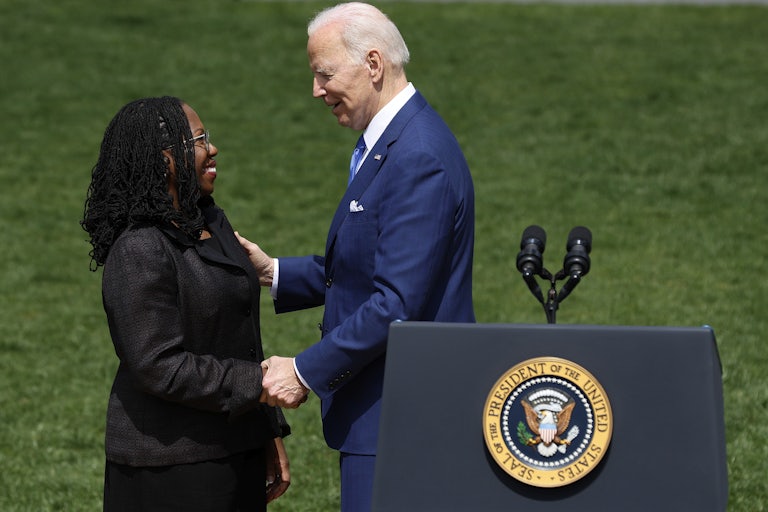
Chip Somodevila/Getty Images

As the second year of his presidency draws to a close, Joe Biden has nominated an impressively diverse array of judges.

As the Associated Press reported on Wednesday, since he took office in 2021, 97 lifetime federal judges have been confirmed under Biden, far outpacing his predecessor Donald Trump (85) and former boss Barack Obama (62). This is due mainly to the fact that Democratic Party control of the Senate has allowed the president to push through nominations.

Three out of every four of those confirmations were women. About two-thirds were people of color. Eleven Black women were appointed to the powerful circuit court, and Justice Ketanji Brown Jackson became the first Black Woman to serve on the Supreme Court. They also have a wide range of experience, including public defenders or people with backgrounds in workers’ rights.

The diversity of nominations “says to the American people…if you wind up in federal court for whatever reason, you’re much more likely to have a judge who understands where you came from, who you are, and what you’ve been through,” White House Chief of Staff Ron Klain told the AP. “Having a more diverse federal bench in every single respect shows more respect for the American people.”

The push for diversity should come as no surprise. Biden promised to counteract Trump’s judicial legacy, which saw the judiciary pushed to the right, as well as bringing new perspectives to the bench beyond the overwhelmingly white and male nominees seen under Trump.

Biden’s number two is Kamala Harris, the first Black and Asian vice president, and he boasts one of the most diverse cabinets in history. He also nominated Lisa Cook and Philip Jefferson to the Federal Reserve Board of Governors. Cook is the first Black woman to serve on the Board, and Jefferson is the fourth Black man.

But while he has done well in filling public-facing roles, the Joint Center for Political and Economic Studies, which focuses on issues related to Black equity, said he needs to do more to make sure internal positions are equally diverse.