Breaking News
Breaking News
from Washington and beyond

After 15 Tries and Most of His Dignity Gone, Kevin McCarthy Becomes House Speaker

This was the fifth-longest House speaker election in history, with the most votes since before the Civil War.

Kevin McCarthy cheers in the House chamber during the election for speaker, as other representatives look on.
Chip Somodevilla/Getty Images

Early Saturday morning, Kevin McCarthy finally crossed the threshold to become speaker of the House. The result comes on the fifth day, in the fifteenth round of voting, of what has become the fifth-longest speaker election in American history, and the longest since before the Civil War.

McCarthy secured 216 votes, with several earlier Republicans defectors instead voting “present” and lowering the number of votes he needed to win. Throughout the week, McCarthy had struggled to eclipse even 200 votes, starting first at 203, before dropping to 202 and even 201 as a group of 19 Republicans continually voted against him, round after round. Meanwhile, Democrats proffered a united front, giving Hakeem Jeffries 212 votes over and over again.

Finally, on Friday afternoon, in the twelfth vote, some movement began to occur as McCarthy continued to cave in to the demands of his defectors. As pressure mounted, just enough Republicans voted late Friday night into Saturday morning to push McCarthy through and secure the speakership that continued to evade him.

But the speakership vote is not even half the battle. If there was this much chaos just to elect the House speaker, imagine what this portends for any other vote or House business. Indeed, further pandemonium may be closer on the horizon than McCarthy was counting on:

If the rules package McCarthy put together to secure the speakership fails after he secures the speakership, there’s no telling what other hurdles may lie ahead. There’s been so much attention placed upon the 19 Republican defectors that McCarthy may have taken for granted the nearly 200 other members of his party, let alone the 212 Democrats, who might have other ideas.

Good luck, Kevin.
More on the Speaker Drama

Here Are the Six Republicans Blocking Kevin McCarthy’s Bid for House Speaker

These Republican holdouts are blocking Kevin McCarthy’s bid for House speaker. He’ll need three of their votes.

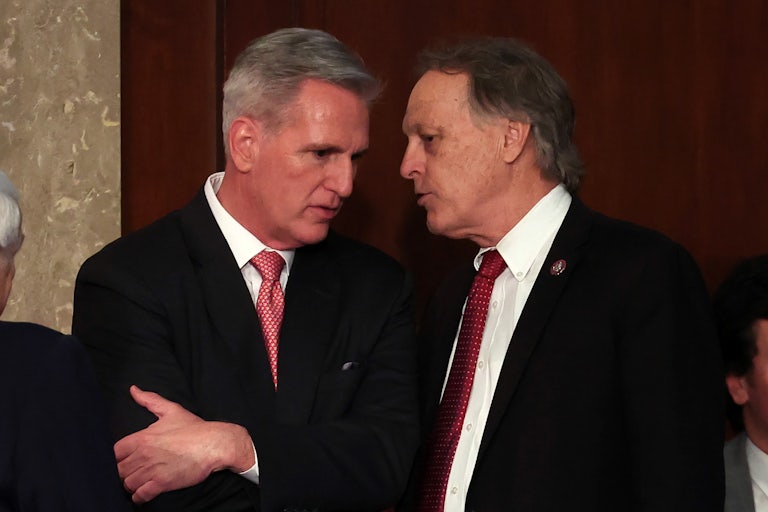
Kevin McCarthy speaks with Andy Biggs in the House chamber
Win McNamee/Getty Images
Kevin McCarthy speaks with Andy Biggs in the House chamber.

Kevin McCarthy was denied the House speakership for the thirteenth time Friday, as six Republicans continued to hold out against him.

The California Republican, who has been open about wanting to be speaker, received only 203 votes or fewer during the first 11 rounds of voting. His party holds 222 seats in the House of Representatives, and he needs 218 to win. He’ll need two of the remaining six Republicans to win the speakership.

Although he lost votes over the first three days, 15 previous holdouts finally switched to backing him on Friday, including Byron Donalds, who had been nominated as a long-shot challenger for two days. They all received standing ovations when they voted.

But six Republicans remain staunchly opposed to McCarthy, thwarting him at every round. McCarthy has been projecting confidence that he’ll eventually win, but it has been a grueling run.

Here are the six Republicans who continue to oppose McCarthy’s bid for speakership.

  • Andy Biggs
  • Lauren Boebert
  • Eli Craine
  • Matt Gaetz
  • Bob Good
  • Matt Rosendale

Gaetz and Boebert are among the strongest holdouts, nominating other Republicans for House speaker throughout this ordeal. The momentum on Friday, however, has inspired McCarthy allies.

Here are the 15 Republicans who switched to voting “yes” for McCarthy as speaker.

  • Dan Bishop
  • Josh Brecheen
  • Michael Cloud
  • Andrew Clyde
  • Byron Donalds
  • Paul Gosar
  • Andy Harris
  • Anna Paulina Luna
  • Mary Miller
  • Ralph Norman
  • Andy Ogles
  • Scott Perry
  • Chip Roy
  • Keith Self
  • Victoria Spartz

This post has been updated.

December Jobs Report: Unemployment Rate Is the Lowest in 50 Years

The Labor Department report found that the unemployment rate is 3.468 percent, a level not seen since 1969.

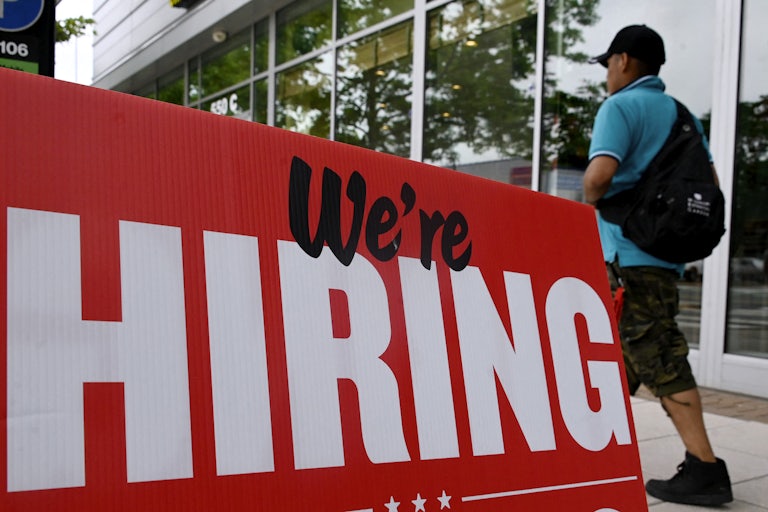
A "We're HIRING" sign, as someone walks by.
OLIVIER DOULIERY/AFP/Getty Images

The U.S. labor force is starting 2023 on a high note, with unemployment reaching its lowest point in 50 years in December, according to a report released Friday by the Bureau of Labor Statistics.

Nonfarm payrolls added 223,000 jobs in December, bringing the unemployment rate to 3.468 percent, the lowest level since 1969 (albeit by a very slim margin, the third decimal point). Comparatively, the unemployment rate in February 2020—just before the pandemic began in earnest in the United States—was 3.5 percent. In December 2019, the unemployment rate was 3.6 percent.

The sectors that added the most jobs were leisure and hospitality, health care, and construction. Employment in retail held steady, while state education employment declined by 24,000 jobs. University employees have gone on strike in recent months over workplace conditions. One of the biggest demonstrations took place throughout the entire University of California system and saw tens of thousands of academic workers walk out to demand pay increases.

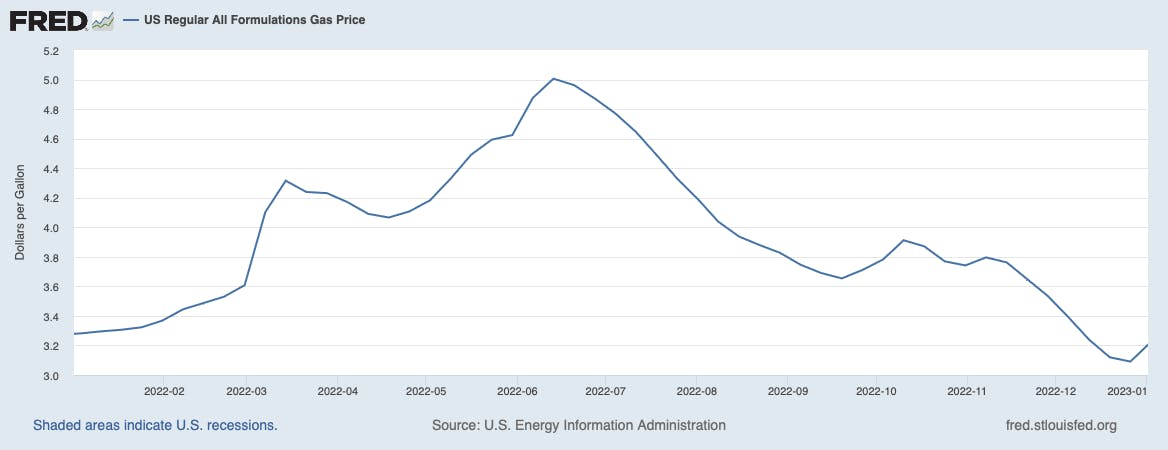
The low unemployment rate isn’t the only piece of good news: The national average gas price, a sore spot for President Joe Biden, has also fallen lower than in January 2022.

National gas prices have dipped lower than they were a year ago. As of Friday, the national average price per gallon was $3.30, according to AAA.

Both the employment gains and the falling gas prices are huge wins for Biden, who has been under fire since he took office for sky-high inflation and unemployment, first due to Covid-19 and then Russia’s invasion of Ukraine.

Inflation finally seems to be cooling, as well, and the Federal Reserve eased off its massive rate hikes at its December policy-setting meeting. The U.S. central bank is eager to achieve a so-called soft landing, or a decrease in inflation without tipping the economy into a recession.

The fact that the labor market has remained strong overall has caused concerns that the economy has not slowed sufficiently to avoid a downturn, but Dean Baker, the senior economist at the Center for Economic Policy and Research, put the chances of a recession at “less than 50 percent.”

I think the overall picture suggests the economy can keep growing at a healthy pace,” he said of the December jobs report, but that will depend on the Fed maintaining a slower pace with rate hikes.

A Populist Democrat Announces Challenge to Josh Hawley on January 6

Lucas Kunce wants to take on the Missouri Republican who incited rioters on January 6 (and then ran away), and he’s got a powerful new campaign ad.

Lucas Kunce
Michael M. Santiago/Getty Images

On January 6, 2021, Senator Josh Hawley was caught on camera running from the same incursion he helped cause. Two years later, as Hawley has continued running from culpability for his role in the attack on the Capitol, he now faces his own democratic challenge. Friday morning—January 6, 2023—populist Democratic candidate Lucas Kunce announced his bid to unseat Hawley.


In his announcement, Kunce took Hawley to task for much more than inciting January 6. Hawley was sent to a “fancy prep school” by his “banker daddy,” while Kunce’s family relied on their neighbors “to survive bankruptcy and medical bills.” Hawley joined an elite corporate law firm after graduation, while Kunce joined the Marines. Hawley supported anti-labor “right-to-work” laws, while Kunce posits himself as a committed anti-monopolist. Hawley had initially voted “no” on a bill to ease health care access for veterans exposed to burn pits; Kunce, who had been exposed to burn pits himself, rallied the cause for the bill.

Kunce told The New Republic that the hardships he faced are a large part of why he’s involved in politics. “When my little sister was born and had an open heart surgery, my family went bankrupt. We made it because the people in that neighborhood came by our house, brought us more tuna casseroles than we could eat.”

Kunce first ran for office in 2022, vying to fill Republican Roy Blunt’s vacant seat. In a crowded Democratic primary, Kunce lost to late-entrant and Anheuser-Busch heiress Trudy Busch Valentine, who then went on to lose the general election to Republican Eric Schmitt by 13.5 points. The primary still displayed Kunce’s formidability. Valentine, whose assets were worth as much as $214.7 million, largely self-funded her own $3.4 million campaign. Meanwhile, Kunce fundraised $4.6 million, more than half of which came from donations smaller than $200.

Kunce’s candidacy offers Democrats of all stripes the opportunity to rally behind someone who could truly give Hawley a run for his money (no pun intended). Missouri went for Trump by 15 points in 2020, but Hawley only beat Claire McCaskill by about six points in 2018. Kunce’s résumé and unhesitating will to expose Hawley as the faux-populist he is—and connect him to everything wrong with America—might be enough to make this race a contest.

“Generally, everyday people do the right things. You see that on ballot measures, and neighbors helping each other out,” Kunce said, referring to the success of statewide initiatives to legalize marijuana, reject right-to-work laws, increase the minimum wage, and expand Medicaid. His goal, Kunce said, is to give power back to, and trust, everyday people. “That’s the exact opposite of Josh Hawley—this guy’s all about power for himself. We’re launching on January 6 because it’s a great example of what a fraud he is. When he thought it was gonna bring him power, he’s raising his fist, he’s riling everybody up, and then the second shit gets real and hits the fan, he’s running for the exits.”

What has Kunce been doing while preparing for his Senate run? “I’ve been rereading Lord of the Rings,” he said, reminiscing of his mother taking him to the library as a kid for free entertainment. “Kinda nerdy, but hey, I play Magic: The Gathering, no shame.” He’s also been listening to his country favorites: Willie Nelson, Waylon Jennings, Merle Haggard. “And for TV, I did just watch Wednesday. I thought it was really good.”

This post has been updated.

This Is Now the Longest Battle for House Speaker Since Before the Civil War

And Kevin McCarthy’s quest for the House speaker gavel continues.

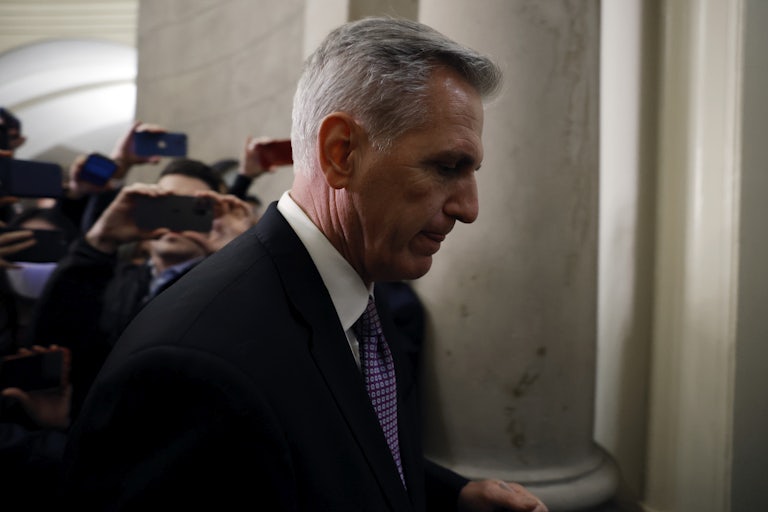
Representative Kevin McCarthy looks down and walks away from reporters
Anna Moneymaker/Getty Images

Kevin McCarthy has broken yet another record for the sheer number of times he’s lost his bid for House speaker. We are now entering territory not seen since before the Civil War.

The House entered its tenth round of voting on Thursday, after McCarthy lost the seventh, eighth, and ninth rounds. The last time at least 10 ballots were needed to pick a House speaker was in 1859, when Republican William Pennington was finally elected on the forty-fourth ballot. In all of Congress’s history, there have only been 14 floor fights where more than two ballots were needed to confirm the House speaker. The longest one took 133 rounds of voting.

McCarthy has not gained any votes in the last three days, despite reportedly making major concessions Wednesday evening to the 20 Republicans opposing his bid. He even reportedly promised a one-member “motion to vacate,” meaning only one House member could force a vote to oust the speaker. (Currently, five members are required.) Instead, McCarthy has lost three votes since the first round.

But he has shown no sign of backing down.