Breaking News
Breaking News
from Washington and beyond

Marjorie Taylor Greene Locked Out of Twitter After Using Dr. Dre Song in Corny Music Video

Dr. Dre slammed the Georgia representative, saying he’d never give permission for a politician as “divisive and hateful” as her to use his music.

Representative Marjorie Taylor Greene on stage waves her hand to a crowd not pictured
Emily Elconin/Getty Images

On Monday, Representative Marjorie Taylor Greene posted a pseudo-hype video celebrating herself and the GOP House majority after the caucus made history in hosting the longest House speaker election since before the Civil War.

The video, posted with the caption “It’s time to begin … and they can’t stop what’s coming,” was set to Dr. Dre’s “Still D.R.E.,” with a smattering of clips showing Greene dramatically striding through the halls of Congress, apparently to showcase her prowess as a political operator greasing the wheels of the House voting 15 times before Representative Kevin McCarthy finally won the speakership.

Garnering over four million views and some 14,000 likes (just 0.35 percent of viewers actually liking the video), the clip was removed after Dr. Dre himself requested Twitter remove the video. “I don’t license my music to politicians, especially someone as divisive and hateful as this one,” he told TMZ.

Dr. Dre’s lawyer, Howard King, had a few more words to share with Greene. “One might expect that, as a member of Congress, you would have a passing familiarity with the laws of our country. It’s possible, though, that laws governing intellectual property are a little too arcane and insufficiently populist for you to really have spent much time on,” King wrote in a cease and desist letter addressed to Greene. King also sent a separate letter to Twitter requesting the company block her post.

Greene had told TMZ she was locked out of her account for using the copyrighted music without permission. And after so gleefully using Dr. Dre’s music in her engagement-snatching video, she snapped back at the eminent musician. “While I appreciate the creative chord progression, I would never play your words of violence against women and police officers, and your glorification of the thug life and drugs,” she told TMZ.

Perhaps such a 180 can be best left with the words of another classic Dril tweet that always seems relevant to the right wing in America:

Unlike in America, Brazil’s President Unequivocally Calls Insurrectionists “Fascists”

After an attack on several government buildings, Brazil’s new president wasted no time and promised to hold the fascists accountable.

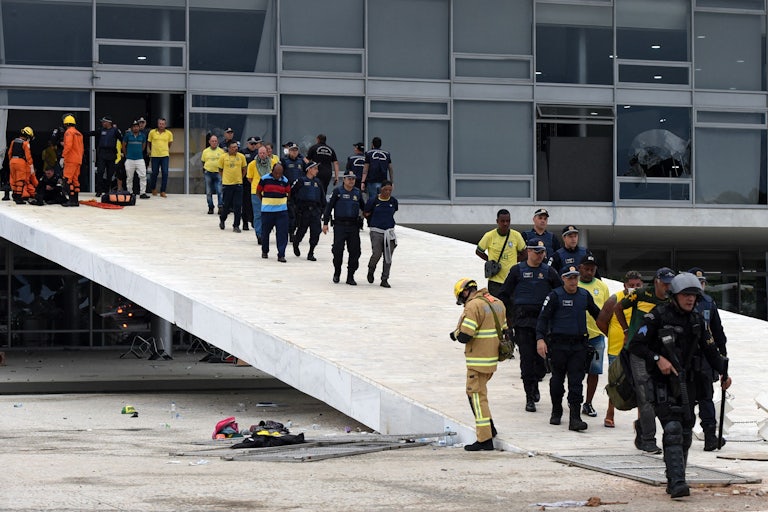
Security forces arrest dozens of supporters of Brazilian former President Jair Bolsonaro who invaded Planalto Presidential Palace in Brasilia, leading them out of the building.
TON MOLINA/AFP/Getty Images
Security forces arrest supporters of Brazilian former President Jair Bolsonaro after they invaded Planalto Presidential Palace in Brasília on January 8.

Supporters of former far-right Brazilian President Jair Bolsonaro attacked the nation’s Supreme Court, Congress, and presidential palace in hordes on Sunday. And Brazil’s government—led by new President Luiz Inácio Lula da Silva—has minced no words on the attack.

Lula excoriated the “barbarism in Brasília,” calling the rioters “fascists, the most abominable thing in politics.” He then signed an edict mobilizing federal forces to intervene in the havoc.

“I wanted to tell you that all the people who did this will be found and punished,” Lula said as he signed the decree. “These people have to be punished, and we are going to find out who financed these vandals that went to Brasília, and they will all pay with the force of the law for this irresponsible gesture, this anti-democratic gesture, this gesture of vandals and fascists.”

And the decree is already in motion.

While the January 8 riot has drawn comparisons to the January 6, 2021, attack on the U.S. Capitol, one clear distinction is that the former has prompted both clear-eyed identification of who the culprits were—not just protesters or rioters but fascists—and an immediate effort to bring said fascists to justice. While hundreds have already been apprehended in Brazil in less than 24 hours, it took twice as long for the United States to charge 53 people.

It’s barely been a day, so it’s too early to completely evaluate Brazil’s efforts to hold the fascist rioters accountable. But the response thus far appears promising, and it is not just directed at individual rioters but also the systems that have directed them.

“We are going to find out who the financiers of these vandals who went to Brasília are, and they will all pay with the force of law,” Lula said, suggesting that the rioters were linked to the illegal logging, mining, and cattle ranching interests that pushed for the rampant deforestation that occurred under Bolsonaro’s reign.

The attackers acted on a fascist impulse to defend who they falsely see as their rightful ruler: a man who said he was committed to the transfer of power but refused to explicitly concede the election. Lula called it as it was, vigorously shutting down the fascist impulse and holding fast to the alternative politics he was duly elected to carry out.

Brazilian Lawmaker Urges Foreign Ministry to Begin Extradition of Bolsonaro From Florida

After his supporters attacked government buildings in Brazil, calls are growing for Jair Bolsonaro to be extradited back home.

Andressa Anholete/Getty Images
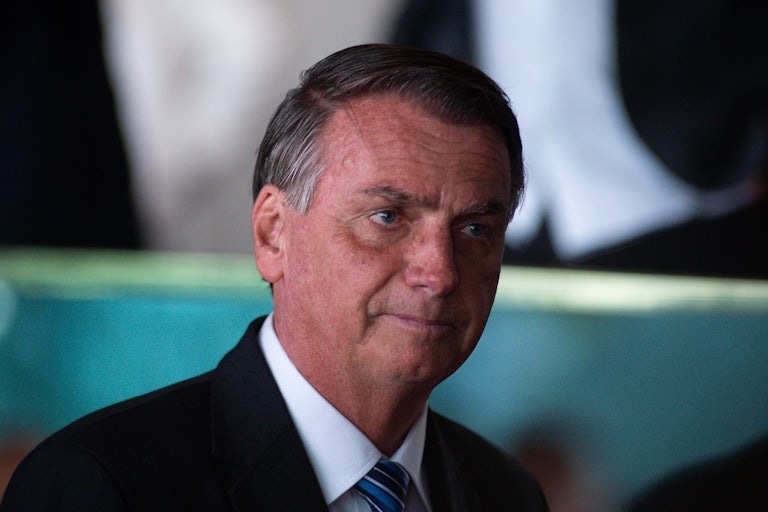
Former President of Brazil Jair Bolsonaro

A Brazilian lawmaker requested Monday that the Foreign Ministry begin the extradition of Jair Bolsonaro from the United States over the attack on Brazil’s government.

Supporters of the far-right former leader invaded and trashed several government buildings in Brasília over the weekend, in an attack that felt frighteningly reminiscent of the January 6, 2021, attack on the U.S. Capitol.

Bolsonaro, who spent New Year’s Eve at former U.S. President Donald Trump’s Mar-a-Lago estate, is still in Florida. He checked into a hospital earlier Monday with severe abdominal pain.

Erika Hilton, one of the first two openly transgender people elected to the National Congress of Brazil, formally requested that Foreign Minister Mauro Vieira begin the extradition process for Bolsonaro due to “serious events and attacks on the powers of the Federative Republic of Brazil.”

She slammed the riot as the work of “extremist groups” supporting the former president.

Several Democratic officials have also called for Bolsonaro to be extradited, including Representatives Alexandria Ocasio-Cortez, Ilhan Omar, and Joaquin Castro.

Bolsonaro is already at the center of four criminal probes in Brazil for accusations of fraud and abuse of power. The allegations include using the federal police to protect his sons and spreading baseless claims that the October election—which he lost to leftist Luiz Inácio Lula da Silva—was fraudulent.

A veteran, Bolsonaro has often been dubbed the “Tropical Trump” and is an outspoken admirer of the former U.S. leader. The similarities between the two men, particularly in the run-up to Brazil’s election, have been overwhelming. In addition to spreading disinformation and now the attack by his supporters, Bolsonaro also has not formally conceded and skipped his successor’s inauguration.

The Dangerous Concessions Kevin McCarthy Made to Become House Speaker

The House is set to vote on a new rules package with several provisions that cater to the far right. Here’s what’s in the proposal.

Nathan Howard/Getty Images

The House of Representatives votes later Monday on a new package of operating rules that includes chilling changes that could seriously damage the United States.

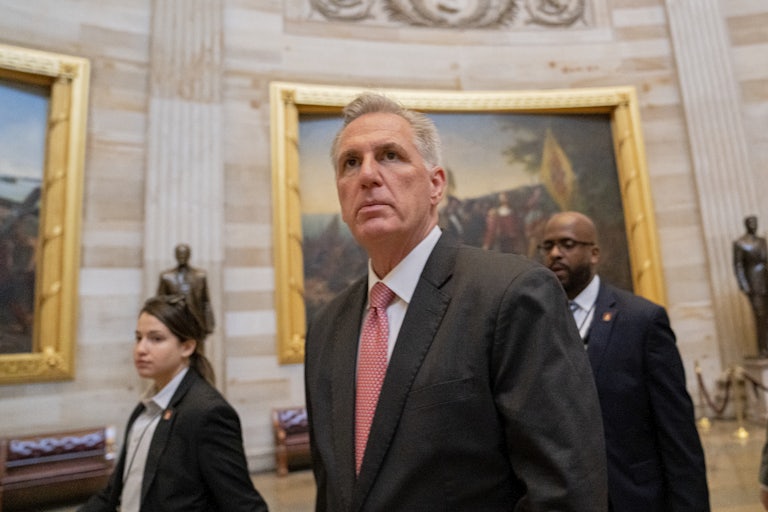
Kevin McCarthy was elected speaker of the House after 15 hellish votes, during which he made concession after concession to the farthest-right members of the chamber. The rules package for 2023 looks very different because of that.

Some moderate Republicans have already said they plan to oppose the package, such as Representative Tony Gonzales, who said he is against proposed potential defense budget cuts. Representative Nancy Mace expressed concerns over the lack of information about the “backroom deals” McCarthy made to win.

Here’s a look at some of the most dangerous proposals:

1. Motion to “vacate the chair”

Not only did McCarthy give all his dignity to his most extreme colleagues, he also apparently ceded all his actual power to them too. The California Republican agreed to restore the motion to vacate, which would allow any single member of the House to call for a vote to remove him.

Considering at one point 21 Republicans had blocked his bid for the speaker’s gavel, McCarthy will have the threat of removal hanging over his head throughout his entire tenure as speaker. He will spend his speakership rushing to please the people who finally agreed to put him there, rather than governing. And if he is removed, the House could be stuck in an endless loop of speaker votes, preventing the chamber from accomplishing anything.

2. Rules Committee assignments for the Freedom Caucus

McCarthy also agreed to give three seats on the powerful House Rules Committee to the Freedom Caucus, the far-right coalition. The House Rules Committee has a lot of influence over what bills and amendments make it to the floor. Freedom Caucus members could now block or stall actually useful legislation from ever reaching a vote. Politico called this “the single most significant surrender of leadership power that we’ve seen in decades.”

3. Slashed spending

The new rules will cap the debt ceiling, or the maximum amount of money the U.S. can borrow, to its level from two years ago. If the U.S. government reaches its soon-to-be-lower borrowing limit, it could default on its debt or fail to make a repayment. If that happens, already high prices and inflation could skyrocket, sending the U.S. into a recession.

Defaulting means the government will also be unable to pay military salaries and Social Security benefits. A lower debt ceiling would also mean less funding for programs such as Medicare and Medicaid, SNAP or food stamps, and meal programs for low-income students.

4. The Holman rule

McCarthy also agreed to reinstate the Holman rule, which lets lawmakers propose reductions in federal salaries, in the number of employees at federal agencies, and in the budget for certain programs. Federal pay or budgets can be slashed to $1, effectively defunding programs. Already on the chopping block is the Internal Revenue Service. The agency is chronically understaffed but has also come under fire for its apparent failure to audit former President Donald Trump’s taxes in a timely manner.

5. Gutting federal investigators’ power

McCarthy also agreed to two proposals that would hugely undermine Congress’s credibility. First, one proposal will gut the Office of Congressional Ethics, an independent federal watchdog, just as it was considering investigations into lawmakers who defied the January 6 investigative committee and serial fabulist George Santos.

The new rules would reimpose term limits on the OCE’s board members and restrict the window for hiring new staff to the first 30 days of the new congressional session (a week of which has already been wasted by McCarthy’s endless speaker votes). The changes would force out three of four Democratic-appointed board members and would run out the clock on hiring while new ones are approved, leaving the OCE unable to investigate anything.

But McCarthy is on board with investigating the FBI and the Department of Justice. He agreed to a proposed House Judiciary subcommittee to investigate the so-called “weaponization” of the federal government. The group will have access to any information shared with the House Intelligence Committee, which is usually the highest level of classified intelligence.

The subcommittee will supposedly act as a watchdog for ongoing criminal investigations, but an earlier version of the proposal limited the probe’s scope to the FBI, the Department of Homeland Security, and the Department of Justice.

Two ongoing investigations are into rioters who stormed the Capitol on January 6, 2021, and into Trump over his removal of classified documents after losing the 2020 election.

7,000 Nurses Go on Strike in New York City

More than 7,000 nurses at two of New York City’s largest hospitals are on strike, demanding better wages and better working conditions.

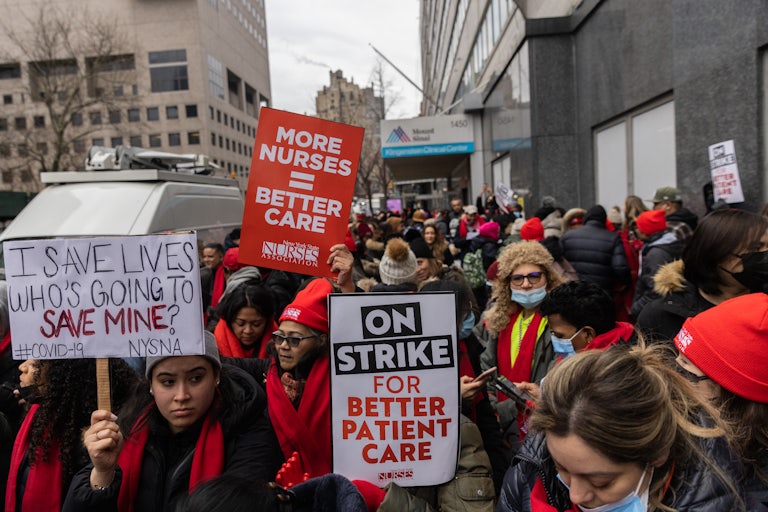
Striking health care workers hold up signs like "I SAVE LIVES WHO'S GOING TO SAVE MINE?," "ON STRIKE FOR BETTER CARE," and "MORE NURSES = BETTER CARE."
Jeenah Moon/Bloomberg/Getty Images
Nurses and health care workers during a strike at Mount Sinai Hospital in New York on January 9

Over 7,000 New York City nurses went on strike Monday, protesting poor pay and tough working conditions due to chronic understaffing.

The strikes at the Bronx’s Montefiore Medical Center and one of Manhattan’s Mount Sinai hospitals come after negotiations broke down Sunday evening.

The New York State Nurses Association had warned that workers at all 12 city hospitals with union contracts would go on strike if agreements could not be struck. After the announcement, seven hospitals struck tentative deals, including two late Sunday—but no agreement has been made yet at the two giant hospitals with nurses on strike Monday.

Nurses are disgruntled by staffing shortages, leading to long hours in tough conditions and not enough pay to match such circumstances, in which they are stretched thin trying to care for all their patients.

“Nurses don’t want to strike. Bosses have pushed us to strike by refusing to seriously consider our proposals to address the desperate crisis of unsafe staffing that harms our patients,” the New York State Nurses Association union said in a statement.

“The decision to go on strike is never an easy one, particularly for workers who care so deeply about the patients and communities they serve,” said New York City Central Labor Council AFL-CIO President Vincent Alvarez. “But hospital executives created this crisis by failing to hire, train, and retain nurses while at the same time treating themselves to extravagant compensation packages. Now it’s time for them to fix what they’ve broken.”

About 3,600 U.S. health care workers died in the first year of the pandemic alone. Now, some two and a half years after thousands drummed their pots and pans in support of the essential workers in one of the epicenters of the Covid-19 pandemic, nurses are left striking for better working conditions.