Breaking News
Breaking News
from Washington and beyond

The Deep Roots of Southwest Airlines’s Winter-Weather Meltdown

The carrier’s holiday-season omnishambles can't be completely attributed to the snow.

Brandon Bell/Getty Images
Southwest Airlines has canceled thousands of flights due to a variety of issues including this year’s historic winter storm and scheduling complications involving crew members.

The massive winter storm that battered the country over the weekend hasn’t just snowed under half of the United States. The airline industry is also on ice: Thousands of flights have been canceled, and although air travel is slowly returning to normal, one carrier in particular—Southwest Airlines—is struggling hard to unmuddle itself.

Southwest canceled 63 percent of its scheduled Tuesday flights and has already canceled 62 percent of its flights for the following day, according to flight tracker FlightAware. Reports abound of hours-long waits in customer service lines, people sleeping in airports waiting to get rerouted, and suitcases piling up at the airline’s desks.

But these recent snafus can’t be entirely pinned on the inclement weather—it’s the absolutely shambolic state of Southwest’s inner workings that are actually to blame. Many airlines lacked sufficient staff for the holiday weekend, but Southwest also hurt itself by not blocking out enough turnaround time between flights, a FlightAware spokesperson explained to CNN.

The president of the Southwest flight attendants’ union also told CNN that they have not been able to get in touch with their bosses at the airline. Both Southwest’s manpower and internal communication issues are partly due to its outdated crew scheduling system, according to a member of the flight crew on a British Airways plane, who goes by the Twitter name @JustAnother_Ben.

An aviation watchdog that goes by the Twitter handle @JonNYC shared an internal memo from Southwest’s vice president of ground operations Chris Johnson. In the memo, Johnson declared a state of operational emergency at the Denver International Airport and said employees would be fired for calling in sick without a doctor’s note, requesting personal time off, or refusing to work now-mandatory overtime.

The president of the Southwest Airlines Pilots Association, Casey Murray, told CNN that these problems have been going on for nearly two years. Winter Storm Elliot appears to be merely the straw that finally broke the camel’s back.

“These sorts of meltdowns occur on a much more regular basis and it really just has to do with outdated processes and outdated IT,” Murray said. “It’s phones, it’s computers, it’s processing power, it’s the programs used to connect us to airplanes—that’s where the problem lies, and it’s systemic throughout the whole airline.”
Air Disasters

Four Washington Power Substations Attacked, Knocking Out Power for 14,000+

These most recent incidents are part of an alarming nationwide trend.

Peter Zay/Getty Images
Tens of thousands were left without power in North Carolina earlier this month after power station were targeted with attacks.

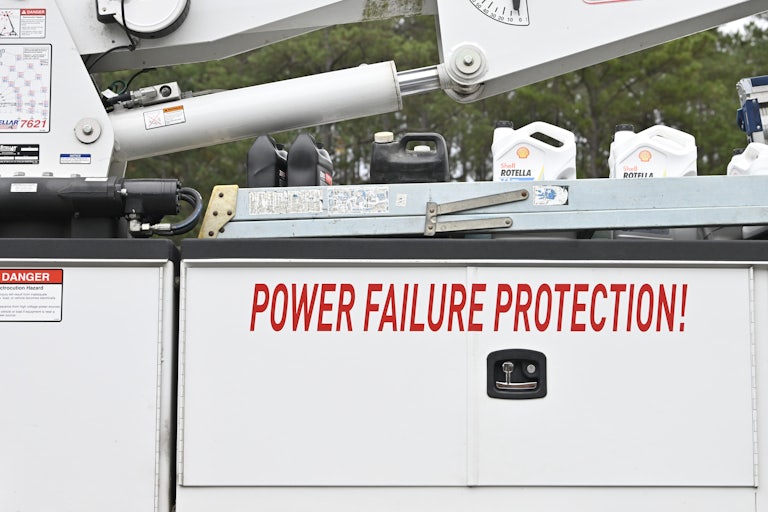
Four power substations in the state of Washington were attacked on Sunday, knocking out power for more than 14,000 customers. The Christmas Day station attackers damaged equipment at each station and set a fire at one.

These most recent attacks join an alarming trend of vandals, trespassers, and domestic terrorists who have targeted power substations across the country. From North Carolina and Oregon, Washington to Florida, intruders have disabled equipment and even struck stations with gunfire. Tens of thousands have lost power as a result; North Carolina residents were recently without power for four days.

Attacks on the power grid are not unheard of—but they’re soaring compared to previous years. Documents obtained by Politico showed that “the past three years have been the most active for reported attacks on the grid in the past decade,” with “101 reported this year through the end of August” after a previous peak of 97 attacks for the entire year of 2021.

There have been numerous warnings, but stakeholders just don’t seem prepared for the onslaught. Nearly a year ago, The Daily Beast obtained a DHS intelligence report that warned of extremist groups identifying the “electric grid as a particularly attractive target given its interdependency with other infrastructure sectors.” And CNN recently obtained a 14-page document circulating on Telegram that included a white supremacist instruction guide for how to conduct low-technology attacks that foment chaos, including attacking a power grid with firearms.

“When the lights don’t come back on … all hell will break lose [sic], making conditions desirable for our race to once again take back what is ours,” the document reads.

In February, three men pleaded guilty of plotting to attack substations with firearms. The trio were alleged white supremacists who had for years strategized how to incite civil unrest, hoping to touch off a potential race war, and the second Great Depression.

Such attacks are disturbing in their own right. But the broader context behind the ideological underpinnings of the attackers only causes more concern. The January 6 Capitol Riot demonstrated the extent to which right-wing radicalization has deepened the resolve of fringe actors to attack the institutions that keep this country running. And in terms of pure mayhem, the attacks on power substations are arguably a lower risk-for-higher reward pursuit compared to mounting an attack on the U.S. Capitol: Literally fatal power outages from New York to Tennessee reveal how keenly vulnerable our country’s infrastructure—and citizens—are to power mishaps.

Politicians gleefully throw support behind brutally reckless over-policing; perhaps they could consider still satisfying their itch for vigilance by at least shifting their focus to protecting our crucial power infrastructure from those who’ve clearly been targeting it in increasing numbers.

Marjorie Taylor Greene Is Facing Her First Big Purity Test

The belle of the fringe-right ball is increasingly facing friendly fire since throwing in her lot with House Speaker–wannabe Kevin McCarthy.

Tom Williams/Getty Images

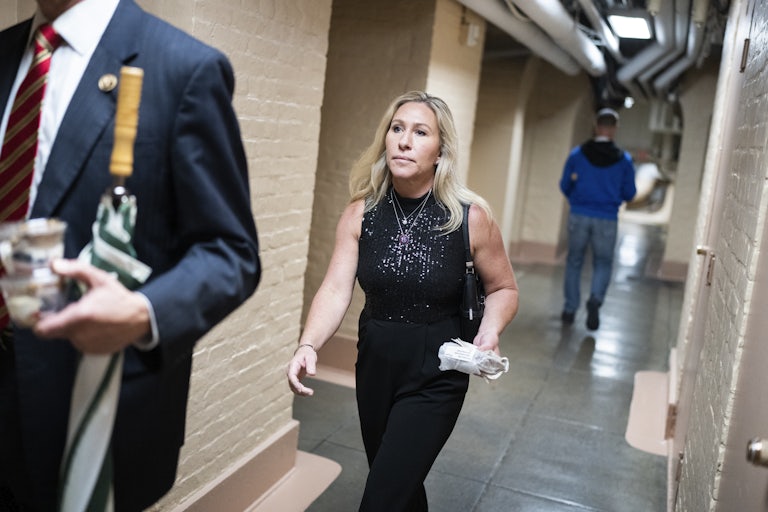
Representative Marjorie Taylor Greene is under fire again, but this time it’s coming from her former far-right allies in Congress.

At issue is Greene’s vocal support for Kevin McCarthy’s bid for speaker of the House, which has already put her in the crosshairs of many far-right pundits. Now, her colleagues think she’s gone too far, as well.

In an essay published last Wednesday in The Daily Caller, Greene accused a group of lawmakers who have dubbed themselves the “Never Kevin Five” of lying to voters when they claim that there will be a viable alternative candidate who can successfully challenge McCarthy for the Speaker’s gavel. “Lying to the base is a red line for me,” Greene wrote.

Never Kevin-er Andy Biggs fired back a few days later. “She’s kind of crossed the Rubicon there. She’s calling us liars and saying we’re misleading,” he said on Lindell TV. (Apparently, neither of these two avid conspiracy theorists and election deniers sees the irony here.)

McCarthy, still a staunch ally of former President Donald Trump, has made no secret of his desire to be speaker. He has already unveiled a host of plans for when he and his party take control of the House of Representatives, including impeaching various cabinet members, investigating Hunter Biden, scaling back aid for Ukraine, and attacking LGBTQ people’s rights.

But he faces serious opposition, and not just from the “Never Kevin Five,” which consists of Biggs, Bob Good, Matt Rosendale, Ralph Norman, and Matt Gaetz. Don Bacon, who is a more centrist Republican, has indicated he’s willing to work with Democrats to elect a more moderate speaker.

Greene has urged her colleagues to unite behind McCarthy, but her alliance with the California representative does not appear to be going well for her.

The feud with Biggs is only the latest public beef she’s had with a former ally. Greene and Colorado Representative Lauren Boebert—who previously were big on MAGA women supporting MAGA women—have locked horns over both Greene’s support for McCarthy and her penchant for wild conspiracy theories.

Again, yes, the irony is lost upon all of the parties involved.

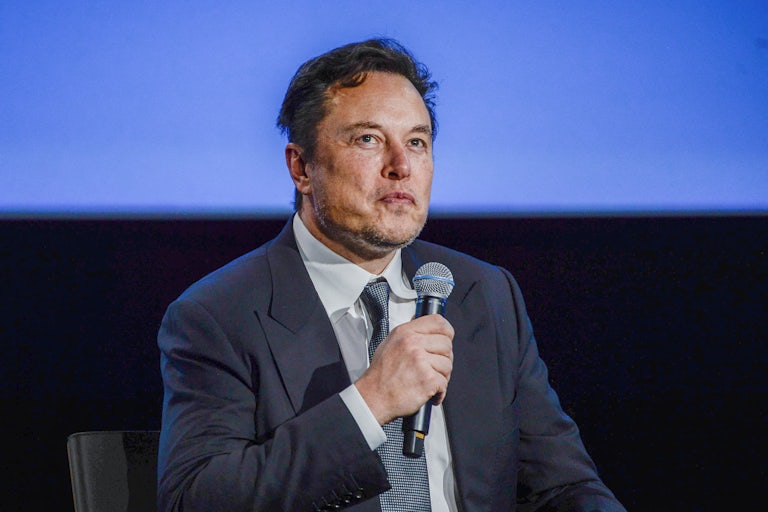
Elon Musk Can’t Stop Lying to Tesla Investors

Tesla’s stock is in a free fall, and the Chief Twit is not doing much to arrest the downward trajectory.

Carina Johansen/Getty Images

Since Elon Musk bought Twitter, Tesla’s stock value has been cut in half. Musk’s reckless behavior—from reinstating far-right radicals and banning journalists, to haphazardly laying off workers, posting Nazi pictures, encouraging people to vote Republican, and alienating advertisers galore—has played a large role in the dramatic free fall.

And it’s not like Twitter is the only firm that’s been inundated by Muskian chaos. Tesla has been embroiled in numerous legal and PR issues related to rampant sexual harassment and racism in factories, to the company’s “self-driving” cars’ apparent propensity to spontaneously combust or run into pedestrians. It’s no surprise that investor confidence would be at an all-time low now that Musk’s attention has been split between the two troubled companies.

Musk himself has a dwindling commitment to the company he took over in 2008. He has sold nearly $40 billion worth of Tesla stock in a little over a year, mostly to maintain Twitter’s viability.

Naturally, this has all been to the detriment of those who still hold stock in Tesla. But in his attempts to massage those concerns, Musk has, in effect, been continually lying to investors, which in turn has only given these benefactors even more fodder to distrust Musk and flee the company.

Musk sold around $8.5 billion in stock in late April, pledging on April 29 “no further TSLA sales planned after today.” It was a pledge he couldn’t keep: On August 10, he sold another almost $7 billion. Once again he promised he was done selling, and once again, he reneged on that promise: On November 8, he sold some $4 billion; he cashed out another $3.6 billion on December 14.

In a Twitter spaces conversation on December 22, Musk pledged once again to stop the sell-off. “I won’t sell stock until, I don’t know, probably two years from now,” he said. “Definitely not next year under any circumstances and probably not the year thereafter.”

That someone as mercurial as Musk can be trusted to keep a commitment spanning the next two years is hard to believe, given his propensity for breaking promises—something that’s ticked up to a weekly basis since he acquired Twitter.

Now, the share value of the venture that enabled Musk to burnish his reputation as a prodigal tech genius is falling, with no end in sight, all at the expense of the Twitter acquisition—a pursuit largely driven by Musk’s hunger for attention, and his yearning to feel funny or well-liked.

If he’s just in it for the comedy, Musk can rest well knowing that many are surely reveling in the laughable absurdity of it all. Meanwhile, those most invested in Musk’s success—investors themselves—are perhaps reckoning with the idea that the best time to divest from Musk was probably yesterday. And that the next best time would be right now.

Unfortunately More on Elon

Who Said It: Donald Trump or Norma Desmond?

They’re both increasingly isolated and adrift from their glory days, but only one is a former president.

Silver Screen Collection/Getty Images
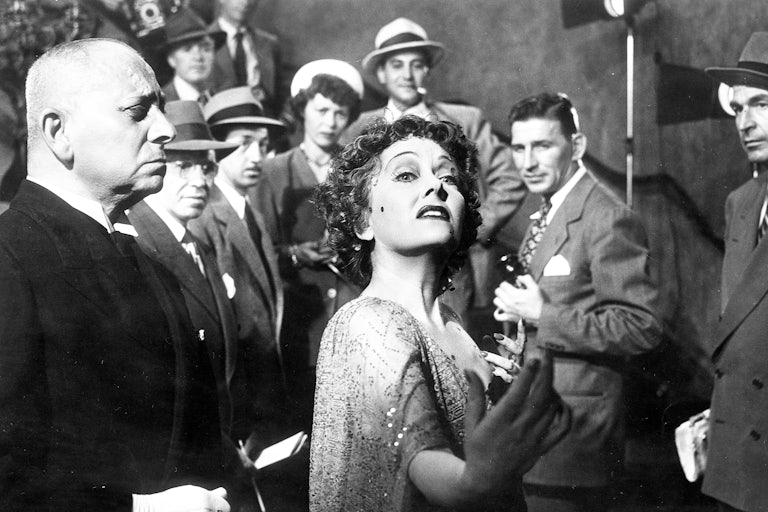
Gloria Swanson appears as Norma Desmond in the final scene of Billy Wilder's "Sunset Boulevard."

Over the holiday, New York magazine’s Olivia Nuzzi produced a compulsively readable dispatch on the nascent presidential campaign of Donald Trump, who has been largely holed up at Mar-a-Lago since leaving office. It’s a detail-rich endeavor, but one particular factoid jumped out: Trump apparently is a massive fan of Billy Wilder’s Sunset Boulevard, in which Gloria Swanson cemented her icon status playing the role of Norma Desmond: a silent film–era superstar driven to near madness by her own keen sense of faded glory, and whose ill-fated comeback attempt ends in tragedy. 

A little too on-the-nose, you say? Maybe a lot on-the-nose. See if you can parse the fact from fiction: Which of the following quotes are from Sunset Boulevard, and which are from Nuzzi’s article? (Answers at the end.) 

  1. “I did nothing wrong...I’ve done nothing wrong.”
  2. “You see, this is my life! It always will be! Nothing else! Just us, and the cameras, and those wonderful people out there in the dark!” 
  3.  “You know, these people forget.” 
  4. “We always have known that this was not the end.”
  5.  “We don’t need two cars, we have a car. Not one of those cheap new things made of chromium and spit, an Isotta-Fraschini. Have you ever heard of Isotta-Fraschini? All handmade. Cost me $28,000.” 
  6. “I think I’ve always been relevant. Like, I’ve been relevant from a very young age.”
  7.  “And who’ve we got now? Some nobodies!” 
  8. “I’m seeing people all the time. I have a lot of people. I’m not isolated.”
  9. “I believe I am overly generous, and I don’t think that’s a bad thing. But sometimes it can make life a little bit more difficult.”
  10.  “That’s a lie! They still want me!” 
  11.  “You know, this floor used to be wood. But I had it changed.” 
  12.  “I’ll show them! I’ll be up there again, so help me!” 
  13. “I don’t need anybody’s advice! I don’t need any advice!”

ANSWERS: Desmond said 2, 5, 7, 10, 11, 12. Trump said 1, 3, 4, 6, 8, 9, 13.