Breaking News
Breaking News
from Washington and beyond

Bernie Sanders Says He Cannot “in Good Conscience” Vote for Debt Ceiling Bill

“The future of the world is literally at stake,” the Vermont senator wrote in announcing his opposition.

Al Drago/Bloomberg/Getty Images
Senator Bernie Sanders

Amid the day-to-day rough-and-tumble of Washington, D.C., we become susceptible to forgetting that days turn to months, and months turn to years. But as the sands of time drift, scientists have been loudly warning about the prognosis of our planet as we know it: It’s not “we need to change before it’s too late,” but “we are on the final brink of being too late.”

On Wednesday, Senator Bernie Sanders announced his opposition to the debt ceiling agreement Republicans ironed out with the White House due to its giveaways to fossil fuel companies and its targeting of social services.

“The best thing to be said about the current deal on the debt ceiling is that it could have been much worse,” Sanders began in a statement. “Instead of making massive cuts to health care, education, childcare, nutrition assistance, and other vital programs over the next decade, this bill proposes to make modest cuts to these programs over a 2-year period.”

Sanders panned the agreement for austerely cutting programs for working people, while doing nothing to challenge entrenched power centers in America, like the bloated military budget or Big Pharma. And he also focused on one of the more puzzling add-ins (whose presence in the bill can only be explained as a favor to Joe Manchin, an emblem of fossil fuel corruption): the expediting of the Mountain Valley Pipeline.

“At a time when climate change is, by far, the most existential threat facing our country and the entire world I cannot, in good conscience, vote for a bill that makes it easier for fossil fuel companies to pollute and destroy the planet by fast-tracking the disastrous Mountain Valley Pipeline,” Sanders said. “When the future of the world is literally at stake we must have the courage to stand up to the fossil fuel industry and tell them, and the politicians they sponsor, that the future of the planet is more important than their short-term profits.”

Sanders instead offered an alternative path for the Biden administration. “The fact of the matter is that this bill is totally unnecessary. The President has the authority and the ability to eliminate the debt ceiling today by invoking the 14th Amendment,” Sanders said. “I look forward to the day when he exercises this authority and puts an end, once and for all, to the outrageous actions of the extreme right-wing to hold our entire economy hostage in order to get what they want.”

Sanders’s statement was refreshing—not just for its refusal to cave to the hostage situation that Republicans built but for its clarity in reiterating that while the latest episode of D.C. melodrama plays out, indeed, the health of the planet as we know it is “literally at stake.”

Such a statement of opposition stands in stark contrast to those put out by the likes of Nancy Mace or the extremist House Freedom Caucus, as they complain the bill does not do enough to cut government investment in the lives of its people.

“Deficit reduction cannot just be about cutting programs that working families, the children, the sick, the elderly, and the poor depend upon,” Sanders said. “It must be about demanding that the billionaire class and profitable corporations pay their fair share of taxes, reining in out-of-control military spending, reducing the price of prescription drugs, and ending billions of dollars in corporate welfare that goes to the fossil fuel industry and other corporate interests.”

Greg Abbott Appoints Election Skeptic as Interim Texas Attorney General

John Scott once agreed to represent Donald Trump in his efforts to overturn the 2020 election.

Brandon Bell/Getty Images
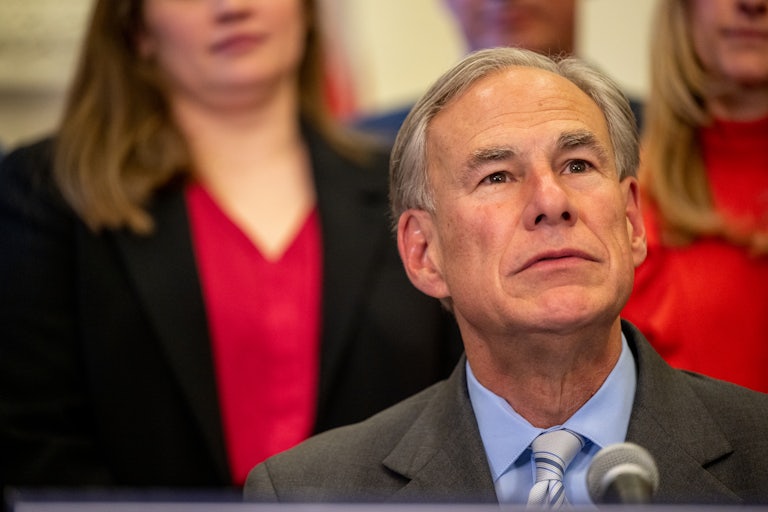
Texas Governor Greg Abbott

Governor Greg Abbott on Wednesday appointed the former Texas secretary of state, who was involved in trying to overturn the 2020 election, as interim attorney general.

The state House voted overwhelmingly on Saturday to impeach Attorney General Ken Paxton for a raft of alleged crimes, including bribery and abuse of office. It was only the third impeachment in Texas history. Paxton had to immediately step aside from his duties and could be removed from office entirely, pending the result of a Senate trial.

Abbott announced Wednesday that John Scott, a lawyer and the former secretary of state, would fill in while Paxton’s trial plays out. Abbott appointed Scott as secretary of state in October 2021, and he served through the midterm elections until the end of 2022.

The official press release listed Scott’s many qualifications, including that he “aided then-Attorney General Abbott’s efforts to hold the Obama Administration accountable and sue President Obama more than any other Attorney General.” While working under Abbott as deputy attorney general, Scott also defended the Texas voter identification law that federal courts ultimately found was discriminatory and created an undue burden on Black and Hispanic voters.

Scott’s initial appointment to state secretary was controversial for a few reasons. First, he was appointed after the legislative session had ended, so he never had to go through the traditional confirmation process.

But more significantly, he also briefly agreed to represent Donald Trump in his efforts to overturn the results of the 2020 election. Scott signed on as counsel to a lawsuit Trump filed to stop the certification of Pennsylvania’s election results. (He filed a motion to withdraw as attorney for the plaintiffs a few days later.)

Although his stint on Team Trump was brief, he seems to have carried that election skepticism into his role in the Texas government. While he eventually conceded that Joe Biden won the 2020 election and that Texas’s elections were fair and secure, he also continued to fuel election misinformation among voters.

Scott’s office oversaw a nearly yearlong audit of the 2020 election results in four of Texas’s largest counties, including the Democratic-leaning Harris and Dallas counties. None of the audits showed there had been any fraud.

During his time as secretary of state, Scott also helped shepherd in a controversial voting law that had been prompted by Trump’s false claims that fraudulent votes were cast. The law rolled back a lot of initiatives that made it easier for people of color to vote, including drive-thru voting, early voting, and mail-in ballot applications. Instead, the law created new identification requirements for mail-in voting, set up monthly reviews to prove voters’ citizenship, and increased protections for partisan poll watchers.

If Right-Wingers Want to Boycott “Woke” Companies, Add This AR-15 Manufacturer to the List

If all it takes is a DEI director or a celebration of Pride to be woke, the list of companies the right should boycott is actually quite long.

Jon Cherry/Bloomberg/Getty Images
An attendee views an AR-15-style rifle during the NRA convention in Indianapolis on April 15.

Chick-fil-A, Target, Bud Light, and more have all become targets of the far right for having even a hint of association with LGBTQ people or efforts to promote diversity, equity, or inclusion.

And with Pride Month right around the corner—with millions of people across the country ready to rejoice in the joy of embracing one’s own sense of love and celebrate other people’s liberation too—it might prove difficult for those on the far right to keep track of all the companies they’ll need to bravely rise up against.

Ruger, for instance—one of the top firearm manufacturers in America—has its own set of diversity and inclusion policies.

Here’s a list of other brands the far right can try going after for the high crime of purporting to care about LGBTQ people or diversity, equity, and inclusion:

This list, of course, is not comprehensive. But if the far right really wants to weed out the dregs of the woke agenda, they’re going to have to go after some of their favorite American brands.

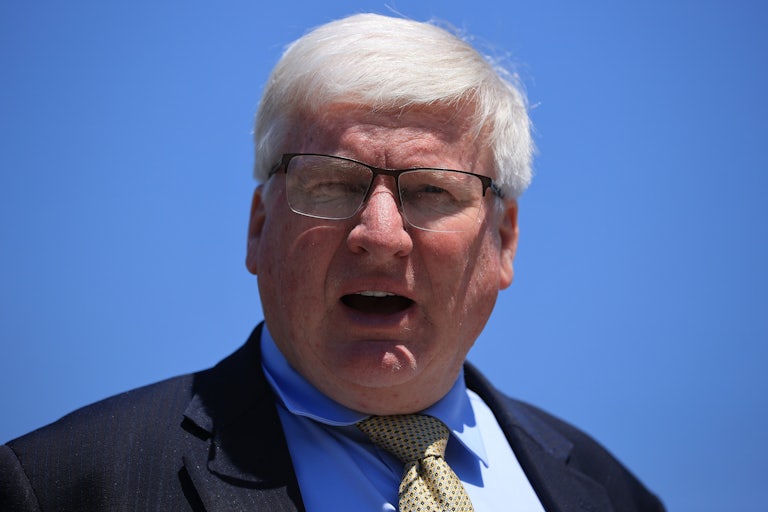
GOP Congressman Says Debt Bill Should Go After Low-Income Housing Too

With a House vote on the bill quickly approaching, Glenn Grothman is making one last attempt to cut even more social services.

Chip Somodevilla/Getty Images
Representative Glenn Grothman

Republicans are now upset about the debt ceiling bill for another reason: It doesn’t go after low-income housing.

The White House–backed debt limit deal narrowly cleared the House Rules Committee on Tuesday by a vote of 7–6. During the meeting, several lawmakers proposed amendments to the bill, including Wisconsin Republican Glenn Grothman. He expressed frustration that the bill would only impose work requirements on food stamps.

“They left low-income housing untouched,” he said. “I think as far as discouraging work and discouraging marriage, I think low-income housing is even a more dangerous program than the food stamps. So I’m including low-income housing in the mix of having work requirements.”

This is not necessarily a new line of attack for Republicans. When they pushed through their disastrous budget bill in April, their plan included slashing funding for housing and homelessness programs by nearly a quarter. Housing advocates warned that hundreds of thousands of families could face eviction and possible homelessness if the policy were implemented.

This is one of the first times, though, that the GOP has been so vocal in opposing low-income housing. It’s also definitely the first time that someone has argued affordable housing discourages people from getting married.

Very few people seem to like the debt deal, with far-right Republicans arguing it hasn’t gone far enough with spending cuts and progressives warning it has gone too far in cutting aid. A major sticking point for progressives is the changes to food assistance. The bill would impose work requirements for the SNAP program, or food stamps, and lower the number of people who qualify for work requirement exemptions.

The bill would also change the Temporary Assistance for Needy Families program, potentially making it harder to get cash assistance. What’s more, the Congressional Budget Office found that food stamp work requirements wouldn’t actually help the deficit.

Grothman put his amendment forward the day before the House’s expected vote and just a few days before the United States is expected to default. His move is a sign that some far-right Republicans won’t go down without a fight. Even if the bill passes, they’re going to try and take down every social service they can in the process.

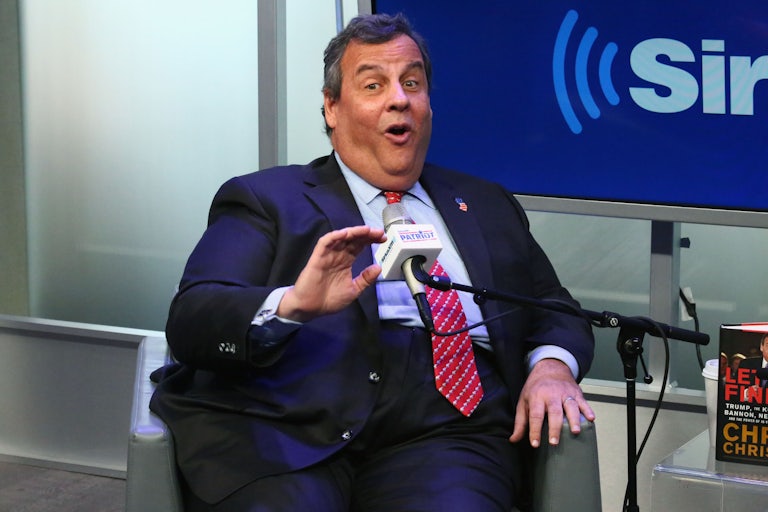
The Big Problem With Chris Christie’s Presidential Announcement

The former New Jersey governor’s anti-Trump New Hampshire bet isn’t likely to pay off.

ASTRID STAWIARZ/GETTY IMAGES
Former New Jersey Governor Chris Christie

Next week, Chris Christie will make it official: At a town hall on Tuesday in Manchester, New Hampshire, the former New Jersey governor will announce that he is running for president.

Chris Christie’s case for the presidency primarily boils down to two arguments. The first is that he’s sort of like Donald Trump—a brash, loud jerk who says what he thinks and brings a certain WFAN regular caller vibe to politics—but, crucially, is not Donald Trump. The thinking here is that Republican voters want someone who is a jerk (probably true) but would like that person to be more competent and even-keeled than the former president (the jury is still out). On this point, moreover, Christie may have the thinking backward: GOP voters like Donald Trump when he is brashly criticizing other Republicans (like Chris Christie) but may not be quite so keen on hearing an establishment figure go at Trump. Still, Christie is betting that he can outmuscle Trump on the debate stage—the way he once bullied Marco Rubio (but not ... Donald Trump).

On that point, Christie is also betting big that New Hampshire is the place to mount his political comeback. There is some logic to this. In 2020, Joe Biden easily bested Trump in the Granite State, performing five points better than Hillary Clinton did in 2016. New Hampshire voters may be souring on Trump, the thinking goes; in any case, primary campaigns need momentum and Christie is banking on finding some in New England. The big problem with this theory though is that Christie has been here before. Christie famously destroyed Rubio’s presidential campaign on a New Hampshire debate stage shortly before the state’s 2016 primary. Doing so didn’t help Chris Christie—he dropped out shortly after the election after winning a shade over 20,000 votes (7 percent) in the state’s primary in 2016. Instead, the candidate he helped was … Donald Trump. Christie is betting that the game has changed since, but he’s an even more marginal figure in Republican politics now than he was then, even if the taint of Bridgegate has worn off. There’s nothing to suggest that this time around will be any different for Christie.