Breaking News
Breaking News
from Washington and beyond

Samuel Alito’s Tacky Defense on Why He Ruled on Case From Billionaire Fishing Pal

The Supreme Court justice accepted a luxury vacation from a Republican megadonor, didn’t disclose it, and then ruled on one of his cases.

Alex Wong/Getty Images
Supreme Court Associate Justice Samuel Alito

Samuel Alito is the latest Supreme Court justice to come under fire for allegedly questionable ethics decisions, and his reasoning behind them is truly awful.

Alito was gifted a luxury vacation in 2008 that included flying on Republican billionaire megadonor Paul Singer’s private jet to Alaska, where they stayed in a fishing lodge that cost $1,000 a night, ProPublica reported late Tuesday. Right-wing activist (and then-head of the Federalist Society) Leonard Leo helped organize the trip, and also attended. Alito did not list the vacation on his annual financial disclosure statement.

The year before, Singer’s hedge fund had submitted its first request that the Supreme Court intervene in a business lawsuit. In 2001, the fund had purchased Argentina’s federal debt at a steep discount. Years later, after Argentina recovered from an economic crash, the hedge fund wanted the Argentine government to pay it back in full.

Singer first asked the Supreme Court to weigh in in 2007, the year before he took Alito on vacation. After the trip, the fund came before the court at least 10 times for the same case. Singer’s involvement was heavily documented in the press. The high court agreed to resolve the issue in 2014. Alito did not recuse himself, instead joining the 7–1 majority in Singer’s favor, earning the hedge fund a $2.4 billion payout.

And Alito himself confirmed everything.

Seeking to preempt outcry, Alito published an op-ed in The Wall Street Journal on Tuesday—just hours before ProPublica published its report. His explanation for why he neither recused himself nor reported the trip was essentially, “I didn’t know I had to.”

I had no obligation to recuse in any of the cases that ProPublica cites. First, even if I had been aware of Mr. Singer’s connection to the entities involved in those cases, recusal would not have been required or appropriate,” Alito wrote, arguing that he and Singer were not personally close, and so he could be considered unbiased.

But beyond that, “when I reviewed the cases in question to determine whether I was required to recuse, I was not aware and had no good reason to be aware that Mr. Singer had an interest in any party.” Again, Singer’s involvement was widely reported.

Alito said he did not report the Alaska trip because “until a few months ago,” justices did not report accommodations or transportation for social events. (This is not true. ProPublica found at least six other examples of justices disclosing gifts of travel on private jets.)

Alito also said that he was really doing the government a favor by taking Singer’s private jet. The trip had already been planned before Alito was invited, and “I was asked whether I would like to fly there in a seat that, as far as I am aware, would have otherwise been vacant,” Alito said. “Had I taken commercial flights, that would have imposed a substantial cost and inconvenience on the deputy U.S. Marshals who would have been required for security reasons to assist me.”

Not only is this terrible logic all around, but Alito also fails to mention the reason that financial disclosure rules changed a few months ago: ProPublica began releasing reports on Justice Clarence Thomas’s relationship with another Republican megadonor, Harlan Crow.

Thomas has received hundreds of thousands of dollars’ worth of gifts from the Nazi memorabilia–collecting billionaire. These include luxurious island-hopping vacations, tuition payments for Thomas’s grandnephew’s private school education, and even the purchase of Thomas’s family property, where the justice’s mother still lives.

If Alito’s shoddy defense of “we didn’t have to report it” is to be believed, we can expect more reports like this soon.

The Supreme Court has operated since its creation without a formal code of ethics, and largely without supervision. As more reports of shady dealings come to light, it’s no wonder that public trust in the institution is waning fast.
Republicans Suddenly Claim Trump-Appointed Prosecutor Is Evil Deep Stater

House Republicans now want to question U.S. Attorney David Weiss about Hunter Biden’s “sweetheart deal.”

Alex Wong/Getty Images
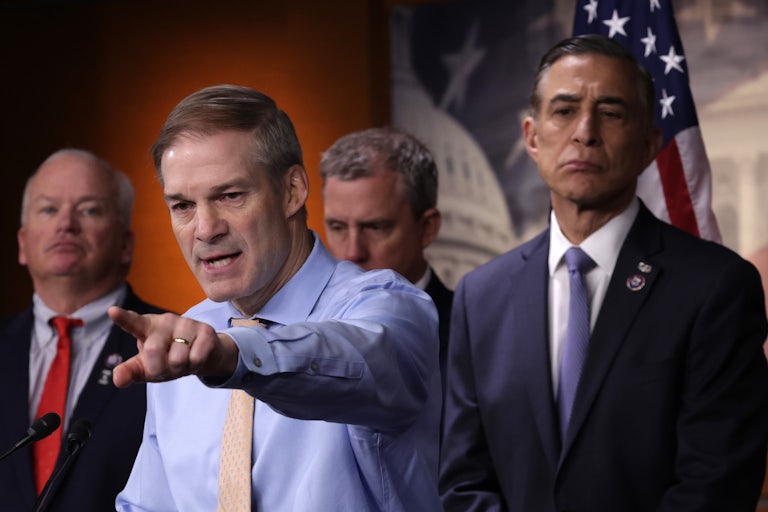
Judiciary Committee Chairman Jim Jordan

In the wake of Hunter Biden’s plea deal in Delaware, House Republicans are blind with rage that after all the buildup, the president’s son isn’t even going to be spending a single night in jail. And more than that, What—nothing about those alleged Burisma bribes? Joe Biden’s mysterious $10 million in unreported 2017 income? On Fox News and in the New York Post, the Daily Mail, and other outlets, they already had Hunter Biden—and for that matter, Joe Biden too—tried and convicted for what Fox’s Maria Bartiromo called “the biggest political scandal any of us has ever seen.”

The air shot out of that balloon in a big way Tuesday, with the plea deal. And now House Republicans want to call on the carpet the U.S. attorney in Delaware who accepted the deal, David Weiss. House Oversight Committee Chairman James Comer wants Weiss to come in for a “briefing.” Judiciary Committee Chairman Jim Jordan said the House should wait until the plea is formally entered. “If there’s a plea entered and it’s done and then the investigation is over, then certainly we’re going to want to talk to him,” Jordan was quoted as saying.

The thread Jordan is hanging onto in that quote is the question of whether this investigation is truly over. Weiss introduced some ambiguity on this matter in his post-deal statement that the probe “is ongoing.” He did not elaborate. Did he mean simply that it’s ongoing in the sense that it’s still on until the plea is officially entered? Or did he mean, as Bill Barr suggested last week, that he’s still looking into the Burisma angle?

It’s the key thing to watch here. It would seem pretty weird for a U.S. attorney to close an investigation into an individual while still probing other charges against that individual. But a lot of weird stuff is happening in America these days.

Bear in mind: Weiss was appointed to his position by Trump. When he became president, Biden left Weiss in the post specifically so he could continue the investigation into his own son—because he saw, rightly, that installing his own person would be seen as a banana-republic-perversion-of-justice kind of move. So he left the fate of his own son to a potentially hostile federal prosecutor. Think Donald Trump would have done that?

And if this is really the end of Huntergate? Well, to most of us, it will prove that the right was overhyping this from jump street. In Wingnuttia, it will merely prove that the deep state is so pervasive, so many-tentacled, that it swallows even Republican prosecutors in its embrace. There’s always an excuse.

Donald Trump Could’ve Gotten the Hunter Biden Deal

The former president thinks his successor’s son got off with a “traffic ticket.” He could have too—if he had listened to his lawyers.

Photo by ALON SKUY/AFP/Getty Images
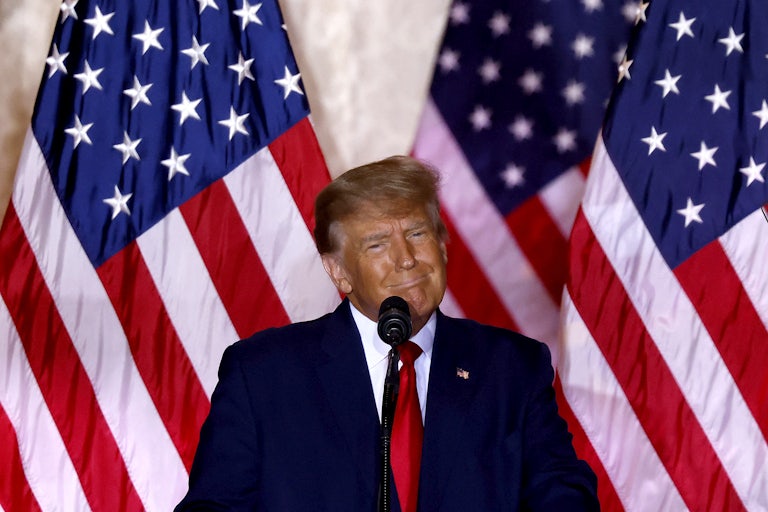
Donald Trump speaking in 2022

Donald Trump is predictably furious after Hunter Biden agreed to plead guilty on two misdemeanor charges of tax evasion and participate in a pretrial program for a gun offense in a deal that means the son of the current president will avoid jail time. “Wow! The corrupt Biden DOJ just cleared up hundreds of years of criminal liability by giving Hunter Biden a mere ‘traffic ticket.’ Our system is BROKEN!” Trump wrote on Truth Social, his bespoke, decrepit social network. “No crime, no case. Election Interference!” he continued.

This is an extension of the line Trump has repeatedly deployed about the dozens of federal charges he faces regarding his alleged mishandling of sensitive classified material related to U.S. national security. Trump has claimed, again and again, that he is facing a political witch hunt, that the charges he faces are a smokescreen intended to remove him from the 2024 presidential race, and that the real criminals—Joe Biden and his family—are getting off scot-free.

There are several problems with this. Setting aside the dubious nature of the allegations against the Bidens, the biggest issue is probably that Trump has all but admitted to refusing to hand back the classified documents for months after leaving office. But there’s another issue as well. Donald Trump could very well have gotten the same deal—and probably even a lighter one—if he had just listened to his lawyers’ advice. One of Trump’s attorneys reportedly tried to get him to return the documents after the Department of Justice’s investigation had begun. Had Trump done this—or if he had returned them months earlier, when the National Archives asked for them back—it is highly unlikely that he would have been charged at all.

If he took a plea deal like the one Hunter Biden agreed to on Tuesday, he would have also likely received a “slap on the wrist” or even less—the Justice Department really, really did not want to bring charges against a former president. He chose not to. The decision to refuse to return documents he had unlawfully retained and then, after an investigation had been opened, to refuse to even try to negotiate a settlement with the Department of Justice directly led to the dozens of charges he was hit with earlier this month.

Donald Trump could have gotten off with a traffic ticket too. The only person he has to blame for the legal predicament in which he now finds himself is Donald Trump.

Republicans Fume Over Hunter Biden’s “Sweetheart Deal”

Despite the fact that a Trump-appointed U.S. attorney cut the deal, GOP pols are crying foul.

Republican Rep. James Comer during a hearing before the House Oversight and Accountability Committee
Alex Wong/Getty Images
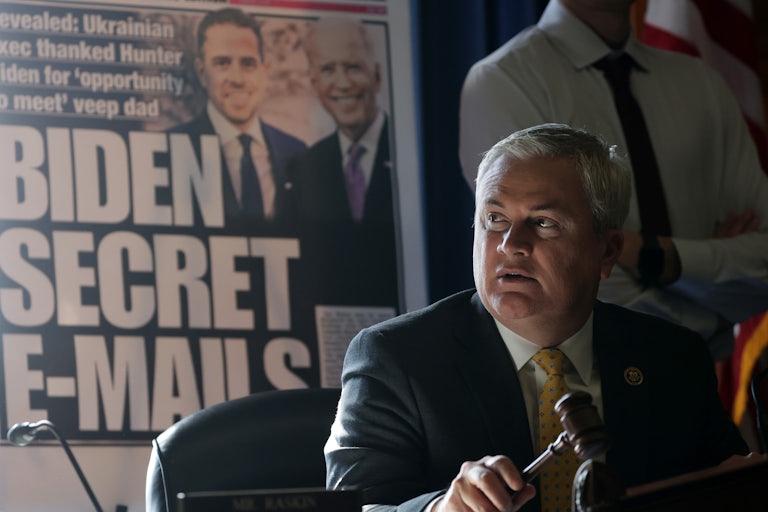
House Oversight Committee Chair James Comer got the “slap on the wrist” talking points.

Republican politicians are not happy about Hunter Biden and federal prosecutors agreeing to his pleading guilty to two minor tax crimes and avoiding prosecution on a separate gun charge.

Speaker Kevin McCarthy decried the proposed deal as evidence of a “two-tiered” U.S. justice system. Former President Donald Trump was indicted on 37 counts for keeping classified documents after leaving office and refusing to cooperate with an investigation, but McCarthy says that he is being targeted because he’s President Joe Biden’s “leading political opponent.”

“If you are the president’s son, you get a sweetheart deal,” McCarthy fumed to reporters on Tuesday. Never mind that the federal prosecutor leading the investigation into Hunter Biden, which began in 2018, is a Trump appointee.

Indeed, “sweetheart deal” was the House Republicans’ phrase of the day. “Hunter Biden’s sweetheart plea deal is further proof of the utter politicization of our federal government—especially the Department of ‘Justice,’” Representative Beth Van Duyne tweeted in a post the House Republican conference Twitter account subsequently shared.

Representative James Comer, who chairs the House Oversight Committee, called the charges against Hunter Biden “a slap on the wrist,” adding in a statement that “these charges against Hunter Biden and sweetheart plea deal have no impact on the Oversight Committee’s investigation.” Comer continued: “We will not rest until the full extent of President Biden’s involvement in the family’s schemes are revealed.”

Senator Josh Hawley also tweeted about the “slap on the wrist” plea deal, adding that the Justice Department has “charge[d] Trump as a spy and tries to put him in prison forever.”

Hunter Biden is not the first high-profile person to take a plea deal with federal prosecutors. Trump adviser Roger Stone, for example, settled a civil case on $2 million in unpaid taxes last year without even having to serve probation.

Hunter Biden’s agreement must still be approved by a federal judge.

Missing Titanic Sub Once Faced Massive Lawsuit Over Depths It Could Safely Travel To

Court documents reveal a former OceanGate employee had several safety complaints over the tourist submersible—and then he was fired.

David L. Ryan/The Boston Globe/Getty Images

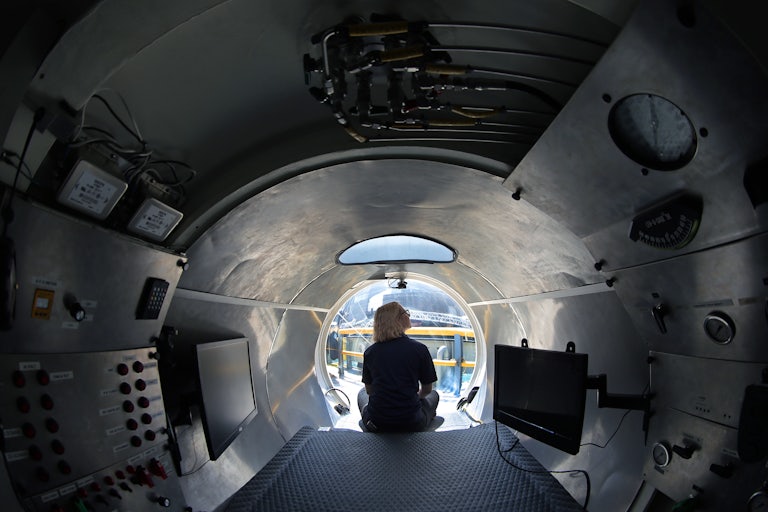
The tourist submersible that went missing while exploring the Titanic wreck was previously the target of safety complaints from an employee of OceanGate, the parent company that owns the sub and runs tourist expeditions of the wreck. That employee complained specifically that the sub was not capable of descending to such extreme depths before he was fired.

That’s according to legal documents obtained by The New Republic. According to the court documents, in a 2018 case, OceanGate employee David Lochridge, a submersible pilot, voiced concerns about the safety of the sub. According to a press release, Lochridge was director of marine operations at the time, “responsible for the safety of all crew and clients.” 

The concerns Lochridge voiced came to light as part of a breach of contract case related to Lochridge refusing to greenlight manned tests of the early models of the submersible over safety concerns. Lochridge was fired, and then OceanGate sued him for disclosing confidential information about the Titan submersible. In response, Lochridge filed a compulsory counterclaim where he alleged wrongful termination over being a whistleblower about the quality and safety of the submersible.

Lochridge, in his counterclaim, alleged that “rather than addressing Lochridge’s concerns, OceanGate instead summarily terminated Lochridge’s employment in efforts to silence Lochridge and to avoid addressing the safety and quality control issues.”

The counterclaim said that:

Given the prevalent flaws in the previously tested 1/3 scale model, and the visible flaws in the carbon end samples for the Titan, Lochridge again stressed the potential danger to passengers of the Titan as the submersible reached extreme depths. The constant pressure cycling weakens existing flaws resulting in large tears of the carbon. Non-destructive testing was critical to detect such potentially existing flaws in order to ensure a solid and safe product for the safety of the passengers and crew.

The counterclaim also details a meeting at OceanGate’s Everett, Washington, facility with engineering staff where “several individuals had expressed concerns over to the Engineering Director.” The OceanGate CEO, Stockton Rush, asked Lochridge to conduct a quality inspection of the Titan. Per the complaint:

Over the course of the next several days, Lochridge worked on his report and requested paperwork from the Engineering Director regarding the viewport design and pressure test results of the viewport for the Titan, along with other key information. Lochridge was met with hostility and denial of access to the necessary documentation that should have been freely available as part of his inspection process.

Lochridge initially verbally expressed concerns about the safety and quality of the Titan submersible to OceanGate executive management, but those concerns were ignored. Lochridge “identified numerous issues that posed serious safety concerns, and offered corrective action and recommendations for each.” Lochridge was particularly concerned about “non-destructive testing performed on the hull of the Titan” but he was “repeatedly told that no scan of the hull or Bond Line could be done to check for delaminations, porosity and voids of sufficient adhesion of the glue being used due to the thickness of the hull.” He was also told there was no such equipment that could conduct a test like that.

After Lochridge issued his inspection report, OceanGate officials convened a meeting on January 19, 2018, with the CEO, human resources director, engineering director, Lochridge, and the operations director. Per the complaint:

At the meeting Lochridge discovered why he had been denied access to the viewport information from the Engineering department—the viewport at the forward of the submersible was only built to a certified pressure of 1,300 meters, although OceanGate intended to take passengers down to depths of 4,000 meters. Lochridge learned that the viewport manufacturer would only certify to a depth of 1,300 meters due to experimental design of the viewport supplied by OceanGate, which was out of the Pressure Vessels for Human Occupancy (“PVHO”) standards. OceanGate refused to pay for the manufacturer to build a viewport that would meet the required depth of 4,000 meters.

The Titanic is estimated to sit on the ocean floor at a depth of nearly 4,000 meters.

Paying passengers wouldn’t know or be informed about Lochridge’s concerns, according to his complaints. They also wouldn’t be informed “that hazardous flammable materials were being used within the submersible.” Lochridge expressed concerns about the Titan again. But OceanGate didn’t address those concerns, and Lochridge was fired.

The case between Lochridge and OceanGate didn’t advance much further, and a few months later the two parties settled.

As of Tuesday, the Coast Guard said that 10,000 square miles have been searched since the Titan submersible went missing Sunday afternoon. Five people are said to be on board, and the submarine had the capability to be underwater for about 96 hours, according to The Guardian