Breaking News
Breaking News
from Washington and beyond

Tucker Carlson Calls Trump “Sensible and Wise” After Saying He Hates Him

Carson, who has privately admitted he hates Trump passionately, seems to be begging for Trump’s forgiveness.

Tucker Carlson laughs
Jason Koerner/Getty Images

“I hate him passionately,” Tucker Carlson once wrote about twice-impeached and now criminally indicted former President Donald Trump. But on Tuesday night, the Fox host bent over backward, forward, and sideways to try cleaning up his errant comments on the radical leader of the Republican Party. Carlson hosted the suddenly “sensible and wise” Trump in an hour-long special, in which the Fox host barely got a word in, giving the former president open rein, perhaps as an apology gift.

In fact, most of Carlson’s presence was felt during interluding clips of him lobbing any favorable adjective he could to describe Trump.

“His descriptions of a meeting with Chinese President Xi Jinping at Mar-a-Lago were remarkably nuanced and even affectionate,” Carlson said of Trump.

On the actual substance of the interview, it was fairly standard Trump form: incoherent ramblings ranging from self-aggrandizing fantasies to geopolitical grievances.

For instance, apparently, when Trump was arraigned last week, people who worked at the courthouse had tears streaming down their faces as they offered assurances to him: “2024, sir.”

Carlson chummily giggled at Trump’s joke that the Wharton School of Finance didn’t teach him about being arraigned.

Trump, who has been debased by numerous Fox anchors including Carlson himself, cited numerous Fox personalities defending his innocence amid being arraigned for 34 counts of falsifying business records while coordinating a hush-money payment to Stormy Daniels, with whom he allegedly had an affair.

On global politics, Trump had glowing praises for rulers for whom, if any Democrat had shared equal sentiments, Fox would sic every host and anchor onto them for months.

“They’re great people,” Trump said on Saudi Arabia—a state guilty of an array of human rights abuses, no less of killing Washington Post journalist Jamal Khashoggi.

The Chinese president, Trump said, was not only “brilliant” but also someone you could never find a good casting for in Hollywood.

Trump also went out of his way, while offering prefaces for why he shouldn’t say it, to talk about Xi’s “beautiful female interpreter.”

Russian President Vladimir Putin, meanwhile, is “very smart,” despite having a “bad year,” not having taken over all of Ukraine. “And what are we going to do? Because Biden is so committed to Ukraine,” he continued.

Trump, however, insisted that he stood up to Putin’s desires, on Ukraine and the Nord Stream 2 pipeline. “I was the worst thing that ever happened to him,” Trump said.

Amid all this, Trump said his biggest problem was not any other nation but “sick radical people” who live within the United States.

“We’re all pretending we’ve got a lot to show for [Trump’s presidency], because admitting what a disaster it’s been is too tough to digest,” Carlson wrote in a text message, just two days before the January 6 attack on the Capitol. “We are very, very close to being able to ignore Trump most nights. I truly can’t wait.”

Instead, two years later, Carlson is back to pretending.

Elon Musk Says He Wants “Specific Examples” of Hate Speech on Twitter

The Twitter CEO seems to think there’s no problem.

Elon Musk talks on stage holding a mic and wearing an "Occupy Mars" t-shirt
Jordan Vonderhaar/Bloomberg/Getty Images

Elon Musk insisted that hate speech and misinformation have decreased on Twitter since he took over, in a bizarre and rambling interview with the BBC.

The Tesla CEO bought Twitter in October. Since then, all hell seems to have broken loose, with Musk firing about three-quarters of all employees, gutting content moderation guidelines, and scrambling to find funds. He admitted to the BBC that it’s been a “rollercoaster” and “quite painful.”

But when BBC reporter James Clayton asked about an increase in hate speech on Twitter, Musk became defensive. He repeatedly asked Clayton to give him a specific example, and when the reporter couldn’t, Musk said, “You don’t know what you’re talking about.”

“You just lied,” Musk said.

It’s disappointing that Clayton was unprepared to offer examples, considering there are so many—including on Musk’s personal Twitter profile. A report released in December by Media Matters and GLAAD analyzed tweets from nine prominent right-wing figures and accounts and found that in the first month under Musk’s leadership, there was a 1,200 percent increase in retweets of posts that use the word “groomer,” a homophobic slur.

The social media research group National Contagion Research Institute found that in the 12 hours after Musk bought Twitter, use of the n-word increased almost 500 percent. Musk has let Nazis back on Twitter, given blue verification check marks to the Taliban, and shared transphobic memes and Nazi photos himself.

Musk also said there is less misinformation on Twitter since he took over, due in part to his efforts to crack down on automated accounts. But a study by the WHO-backed fact-checking organization Health Feedback found that “misinformation superspreaders,” or accounts that repeatedly share misinformation, have seen a major rise in popularity since Musk took over.

When asked if he prioritizes free speech on Twitter over facts, Musk—a self-described “free speech absolutist”—countered with what he probably thought was a real zinger: “Who’s to say something is misinformation?” Considering his own Twitter profile is rife with conspiracy theories and misinformation, he may not know.

During the interview, Musk insisted Twitter was close to being “cash-flow positive,” despite reportedly telling employees in March that the company is now worth $20 billion, less than half what he paid for it. He also claimed that his dog is now the company CEO.

So maybe things will run a little more smoothly now.

Harvard Names Graduate School After Republican Billionaire Megadonor Who Loves Ron DeSantis

Ron DeSantis is leading an attack on academic freedom. And Ken Griffin is one of his biggest financial backers.

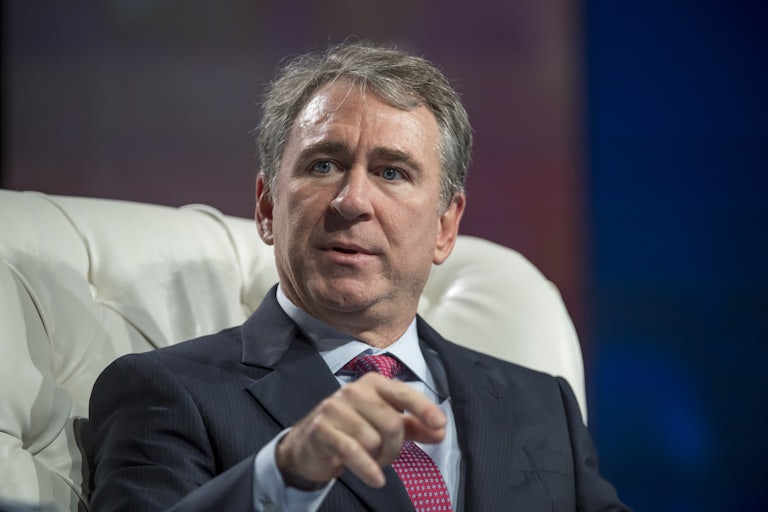
Ken Griffin
David Paul Morris/Bloomberg/Getty Images
Ken Griffin

Harvard’s Graduate School of Arts and Sciences announced Tuesday it will be renamed for a Republican billionaire megadonor who is one of Ron DeSantis’s biggest financial backers.

Hedge fund CEO Ken Griffin graduated from Harvard in 1989. The school praised his $300 million gift, saying it will help it advance its research and expand its ability to provide students with financial aid.

But people were confused by the fanfare over his gift and the decision to give Griffin such a prominent reward. Harvard’s endowment fund is $53.2 billion, the largest academic endowment in the world, so Griffin’s gift is a drop in the bucket for them.

But more than the money, people are pretty mad about Griffin himself. The billionaire is currently the third-biggest individual political donor in the country, having given a total of $71,050,000 to exclusively conservative causes, according to OpenSecrets.

A report published in November by the group Americans for Tax Fairness found that Griffin gave $66.1 million to several Republican super PACs and candidates during the 2022 midterm elections. That election cycle was the most expensive midterms ever, as billionaires rushed to exert influence over the outcomes.

Griffin actually was one of Barack Obama’s biggest fundraisers when he first ran for election in 2008. But by 2012, Griffin had flipped, transferring his vote and his money to then–Republican nominee Mitt Romney.

He alleged the Obama administration had “embraced class warfare as being politically expedient” and argued that wealthy people had “insufficient influence” in politics.

Most recently, Griffin has thrown his weight behind Ron DeSantis. He was the Florida governor’s biggest donor during the 2022 election, giving $5 million to DeSantis’s reelection campaign.

Griffin has repeatedly said he would “love” to see DeSantis run for president in 2024. During a March interview with Bloomberg, Griffin said he disagreed with DeSantis on a few points, such as the governor’s going after Disney for criticizing Florida’s “Don’t Say Gay” law or spreading doubt about Covid-19 vaccines.

To be clear, Griffin didn’t say he disagreed with DeSantis’s motivations. Instead, Griffin said he thought the Disney retaliation was government overreach and the vaccine disinformation was poorly worded and framed.

Meanwhile, DeSantis has come under fire recently for going after educational freedom in Florida. He has promised to defund diversity, equity, and inclusion programs on college campuses; limited what can be taught or read in schools; and even had his allies force out the president of a liberally minded college.

Wisconsin Teacher Who Complained About “Rainbowland” Song Ban Placed on Administrative Leave

A Wisconsin school district seems to be retaliating against one of its own teachers, after she brought attention to overzealous enforcement in the classroom.

Kevin Winter/Getty Images/The Recording Academy
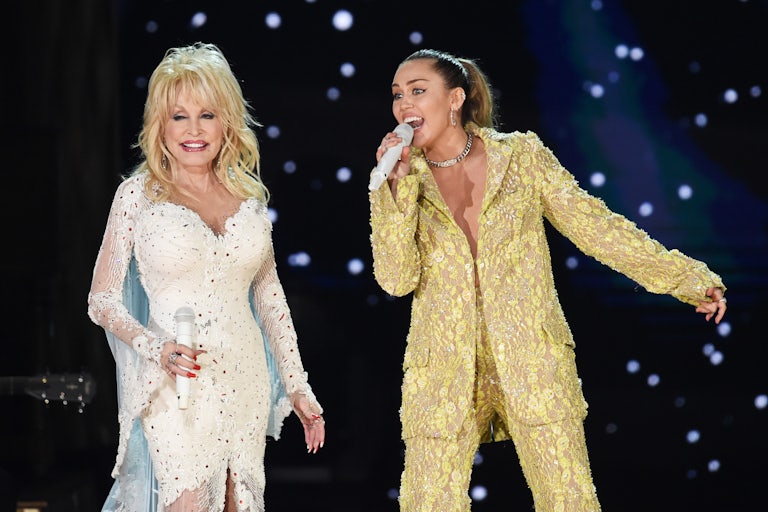
Dolly Parton and Miley Cyrus, the singers of “Rainbowland,” perform onstage.

In March, a first-grade concert in Wisconsin was barred from singing “Rainbowland” by Miley Cyrus and Dolly Parton. Now the school district has placed a teacher who complained about the ban on administrative leave. The district has not clarified when the teacher will be allowed to return or what repercussions she may face next.

Heyer Elementary first-grade teacher Melissa Tempel had been working with other teachers to prepare for a spring music concert. The teachers decided to include Cyrus and Parton’s “Rainbowland” in the set list. But school administrators, including the principal, barred the song’s inclusion, citing a district-wide policy on items “that may be considered political, controversial, or divisive.” Tempel tweeted about the ban, prompting massive public attention on the Waukesha School District.

And then, last week, Tempel was placed on administrative leave. She had come to school like any other day. But unlike any other day, district officials were waiting to stop and remove her from the classroom.

The school board plans to meet Wednesday. The agenda includes items limited to the “executive session” related to “specific personnel problems,” which suggests closed-door discussions about Tempel’s fate. Parents from the district have found this secrecy as well as the uncertainty around Tempel’s leave period or the reason for it in the first place to be indicative of district officials’ broader lack of transparency.

Members of the Alliance for Education in Waukesha, or AEW, a group of parents and community members, are inviting the public to attend a public singalong to “Rainbowland” and the school board meeting to “show support for an inclusive Waukesha.”

“I am deeply concerned that Ms. Tempel was removed from her classroom for standing up for them and what she knows is right,” said a parent from Tempel’s class.

“Melissa is a wonderful teacher, and the fact that the district did not address this issue with her and with the school principal directly, but instead called her out in a communication to the entire district community is not only wrong but juvenile,” said another Heyer elementary parent.

Tempel’s administrative leave is just the latest in what parents and teachers say is a school district’s overzealous enforcement of Board Policy 2240, Controversial Issues in the Classroom, which sets guidelines for when the district would “permit” a so-called “controversial issue” to be introduced in the classroom. The broad policy has gone as far as banning rainbow designs from school decor or teacher lanyards because of the association with the LGBTQ community.

The teachers’ initial planning for the spring concert seemed fairly innocent. After some back and forth, Tempel and her colleagues found Parton and Cyrus’s “Rainbowland” to pair well with other songs in the lineup, like “What a Wonderful World,” “Here Comes the Sun,” and “It’s a Small World.”

“Livin’ in a rainbowland, where everything goes as planned, and I smile, ’cause I know if we try, we could really make a difference in this world,” Parton and Cyrus sing in their chart-leading ballad.

But as the teachers soon discovered, the show would not go on as planned.

The school principal and another school administrator reviewed the song and decided that it “could be deemed controversial” in relation to Board Policy 2240. Waukesha School Board President Dr. Kelly Piacsek and Superintendent Dr. Jim Sebert have insisted that they did not “insert themselves into the song selection.” Rather, they framed the process as decisions made by Heyer Principal Mark Schneider and the school’s music teacher. Piacsek and Sebert claim they only reviewed and upheld decisions made by Heyer’s staff.

But members of AEW argue the officials are blaming school staff for a broader chilling atmosphere in the district that is being conducted, namely through the advancement of policies like 2240.

Curiously, Piascek and Sebert, while insisting they were not involved in the decision to ban the song, took it upon themselves to explain the exact rationale of why it was banned. They explained that the “subject matter addressed by the song’s lyrics” was not in line with the “the age and maturity level of the students.”

The district has not clarified exactly what is inappropriate about Cyrus and Parton’s song, nor have they clearly delineated why Tempel has been placed on forced leave. Attempts were made to reach Superintendent Sebert, Deputy Superintendent Joe Koch, School Board President Piascek, and Heyer Elementary Principal Schneider, but The New Republic did not hear back from any by publication time.

“This Superintendent and Board began the march toward marginalization last year, and it has only served to stoke fear and sow distrust in the  Waukesha Community, which has yielded a pattern of bullying against anyone who calls out the district’s bias and harassment,” the AEW said in a statement Tuesday. “Now Waukesha is a national laughingstock, and the blame for that falls squarely to the feet of the district’s leadership, not those who have the courage to hold them accountable, like Ms. Tempel.”

Tennessee’s Governor Says He Wants a Red Flag Law. Here’s How to Tell Whether He Means It.

If Bill Lee is serious, after the two weeks of chaos in his state, he could actually make it happen.

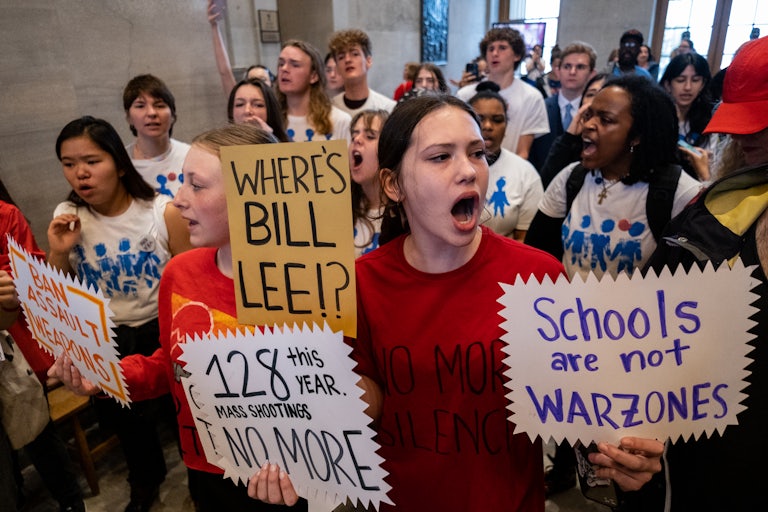
Signs read "Where's Bill Lee?," "Schools are not warzones," "Ban assault weapons," and "128 this year. Mass shootings no more."
Seth Herald/Getty Images
Protesters gather at the Tennessee State Capitol building and demand action on gun control on April 6 in Nashville.

Tennessee’s Republican governor said Tuesday he would support gun reform legislation, pulling an abrupt 180 on gun control legislation as his state still reels from a school shooting.

A shooter opened fire at the Covenant School in Nashville two weeks ago, killing three children and three adults and wounding several others. State Republicans, including Governor Bill Lee, have insisted that there is nothing they could have done or could do differently to prevent such a tragedy. When Democrats agitated for gun reform on the floor of the state House of Representatives, Speaker Cameron Sexton moved to expel two of them from the legislature.

Lee finally struck a different tune Tuesday, during an appearance at the Midtown Hills police precinct, which responded to the Covenant School shooting. “I think everyone—leadership from speakers as well as other leaders—have expressed a desire to do something and move forward,” he said. “I have challenged them to bring forward ideas and subsequently met with those leaders. I do believe we should get it done during this session.”

Lee did not offer any specific suggestions of what those laws, including a red flag law, should entail. Here are some places he could look for ideas: the red flag law that Tennessee failed to pass in 2020 or the package of gun reform measures that state Democrats introduced last week.

One of those bills is for extreme risk protection, another name for a red flag law. The measure would let families and law enforcement intervene when a person poses a significant threat to others or themselves.

The Tennessee Senate Judiciary Committee has said it will not hear any firearm legislation for the rest of the year, but Lee urged the legislature to pass some kind of reform this session.

A few hours after Lee’s speech, Sexton responded by announcing that “the House is willing to work toward bipartisan solutions to protect all children at their schools, in their communities, and inside their homes.” Though he did not specify a red flag law or say the word “guns,” his statement was in response to Lee’s suggestion for this legislation.

Lee’s speech was only his second public appearance since the shooting, and it was markedly different from his first one. In a video message posted on Twitter just days after the attack, Lee said he had lost two close friends in the shooting, but it was not yet time for change.

“I understand that there is pain; I understand the desperation to have answers, to place blame, to argue about a solution that could prevent this horrible tragedy,” he said. “There will come a time to discuss and debate policy. But this is not a time for hate or rage. That will not resolve or heal.”

His pivot comes after two weeks of turmoil in and national scrutiny of the Tennessee state legislature. Thousands of students marched two separate times on the Capitol building demanding gun control. They were joined by three Democratic lawmakers, two of whom were subsequently expelled by their Republican colleagues for allegedly breaking House decorum rules.

One of the expelled lawmakers, Justin Jones of Nashville, was reinstated Monday by his district’s Metro Council. He is now technically a “new member” and can file up to 15 bills. Jones promised Monday night that all 15 bills he files will be on gun control.