Life in a Warming World
A weekly reckoning with our heated planet—and the fight to save it

The Fossil Fuel Industry Veterans Who Regulate Your Electricity

A closer look at the people in power who control your power

Eric Thayer/Bloomberg/Getty Images
Power lines in North Hollywood, California

When you think about your electric bill, what comes to mind? For most of us, it probably goes no further than annoyance at how high it gets when your spouse or roommate cranks the A.C. all summer. It’s safe to say that the average American doesn’t think too much about the people making decisions about electricity that both dictate the rates we pay and the amount of progress the country achieves on climate change.

But a new study of the professional background of these people ought to make us sit up and take notice, because many of them walked right through the revolving door from the fossil fuel industry.

First, some context: The nation’s 168 investor-owned utilities serve almost three-quarters of Americans. Because of the regulatory structure of how we provide electricity, these utilities can only turn a profit when they build new infrastructure—which incentivizes them to prioritize certain projects over others. The state bodies that regulate these utilities (and other services like water and telecommunications) are usually referred to as “public utility commissions,” and PUCs are staffed by commissioners who are either elected by voters or appointed by elected officials, depending on the state.

“PUCs are charged with ensuring reliable service to customers, at the lowest possible rates, while still allowing a ‘reasonable’ return on the investments that utilities make to run the electrical power system,” Jared Heern, a postdoctoral researcher at Brown University, told me. “The way it usually works is that utilities spend money on something or want to spend money on something, so they go to the PUC that rules whether it is a reasonable and needed expense or not, and then they set the electric rates that customers pay so utilities can recoup that money plus a profit on top.”

Research conducted by Heern and published in the July issue of the journal Energy Research & Social Science looked at the bios of more than 800 commissioners serving in all 50 states between 2000 and 2021 and found that 25 percent of the commissioners surveyed had worked in the fossil fuel or utility industries, compared to 19 percent with a background in environmental regulation.

This isn’t necessarily shocking. Having industry knowledge in a complicated field like electricity generation is, naturally, a good fit for many regulators. But this experience could also bias commissioners toward decisions that might be profitable for a utility while not necessarily helping customers or the environment. The commissioners’ experience working on PUCs is also potentially profitable for themselves: Heern tracked what half of the surveyed commissioners did after leaving the PUC, and a whopping 50 percent of them went back to work for the utilities they had just been regulating.

“Decarbonizing and decentralizing the electrical power system is a critical part of addressing climate change and will become even more important as we electrify other sectors like transportation and building heating,” Heern said. “Yet there are only about 200 public utility commissioners at a given time spread across all 50 states that are making these crucial regulatory decisions on what utilities can, cannot, and should do with the electrical power system.”

Utilities are, pardon the pun, real power players in state and national politics—Southern Company, one of the nation’s biggest utilities, spent more than $9.2 million on lobbying last year—while wealthy utility CEOs can also make significant financial contributions in local and state races. In many states, public utility commissioners are appointed directly by governors or legislatures, which can open up serious potential conflicts of interest when considering how personal interest and financial ties come into play.

Heern’s research found that both Democratic and Republican utility commissioners tended to have backgrounds working in the services they were then appointed to regulate. Partisanship, however, played a key role in one area: Some 30 percent of Democratic utility commissioners had a background in environmental regulation, whereas only 10 percent of Republican commissioners did.

Amid all the tangles of conflicts of interests, Heern’s work points to some encouraging news on climate. The number of commissioners with environmental experience soared from 12 percent in 2000 to 29 percent in 2020, as the energy transition kicks into gear—a change Heern says “seems positive for the necessary policy steps to be taken in addressing climate change.”

Heern told me that he hopes his work kick-starts more research and focus on these crucially understudied groups. “PUCs need more attention from researchers and journalists, but also from members of the public,” he said.

Good News

For the first time, wind and solar outpaced coal in America’s mix of energy generation consistently for the first five months of the year, according to an E&E News analysis of preliminary federal energy data. “From a coal perspective, it has been a disaster,” Andy Blumenfeld, an energy analyst, told E&E. “The decline is happening faster than anyone anticipated.”

Bad News

The Pakistani government said Tuesday it is planning to evacuate more than 80,000 people ahead of Cyclone Biparjoy’s landfall on Thursday. This week, the storm reached 105 mph wind speeds over the Indian Ocean, classifying it as a “very severe” cyclonic storm. High tides and strong winds from Biparjoy killed several people in India ahead of the storm’s landfall.

Stat of the Week

172%

That’s how much more land has burned in California’s wildfires since 1971 thanks to climate change, a new study has found. Wildfires in the state have increased fivefold over the past 50 years.

Elsewhere in the Ecosystem

Alarm at rightwing push to reverse clean-energy success in Texas and beyond

Last week, Texas Republicans scrambled to pass a bill that would have imposed significant punishments for new wind and solar facilities. Portions of that bill were directly drafted and edited by the Texas Public Policy Foundation, ot TPPF, a powerful conservative think tank in the state with a history of lobbying against climate policies in Texas and beyond, The Guardian reports:

The burgeoning influence of TPPF, an organization substantially funded by fossil fuel interests and publicly lauded by Greg Abbott, Texas’s Republican governor, is the catalyst to a rightwing attempt to crimp the stunning progress of renewable energy in the state, which now produces more than a quarter of all wind-powered electricity in the US.

The group’s agenda is now extending far beyond Texas, bankrolling efforts to halt offshore wind turbines in Massachusetts and to prop up coal power on native American land in Arizona while spearheading efforts to crack down on sustainable finance in energy-producing states like West Virginia.

“We are very influential, we are meeting with policymakers to share recommendations and we’re having success around the country,” said Jason Isaac, a former state representative and now director of TPPF’s energy initiatives. Isaac said that TPFF regularly helped craft “certain aspects” of bills in Texas related to the state’s electricity grid or environmental, social, and corporate governance (or ESG) issues.

Read Oliver Milman and Dharna Noor’s full report at The Guardian

This article first appeared in Apocalypse Soon, a weekly TNR newsletter authored by contributing deputy editor Molly Taft. Sign up here.

My Personal Gas Stove Saga

Improving indoor air quality is harder than it sounds.

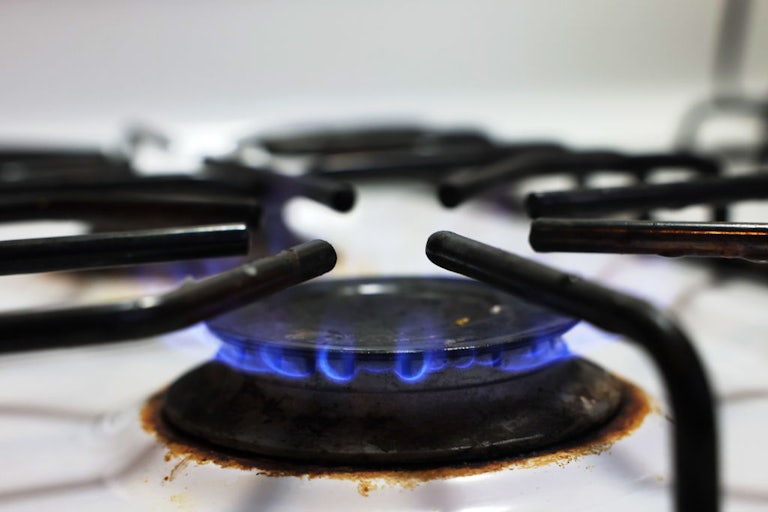
A close-up of a lit gas stovetop.
Michael M. Santiago/Getty Images

Confession: When TNR began covering the most recent wave of gas stove news, I was still cooking on a gas range.

At first, replacing it didn’t feel like a realistic option: The stove came with our rental. And while I wasn’t wild about the well-established link to respiratory illnesses, I figured there were a lot of risks out there in every aspect of life. I also appreciated how quickly the range heated up, how responsive it was to adjustments during the cooking process, and how screaming hot I could crank the oven for homemade pizzas—in short, all the reasons people say they like gas stoves. And there was no chance any landlord would shell out for induction.

So as I interviewed people about new research showing gas ranges leak carcinogenic benzene, and reported their suggested policy solutions, I was compartmentalizing. I was even a little startled when my husband, reviewing the coverage, insisted that we had to do something about this too—and do it now, not merely prioritize electric when we eventually moved out. When he bought new filters for a long-unused air purifier and set it up in the kitchen, along with an air quality monitor, I suggested this might be overkill. (Caveat: Home air quality measuring devices are not very accurate, but you can watch the “volatile organic compounds”—which include benzene—spike when you turn the stove on, which has a way of making the theoretical risk feel a little more immediate. Great panic fodder for masochists.)

Without his insistence, though, I’d never have appreciated how hard it is to mitigate the effects of gas stoves with the tips many “service” journalism pieces offer.

One Slate piece last October suggested people cut their risk by using the exhaust hood. And that’s what our landlord suggested when we first contacted him asking whether he’d consider replacing the gas stove. The exhaust hood doesn’t do much, though, when it’s simply venting to a spot six inches above where it takes in air, rather than to the outdoors. Although this air is allegedly filtered before being dumped back into the kitchen, a lot of filters don’t work on benzene, and our filter was old and the vent cover even broke off shortly after this experiment began. The landlord said there was no way to vent to the outdoors given the kitchen’s setup.

Our main option was to open the window while cooking. As fall turned into winter, doing this every time we cooked got really flipping cold.

In January, all hell broke loose. U.S. Consumer Product Safety Commissioner Richard Trumka Jr. told Bloomberg that “any option is on the table” regarding gas stove regulation and “products that can’t be made safe can be banned.” Conservatives went haywire, yelling about freedom and chaining themselves to their ranges, while liberals pointed out that no one was going to actually rip existing ranges from the walls and a full nationwide ban on gas stoves almost certainly wasn’t in the offing anyway.

But here’s the thing about people like Trumka using their pulpit: It may trigger the wingnuts, but it also raises public awareness. I can’t prove the connection, but when we emailed the landlord three days after this national debate kicked off, this time he said yes—that this issue had been on his mind—and offered a deal of replacing the gas stove in exchange for our signing a longer-term lease.

The physical act of replacing a stove still takes work: The gas range, it turned out, had no electrical hookup behind it, so that had to be installed. The technician who dropped off the new range for installation gave me a lecture about how his wife had demanded the opposite switch—that he put in a gas range rather than electric. Were we really sure about this, he asked, or was the rental management agency forcing us to take a substandard stove swap? I mentioned the research on gas stoves. He remained unconvinced.

I’m happier than I thought I’d be with the new range—it’s not induction, but regular glass-top electric stoves have gotten better since I last used them: They heat up faster and can reach higher temperatures. The heat in the electric oven seems a little steadier and more uniform than in our gas one (this is consistent with what others say, although I’m not aware of good data), so it’s a little better for cakes and more delicate stuff—and it gets very, very hot with enough time, so pizza and bread still work.

And here’s the thing: Not having to worry about what’s leaking out isn’t nothing. It feels better than you might think. Aside from the concern about respiratory problems and cancer—our basement gas line sprang an unrelated leak midway through this process, resulting in multiple emergency technician visits—it’s kind of nice to know that there’s one less way for the house to blow up.

Anyway, that’s one story of a gas-to-electric switch.

Now, some news: I’ll be going on tiny-human leave for a few months as of the end of this week (one of the reasons we pushed through this stove saga—kids are particularly affected by gas range emissions). I couldn’t be more delighted to introduce Molly Taft, who will be taking over this newsletter and the TNR climate desk in the interim. Molly was most recently a staff writer at Earther, Gizmodo’s climate site, and has also written for The Intercept, Vice, The Outline, and in fact The New Republic!

Simultaneously, we’ll soon be renaming this newsletter from its original launch title of “Apocalypse Soon” to “Life in a Warming World,” to better reflect the wide-ranging nature of topics covered. It’s going to be an exciting next couple of months—stay tuned!

Good News

Well, medium news: Chemical companies Chemours, DuPont, and Corteva have announced a preliminary settlement agreement in lawsuits over damages from PFAS (or “forever chemicals,” linked to many adverse health outcomes, so named because they are slow to break down) contaminating drinking water. The agreement involves setting up a $1.19 billion fund for removing PFAS. (Chemical company 3M also appears ready to settle on similar claims.) The good part of this is that it means money will go toward cleanup. The bad part is that it may not be enough, and it probably doesn’t hold these companies fully accountable for decades of misleading the public about the dangers from these substances.

Bad News

Both Allstate and State Farm have stopped writing new home insurance policies in California, due to climate risks and repair costs.

Stat of the Week

50%

That’s the increase in the amount of carbon dioxide in the atmosphere, comparing this year’s measurements to the preindustrial era, according to a new report.

Elsewhere in the Ecosystem

The Grand Canyon, a Cathedral to Time, Is Losing Its River

The great Western water crisis will have many casualties. The Times’ photo-intensive feature on the Grand Canyon takes one of them and uses it as a poetic stand-in for the greater Colorado River catastrophe:

The Colorado flows so far beneath the Grand Canyon’s rim that many of the four million people who visit the national park each year see it only as a faint thread, glinting in the distance. But the river’s fate matters profoundly for the 280-mile-long canyon and the way future generations will experience it. Our subjugation of the Colorado has already set in motion sweeping shifts to the canyon’s ecosystems and landscapes—shifts that a group of scientists and graduate students from the University of California, Davis, recently set out to see by raft: a slow trip through deep time, at a moment when Earth’s clock seems to be speeding up.

John Weisheit, who helps lead the conservation group Living Rivers, has been rafting on the Colorado for over four decades. Seeing how much the canyon has changed, just in his lifetime, makes him “hugely depressed,” he said. “You know how you feel like when you go to the cemetery? That’s how I feel.”

Read Raymond Zhong’s full report at The New York Times.

This article first appeared in Apocalypse Soon, a weekly TNR newsletter authored by deputy editor Heather Souvaine Horn. Sign up here.

I Wish I Were Joe Manchin

What is your personal Mountain Valley Pipeline? What would it be like to force your co-workers to pretend it’s a good idea?

Joe Manchin grins and points as he walks.
Bill Clark/Getty Images
Senator Joe Manchin, living his best life

Can you imagine what it must be like to be Joe Manchin? Seriously, picture it for a second. Imagine anytime your co-workers were on deadline to deliver a project, you could just toss in a line funding your pet obsession: if TNR’s editorial team were about to launch an expanded Supreme Court desk, for instance, and I said, “Welp, in exchange for my very titular support for this project, you must also fund my plan to plant Charentais melons around the Washington Monument.”

Now imagine that instead of saying, “Absolutely not, what are you smoking, this has nothing to do with fruit,” my bosses and colleagues stared at me blankly for a few seconds, said, “OK, we can work with that,” and issued a press release announcing their support for small-scale heirloom melon agriculture in downtown D.C.

This is pretty much how things have been playing out over the past year with Joe Manchin and the Mountain Valley Pipeline—the cursed imbroglio that has now made it into this week’s debt ceiling deal.

The melon seeds of this week’s news were sown last summer, when the West Virginia “Democrat” finally agreed to provide his vote for Democrats’ flagship piece of legislation, the Inflation Reduction Act. For his support, Manchin secured a promise from Democrats not just to speed up federal permitting in general but specifically to “require the relevant agencies to take all necessary actions to permit the construction and operation of the Mountain Valley Pipeline and give the DC Circuit jurisdiction over any further litigation.”

The follow-up to this came in September, when Manchin introduced his Energy Independence and Security Act, a bill purportedly to reform the U.S. permitting system for energy infrastructure but especially to issue any new permits the Mountain Valley Pipeline might need, and which had been repeatedly blocked by the Fourth Circuit over environmental concerns, including the pipeline’s threat to at-risk species.

The White House duly issued its statement of support, despite 70 House Democrats pointing out that gutting the National Environmental Policy Act to please Manchin was maybe not the best idea, and Majority Leader Chuck Schumer tried unsuccessfully to get it into September’s continuing resolution to keep the government funded. When that failed, he attempted in December to attach the bill to the National Defense Authorization Act—with Biden’s blessing—before giving up on that plan as well.

Imagine how frustrated you’d be if you were Manchin at this point. After all, you provided a crucial swing vote on a piece of legislation that could save households thousands of dollars and help cut the emissions contributing to an existential crisis on Planet Earth, and your co-workers still haven’t delivered on their promise to ram through your ill-conceived, ill-executed little scheme that undermines that entire effort.

The Mountain Valley Pipeline is, to use the technical term for something that would comprehensively flunk any rational utilitarian analysis, a bad project. The idea is to run a pipeline over 300 miles from northern West Virginia to southern Virginia, perhaps even including an extension into North Carolina, and fill it with fracked gas, which we now know is fueling a spike in global methane emissions, warming the planet at a much faster rate than earlier projections.

It’s been unclear from the get-go what demand this pipeline will allegedly be meeting, given that the region already gets gas from the existing “Transco” pipeline system. But Manchin likes the MVP, presumably, because it’s in his state and theoretically promises jobs and economic development to communities in dire need of them. He has repeatedly asserted that the MVP somehow enhances the country’s energy security. (He might also just like it because he gets a bonkers amount of money from the fossil fuel industry, but hey, let’s not be cynical.)

If the MVP is like other pipeline projects, the actual benefit to local communities is wildly inflated. But given what’s being promised, it’s impressive how much local opposition the pipeline has provoked, from environmental activists to landowners concerned about accidents and irritated about the seizure of their property via eminent domain.

It’s not just the pipeline’s projected emissions—equal to those of 26 coal plants—that have raised eyebrows, as TNR’s Kate Aronoff pointed out last year. Since 2018, the project has racked up hundreds of water quality violations. And as Inside Climate News reported last fall, there’s a particular concern about the safety and stability of pipeline sections that have been left outside for long periods of time. In April, the Fourth Circuit took a look at the pipeline’s copious water violations and ruled that West Virginia had “failed to provide a reasoned explanation as to why it believes MVP’s past permit violations will not continue to occur going forward.” Last week, the D.C. Circuit ruled that the Federal Energy Regulatory Commission needs to either prepare a report on the MVP’s possible effects on erosion and sedimentation or explain why it hasn’t.

In short, there are a lot of reasons to let this questionable project die. And really, it would be sensible at this point for Schumer and Biden, after multiple attempts to honor last summer’s deal with Manchin, to mothball the thing. Instead, the long-awaited bill text to avoid a default on U.S. debt gets released, and what do we see? Round Three of “let’s try to insert special treatment for this bogus piece of mega-plumbing into must-pass legislation.”

Although Virginia Senator Tim Kaine immediately announced his intention to haul the MVP expedited approval back out of the bill text, on the grounds of it being “completely unrelated to the debt ceiling matter,” the Senate rejected his amendment late Thursday and passed the bill with the MVP provision intact.* Manchin, meanwhile, issued a statement early this week saying, “I am proud to have fought for this critical project and to have secured the bipartisan support necessary to get it across the finish line.”

And hey, why wouldn’t he be proud of himself? If you had managed to send your co-workers on a nine-month masochistic mission to insert your personal idée fixe into every big-ticket item that crossed their desks, wouldn’t you be pleased? Wouldn’t you be drunk on cantaloupes and power? Truly: What must it be like to be Joe Manchin?

Good News

The National Oceanic and Atmospheric Administration hurricane outlook for 2023 predicts a “near-normal” year of 12 to 17 named storms.

Bad News

“Recycling has been promoted by the plastics industry as a key solution to the growing problem of plastic waste,” The Guardian’s Karen McVeigh reports. “But a study has found recycling itself could be releasing huge quantities of microplastics.” Specifically, the wastewater from a “state-of-the-art” recycling facility in the U.K. was found to contain 13 percent of the plastic processed in the plant. Installing a filter reduced that to 6 percent. Nevertheless: yikes.

Stat of the Week

1,579

That’s the number of climate protesters arrested by police in the Netherlands this past weekend, following a highway demonstration against fossil fuel subsidies.

Elsewhere in the Ecosystem

Regulators Want Fashion Brands to Pay for Their Textile Waste

Numerous countries and states are now considering making fashion companies pay fees—part of an “extended producer responsibility,” or EPR, approach—to help tackle the growing clothing waste crisis:

Fashion industry waste is a growing and largely unchecked problem. In the EU, textile waste totals about 4 million tons each year, while in the US it hit 17 million tons in 2018, up 80% over 2000. Garments that don’t end up in local landfills are often shipped in bulk to countries in the Global South. In Ghana, as many as 15 million discarded garments arrive every week, according to the Or Foundation, which advocates for fashion waste reform.… Supporters of EPR programs for textiles hope they will curb overproduction, lead to recycling innovations and encourage companies to make higher-quality products. It’s also likely that EPR fees would be passed on to consumers, whose thirst for cheap clothing is exacerbating overconsumption.

Read Olivia Rockeman’s report at Bloomberg.

This article first appeared in Apocalypse Soon, a weekly TNR newsletter authored by deputy editor Heather Souvaine Horn. Sign up here.

* This piece has been updated.

What Fossil Fuels Have Done to Summer Is Unforgivable

There’s nothing fun about deadly heat.

Dishes of crab, baked beans, vegetables on a skewer, salad, and condiments sit on a table alongside plastic cutlery and paper plates.
Bethany Lafrenier/Getty Images
A Memorial Day cookout in 2013

Ah, Memorial Day: the time to haul out the grill, peruse those make-ahead salad recipes, and throw your back out dragging your aging air conditioner out of the closet, because it’s going to be a heck of a summer.

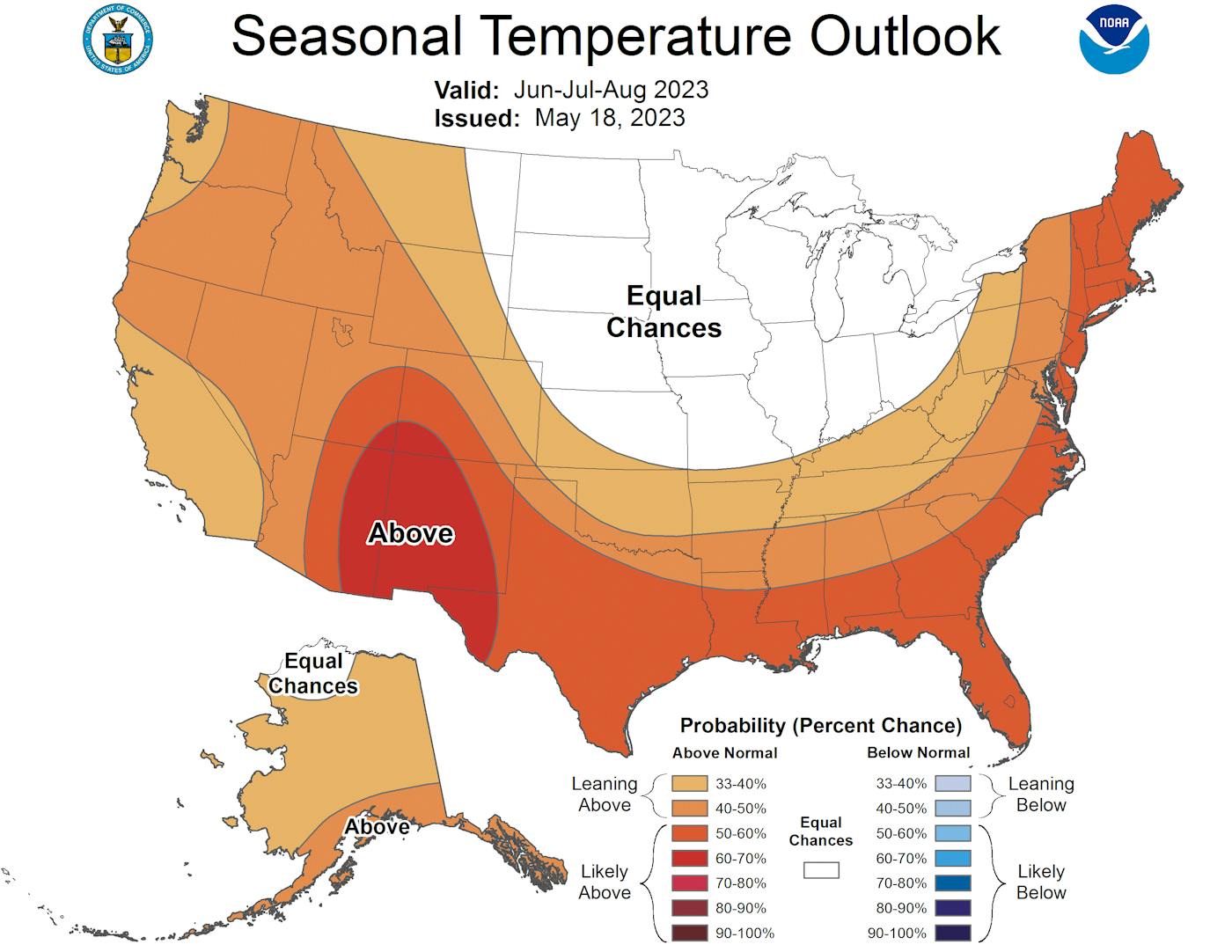
The National Oceanic and Atmospheric Administration recently unveiled its seasonal temperature outlook, which estimates most of the United States is likely to experience above-normal temperatures this summer. The probability of that outcome depends on where you live, ranging from 33–40 percent in West Virginia and central Montana to 60–70 percent in parts of the Southwest.

Source: NOAA

NOAA also released its Seasonal Precipitation Outlook, which predicts that much of the Midwest, South, Southeast, and Mid-Atlantic may experience above-average precipitation, while the Southwest—already in crisis due to an ongoing drought—is likely to suffer from below-average precipitation, which could also hit the Pacific Northwest. (The 2023 hurricane season outlook will be announced at a news conference later this week.)

Global warming gives us different things to mourn in different seasons. The changing climate, for example, can make people nostalgic for the autumns and winters of yesteryear—you know, when leaves changed color on schedule and drinking hot cider in October didn’t just make you sweat, or when backyard skating rinks didn’t melt into vernal pools in January.

But climate change’s effect on summer feels simultaneously more subtle and more foreboding. It doesn’t make summer less summery. But it does make summer less fun and more dangerous, in a variety of insidious ways.

At the more prosaic end of the spectrum, 75-degree days turning into 85- or even 90-degree days is just an unpleasant hassle, making it harder to enjoy the outdoors and more costly to keep the indoors comfortable; air conditioners are expensive and a pain to deal with, and heat screws up people’s sleep.

Then there are the deadly waves, whose toll is probably undercounted in this country. “The Centers for Disease Control and Prevention,” Eric Margolis previously wrote for TNR, “only counts deaths where heat illness is explicitly noted, so the official CDC count of heat-triggered deaths sits at just around 600 per year. Epidemiologists estimate that the real figure may be closer to 12,000—20 times higher than the official count.”

Those numbers could soon rise. For a while, heat deaths were decreasing—probably due, the CDC has surmised, to “better forecasting, heat-health early warning systems, and increased access to air conditioning.” But there are a few reasons that trend might not hold. For one, the number of dangerously hot days in many areas is growing. Here in D.C., for example, the “baseline” number of heat emergency days is supposed to be 11. But by the 2050s, even under a “low emission scenario,” that number will more than double, to 25—and could be as high as 45. (Already, this decade, the city is expecting the number of heat emergency days to range from 18 to 20.)

The second reason is that air conditioners, which are hardly evenly distributed across society to begin with, aren’t much help if the electrical grid fails. In the 2021 heat wave that hit the Pacific Northwest, over 6,000 people lost power in Portland alone during a 112-degree-heat weekend. As Vox reported that year, the U.S. power grid is dangerously underprepared for these kinds of scenarios, and not just because of overall energy capacity: “If the weather gets hot enough, power lines start to sag—a result of the metal inside them expanding—and risk striking a tree and starting a fire. At the same time, power plants are highly dependent on water, which they need to cool down their systems,” but which isn’t necessarily available in some areas during drought.

And that’s to say nothing of work-related heat deaths, for both outdoor workers in fields like agriculture, construction, and delivery and indoor workers in poorly ventilated warehouses. It’s to say nothing of the increasingly plausible link between heat and derechos, or the dangers of drought, fire, or flash floods—all of which climate change is making more likely in various regions in the summertime. It’s to say nothing of the well-documented annual spike in violent crime, which researchers show is particularly likely on days above 85 degrees.

As a fall and winter person myself, I spend a lot of time mourning what petro-hegemony is doing to those seasons. But what rampant emissions are stealing from summer people—and all of us—is arguably worse. Climate change isn’t simply removing what’s enjoyable about these months (like snow in winter). Instead, it takes those enjoyments and dials up the temperature until the fruits of the season start to rot—until the former beach days, al fresco park gatherings, and mornings in the garden just aren’t very pleasant, or even carry the risk of heat stroke, and “scorchers” turn into multiday death traps.

Happy unofficial start to summer. It’s a lovely time to get angry and demand better.

Good News

California, Arizona, and Nevada have come to an agreement on water cuts to address the crisis in the Colorado River basin. It’s not final, and it’s absolutely not enough to resolve the situation permanently. But after an incredible amount of stalling, it’s a start.

Bad News

The G7 meeting in Hiroshima over the weekend failed to result in a commitment to coal phaseout and included explicit praise for natural gas: not a great outcome for the climate.

Stat of the Week

That’s what the top fossil fuel companies (think BP, Shell, ExxonMobil, Total, Chevron, and more) would owe in regular reparations for the cost of extreme weather, sea level rise, and other climate disasters, according to new hypothetical calculations.

Elsewhere in the Ecosystem

She’s Out to Save Rare Wildflowers, but First She Has to Find Them

One of the upsides of California’s torrential rain earlier this year has been a “super bloom” of wildflowers. That gives botanists a brief window in which to locate rarer species and possibly save them from extinction, Jill Cowan reports:

This spring and summer, Dr. Fraga and other rare-plant biologists are in an exhilarating race to find wildflowers before they disappear again.

The botanists’ ultimate goal is to secure endangered or rare species designations for the most threatened plants. That can lay the foundation to legally force land managers to make accommodations for threatened species. (For instance, the Center for Biological Diversity has made wildflower protection a key piece of its lengthy fight against development of the Tejon Ranch, where almost 20,000 new homes have been proposed north of Los Angeles.)

In order to get endangered or rare species designations, Dr. Fraga and her colleagues must first prove that the plants still exist.

Read Jill Cowan’s report at The New York Times.

This article first appeared in Apocalypse Soon, a weekly TNR newsletter authored by deputy editor Heather Souvaine Horn. Sign up here.

The Real Reason Americans Are Addicted to Lawns

“People don’t like lawns. That’s the irony.”

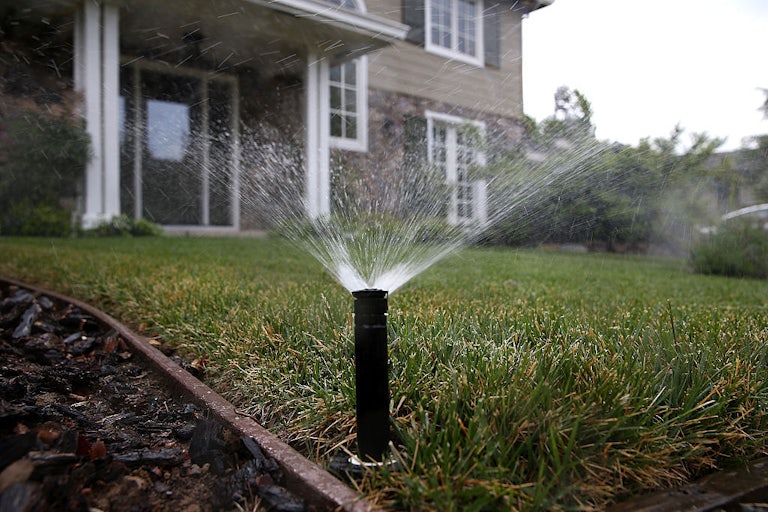
A sprinkler sprays water over a lawn with a house in the background.
Justin Sullivan/Getty Images
A sprinkler waters a lawn in drought-stricken California.

What’s the best way to make your yard more environmentally friendly? Articles on the topic abound this time of year. We’re now halfway through “No Mow May,” an interesting initiative that began in the U.K. and is spreading in the United States. Abstaining from lawn maintenance for a month to help bee populations is certainly easier than ripping up your lawn and planting native wildflowers—which can be pretty expensive and time-consuming. But No Mow May doesn’t solve the broader issues of water use, pesticides, and fertilizer runoff. And it might even be counterproductive.

To help me make sense of all of this, I called up Paul Robbins, dean of the Nelson Institute for Environmental Studies at the University of Wisconsin-Madison, who literally wrote the book on lawn culture. His advice wasn’t what you typically hear in these conversations. Instead of encouraging individuals to plant wildflowers to save the bees or guilting people for their front-yard greenery, he said, we might be better off chipping away at some of the industry issues that make lawns so pervasive in the first place.

This interview has been edited and condensed for length and clarity.

We’ve known for quite a while that lawns aren’t the most environmentally friendly option for a variety of reasons, but they remain the overwhelming norm in this country. What do you feel are the top factors in that?

There’s a really simple answer to this: Most of the houses that people live in have already been built. This is deeply structural: The actual housing stock, the lot size, the footprint of the house, the landscaping choices made by developers—which are all value-engineering choices—have all already been made. No one puts in a lawn; they buy a house and it has a lawn, which puts the burden on them to somehow get rid of it, which is actually an enormous undertaking. It takes more work than just leaving it where it is.

Having said that, people don’t like lawns. That’s the irony; more and more people don’t want them, but nothing has changed. The reason it hasn’t changed is that everything that has nothing to do with lawns would have to change first.

It sounds like you’re saying, at least in part, it’s an industry problem.

As in the housing industry, yes. I’m not even talking about the fact that there’s a $10 to $40 billion lawn industry that’s actually invested in keeping them. There’s a deep investment in maintaining your need for lawns and to off-load the pain that they are to you by providing services—massive amounts of service provision.

And they tell people that they have problems. Scotts won awards for telling people to ask for such and such a product: “You have a problem, go ask for that.” You would never have done that back when it was a mom and pop hardware store in the 1980s. If you had a problem with your lawn, you might go and ask somebody at Ace Hardware, but to go and say, “I need this chemical, this product”?

The press is constantly saying lawns are about “American culture—we have this weird anomalous culture, and aren’t Americans odd?” when in fact it’s all rather obvious: We’ve got a really weird housing market, once you get outside the urban core, and you’ve got an industry that needs to sell this stuff. And most people really don’t want to have them and would love to replace [them] with something else.

But presumably that’s incredibly labor intensive, because it’s much easier to pay someone to mow your lawn.

Yeah. Well, it’s possible people are more interested in DIY culture in general terms. You know, The New York Times is filled with stories about beekeeping. But how many people keep fricking bees? Not that many. So that’s great that some hipster in Brooklyn is keeping bees—I think that’s wonderful. But am I counting on hipsters in Brooklyn to save the planet? No. Nor am I counting on busy, middle-class people pulling up their lawns. It’s unfair to burden them with this problem because they can’t solve it. So: Could we come up with an industry that somehow can make margins by replacing your lawn with something that takes less struggle and supports pollinators? Yeah, I actually think we can.

Really?

Well, I don’t have much confidence in capitalism. But having said that, yeah, there’s enough people out there who are interested in alternatives that if you squeeze a little you can start getting some options. In Canada, when we started studying this stuff, bans were being placed on the sale of certain chemical products—pesticides in particular. That’s something you can put tighter controls on. Once you pull pesticides out, that opens out all kinds of alternatives to lawns, because you’ve got to have something, and you’ll pay for it. So there might be some regulatory action to open the opportunity for that.

So there are a couple ways bans and regulations are starting to enter the American system. One, with water use.

Yeah, water’s going to kill it west of the hundredth meridian. East of the Mississippi, it’s a little harder to imagine. We’ve got plenty of water here, and it’s only going to get wetter.

And then, two, with bans on gas-powered either leaf blowers or lawn mowers, which is starting to happen. To what extent do these things make a difference in terms of the viability of lawns, or are we going to need something much bigger?

Banning these engines is a good thing in and of itself for air quality, to say nothing of like, carbon. But it’s not going to make the lawn go away. Everything’s just going to be electric.

The pesticide market could be regulated better I think, by a long shot. I do see room for regulatory interventions here.

Well there might be political support for that, given the research about what pesticides are doing in terms of cancer risk.

Cancer risks, and God knows what they’re doing to reproductive health. I’m not a public health expert, but we’re all buying organic cause we’re so worried about all these chemicals in the system, and people are dumping this shit on their own lawns! And it tracks into the house—I’ve seen the organic chemistry—it’s all over. It tends to decay in sunlight, but once it’s in your house dust, your kids are eating it, curtains—man, it’s everywhere. It’s in your body. We’re covered in this stuff. See, homeowners, they have no margin, so homeowners will always use more pesticides than they need, cause they’re not a farmer. No farmer would ever use a drop more Roundup than they have to, whereas a homeowner will use about 50 times as much because the marginal cost is so small relative to their other expenses.

That could have some regulatory legs. I think people don’t want that.

So maybe going the human health route rather than the “save pollinators” route might be more effective?

Yes, and I say that as someone who runs an environmental studies program. Environmental justice comes first. Most of these things are totally unnecessary cosmetic pesticides, as opposed to growing food for millions of people.

So when you do see these lawn clashes come out—I’m thinking of a suit in Maryland involving a homeowner association—is it because people are worried about home value? Because as you say, people don’t love lawns so much, but there’s something going on here.

HOAs are fascist about everything. I mean, have you ever seen what a homeowners’ association code looks like? There are still racial covenants on some people’s property—they’re inactive because of the Fair Housing Act, so they’re trumped by federal law. But then why are they still on there? There’s a lot of reasons that HOAs operate the way they do, and they are about property values, without question—resale value. And of course it’s a kind of moral economy that comes with that that enforces all these things, and lawns are just one tiny piece of that.

It sounds like you’re saying that regulating input is going to be more effective than regulating behavior or giving people some kind of marginal incentive for planting native plants or something like that.

I’d like to think that positive incentives work, I’m willing to be proven wrong. I haven’t studied it, so I’m not here to say it’s a bad idea. But you’ve got to offset the cost, because coming up with alternatives is a pain; it’s really difficult.

In Madison we also have a law on the books—I call it a freedom-to-farm law because that’s the only correlate in the law books that I know, but it’s not a freedom to farm, it’s a freedom to let your lawn go to shit. It makes it harder for you to be sued by your neighbors if you choose alternatives like prairie grass. It’s not a law that tells you to do something or even pays you to do something; it just keeps you from being sued for doing something. Even that would be a good step from a regulatory point of view.

Good News

Rooftop solar, if installed aggressively, could potentially meet a third of the U.S. manufacturing sector’s power needs, according to a study from Northeastern University researchers.

Bad News

We’re now on track to hit the threshold of 1.5 degrees Celsius (2.7 degrees Fahrenheit) of warming by 2027, thanks to climate change and the added effects of El Niño.

Stat of the Week

That’s how much air pollution from oil and gas production costs in terms of health effects across the U.S., according to a new study. States with higher oil and gas production had correspondingly higher health costs.

Elsewhere in the Ecosystem

​​What the EPA Can’t Say About Its New Power Plant Rules

Last week, the Environmental Protection Agency proposed regulations to cut almost all the emissions from the power sector by 2040—understandably making headlines. But as Emily Pontecorvo and Robinson Meyer point out at Heatmap, the EPA has to strike a delicate balance between climate goals and a Supreme Court ruling last year that said the agency has relatively limited authority to regulate greenhouse gas emissions from power plants and would have to restrict itself to things taking place “within the fenceline” of the plants themselves:

The EPA’s new proposal tries to hew within those guidelines. The agency has determined that the best available technology to reduce emissions directly from fossil-fuel-burning power plants is to install carbon-capture equipment. Carbon-capture-and-storage technology, or CCS, is now affordable and feasible, the agency asserts.

“There’s a 100% chance that this will be challenged in court,” Michael Gerrard, a Columbia Law professor and the director of the Sabin Center for Climate Change Law, told us. “The debate will largely be about if CCS is ‘adequately demonstrated.’”

At stake, too, is the question of whether the rules represent a Trojan horse—that although the proposal appears to comply with the Court’s guidelines, the expense and hassle of installing carbon-capture equipment is meant to force utilities to shift to renewables anyway. That could in fact be the rules’ practical effect. (Some environmentalists will admit—although not on the record—that they like the rules for this reason.)

Read Emily Pontecorvo’s and Robinson Meyer’s article at Heatmap.

This article first appeared in Apocalypse Soon, a weekly TNR newsletter authored by deputy editor Heather Souvaine Horn. Sign up here.