Life in a Warming World
A weekly reckoning with our heated planet—and the fight to save it

Why Climate Journalists Hate Earth Day

The annual event began with good intentions. Now it’s a source of dread.

An inflatable globe rests on top of an oil refinery, reading "Earth Day 1970-1990."
Joe Sohm/Visions of America/Getty Images
The Unocal oil refinery in Los Angeles, on Earth Day 1990

The time draws near. Those working in climate and environmental coverage can feel it approaching like the rumble of an oncoming train: Earth Day.

The celebration on April 22 started with the best of intentions in 1970—part of a radical, nationwide movement that also helped establish the Environmental Protection Agency and extend the Clean Air Act. In recent decades, though, Earth Day has felt a bit more nebulous—and susceptible to cliché, pablum, window dressing, and corporate greenwashing. Reliably, at least one oil major each year uses the day to release some bonkers ad copy suggesting they’re environmentalists.

TNR has published several pieces about this long-running trend, from Bradford Plumer’s short post in 2008 comparing the corporate co-opting of Earth Day to Christmas to Emily Atkin’s 2017 classic about Earth Day having become a “corny celebration of green living” mostly for white and privileged people, while low-income and minority populations face toxic air and water every day. Going forward, she wrote, “the onus is on the more privileged classes to change Earth Day from a feel-good exercise for well-off liberals to a day of mass activism to help the underprivileged, who have more immediate concerns than environmental injustice (let alone global warming).”

Liza Featherstone struck a similar note in her plea last year to resurrect the radicalism of the original Earth Day. But on the optimistic side of things, she argued, we can point to the original as powerful proof of concept:

If not for the climate crisis—which scientists and environmentalists warned about on that first Earth Day and the world has struggled and largely failed to address ever since—we’d probably view ’70s environmentalism as one of the most transformative social movements in history. That first Earth Day kicked off many of the important changes. As National Earth Day organizer Denis Hayes said in a 2020 interview, before that first Earth Day the Cuyahoga River was routinely on fire, breathing the air in major American cities like Pittsburgh and Los Angeles was like smoking two packs of cigarettes a day, and the bald eagle—America’s national bird—was in danger of going extinct. None of that is true today. Our waterways are also much cleaner, and fewer children suffer from lead paint poisoning in their homes (in fact, childhood lead poisoning has declined by 90 percent). The massive mobilization of Earth Day helped focus the general public’s attention on the environment, and in turn, that of politicians. Looking at this history tells us something that we need to know right now: We have solved pervasive and deadly environmental problems in the past, and we can do it again.

As part of a series next week on the origin of various environmental culture wars, we’ll have more coverage of how, exactly, this moment of consensus fractured and climate policy got stuck in partisan deadlock. But in the meantime, as we gear up for a week that will doubtless feature its usual share of corporate shenanigans, it’s worth sparing a thought for what meaningful celebration might look like.

Denis Hayes, the original organizer of Earth Day in 1970, offered five suggestions to Outside magazine’s Heather Hansman last year: Focus on the biggest, and ideally the most discrete, issue (that would be emissions); name a “clear enemy”; pinpoint specific political changes (as when Earth Day activists identified the “dirty dozen” congressmen in flippable districts who were blocking environmental policy); take the imperfect, passable policy over no policy at all; and give people a goal that doesn’t feel “hopeless.”

Notably, none of these sound much like the program you’ll see if you visit EarthDay.org’s rundown for 2023. The official theme is “Invest in Our Planet”—a word choice evoking start-up culture, business-led solutionism, and so-called sustainable investment, none of which have performed all that well in recent years when it comes to reducing emissions. (In any event, the right is now engaged in all-out war on the entire idea that investment should be sustainable.) Under the heading “How to Do Earth Day 2023,” visitors are offered six ideas: “Climate Literacy,” “End Plastics,” “Plant Trees,” “Vote Earth,” “Global Cleanup,” and “Sustainable Fashion.”

If Hayes is right, then for Earth Day to be effective again, it might need to choose one issue. It might need to be more explicitly political and less universally inoffensive. A useful Earth Day might not look like a product you can buy but a fight you can sign up for—and an affirmative vision of what winning the battle might look like.

Good News

We don’t need the toxic and long-lasting chemicals known as PFAS to make things stain-resistant, a new peer-reviewed study finds. Furniture fabric that hadn’t been treated with PFAS held up just as well as untreated fabric. “PFAS on treated fabric can break off and end up in indoor air, attach to dust, or be dermally absorbed, and the pollution is especially a problem for homes with small children,” The Guardian’s report on the study notes. “The product is commonly applied to stain-resistant apparel and products for babies and children.” Find more information on what we know about the health effects of PFAS here and here.

Bad News

Sea levels are rising more quickly than predicted along the southeastern and Gulf coasts, which might exacerbate the effects of hurricanes that make landfall there.

Stat of the Week

$14 billion

That’s how much the “collective market value of the biggest US [oil and gas] companies” fell in just three days when Ireland’s parliament voted to divest from fossil fuels, even though the value of the divestment itself (i.e., the value of the stocks in the sovereign wealth fund) was only about $78 million. That seems to indicate, according to a new study reported by the Financial Times, that divestment pledges and “viral divestment tweets” serve as important market signals.

Elsewhere in the Ecosystem

This Is How Fast Humans Have Changed the Ecosystem

The forest of aspen trees known as Pando, in Utah, is actually a single organism, “perhaps the world’s largest living creature. It might also be the oldest living thing on the planet, having survived for over 10,000 years,” writes Faye Flam at Bloomberg. Each tree is a clone stem of the same plant, all connected by an underground network of roots. But now the organism is under threat:

In the last 100 years, human activity has made growing new stems much tougher for Pando. The main threats, said Rogers, are deer and elk, as well as a few domestic cattle and sheep. Aspen grow fast, which makes their young stems tender and tasty to these herbivores, and so most are getting eaten before they have a chance of becoming a new tree. Areas that used to hold 200 adult stems now have just 50. “It hasn’t shrunk from the outside,” said [Utah State University biologist Paul] Rogers. “It’s thinning and collapsing from the inside.” The fact that it’s getting eaten isn’t the fault of the herbivores. Their populations exploded when, in the early 20th century, people decided to exterminate their main predators—wolves, bears and cougars.

The impact of climate change is harder to predict, said Rogers. “We have these two opposing forces.” On the one hand, warming temperatures could shrink aspen habitat, pushing them to cooler, higher elevations. On the other hand, aspen thrive in fire.

Read Faye Flam’s article at Bloomberg.
Remember When Every Week Was Like This?

Trump’s arraignment was a flashback to that miserable era when he drowned out every policy discussion.

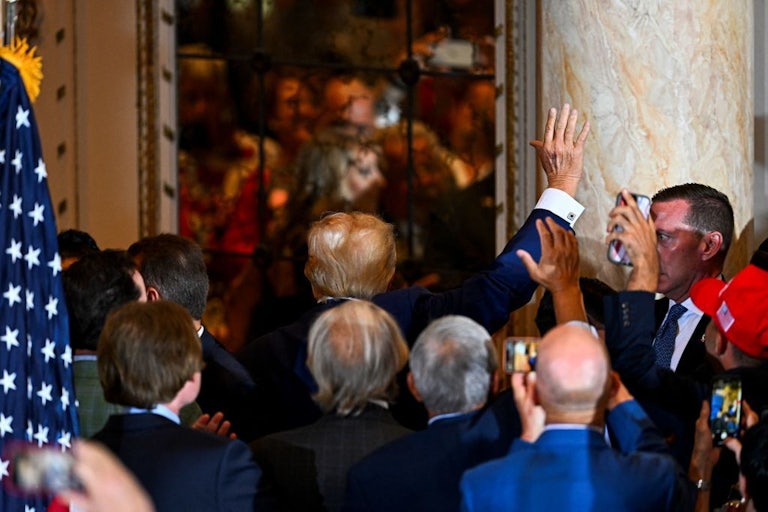
Donald Trump walks away from the camera out of a room, while waving.
Chandan Khanna/Getty Images
Former U.S. President Donald Trump leaves a press conference in Mar-a-Lago following his Manhattan arraignment.

One thought in particular has dominated my mind this week amid the media frenzy of the Trump indictment: Do you remember when every week was like this?

Obviously, not every week literally involved a former president turning himself in for arraignment on 34 felony charges related to misusing campaign funds to pay hush money to an adult film actress. But for entire stretches of the Trump administration, it felt like each day brought a new political tornado, a new scandal, a new baffling situation where it was hard to get answers about what was going on because no one in power seemed to know. As TNR legal writer Matt Ford put it in one memorable, viral tweet in early 2017, “It’s less of a ‘news cycle’ these days and more of that [Battlestar Galactica] episode where the Cylons attack every 33 minutes.”

While Trump, of course, has not exactly faded into dignified, dog-painting retirement like George W. Bush, it’s been easy until the past week to forget what the adrenaline-fueled chaos of his administration felt like. One of the tragedies of that era was that, while the ethics violations, racist rhetoric, and international incidents that dominated headlines were unambiguously worthy of attention, they also made it hard for the average media consumer to get a handle on the Trump administration’s policies—the concrete, substantive legacy of the three-ring circus parked at 1600 Pennsylvania Ave.

So as recent climate news—deadly tornadoes across 14 states, a U.N. report characterized as a “final warning” on global warming, the abrupt reappearance of an inland sea in California—again fades from the headlines this week in favor of Trumpernalia, it seems appropriate to look back at just how many destructive climate and environmental policies got pushed through in those years while the Russia investigation or Melania’s jewelry line competed for the nation’s attention.

Donald Trump began his presidency by making climate denial more or less the official position of the United States government. He did this, TNR’s Emily Atkin observed in 2017, by first nominating a bevy of climate deniers to key positions: Scott Pruitt to lead the Environmental Protection Agency, Rick Perry as energy secretary, Kathleen Hartnett White to the Council on Environmental Quality (this was later withdrawn), and Oklahoma Congressman Jim Bridenstine to head NASA. Meanwhile, Department of Agriculture employees were instructed to avoid the term “climate change” in favor of euphemisms like “weather extremes.”

Before his resignation the following year, Pruitt accrued so many bonkers ethics scandals—a soundproof phone booth, four-figure spending on fountain pens, use of a military helicopter to visit a coal mine, and a really great deal on a Capitol Hill rental owned by an energy lobbyist—that sometimes his policies flew under the radar. In 2018, for instance, Pruitt announced a boring-sounding new rule blocking the EPA from considering studies that contained confidential information about human subjects. The upshot, as Emily Atkin wrote at the time, was that the EPA could no longer use “much of the research showing how pollutants damage public health.… If science based on confidential human health information couldn’t be used by the government,” she wrote, “the tobacco industry likely never would have been subject to strict regulation.” Pruitt also attempted to gut the Obama-era Clean Power Plan, a crusade that his successor, Andrew Wheeler, continued—despite the EPA calculating that this would result in an extra 1,400 premature deaths per year. (The plan was halted by a federal appeals court.)

As the Trump administration entered its final year, Trump’s long-announced withdrawal of the U.S. from the Paris Agreement became official, the Senate passed his climate-hostile replacement to the North American Free Trade Agreement, or Nafta, and his administration’s effort to gut environmental regulations went into overdrive. Miranda Green chronicled the dizzying timeline for TNR that summer:

Since March, the Environmental Protection Agency has weakened mercury air pollution standards, permanently lowered regulations for vehicle tailpipe emissions, and finalized a reinterpretation of the Clean Water Act that opens the door to expedited pipeline development.

At the White House, Trump has been just as busy. In June he signed an executive order that allows companies to bypass key environmental reviews on infrastructure projects like mines and issued a proclamation to allow commercial fishing in a protected monument off Maine’s coast that was created specifically to limit such activity.… As of May 20, [the administration] has revoked, replaced, or weakened 66 environmental rules, according to a count by The New York Times.

By the time of The New York Timesfinal update on its deregulation count on Inauguration Day, that list of scrapped environmental rules had risen to 98, with 14 more in progress. Less than a week before Election Day 2020, the administration also attempted to open more of the Tongass National Forest—part of the world’s largest intact coastal temperate rainforest—up to logging.

This isn’t even close to an exhaustive list of Trump-era climate and environmental policy. It’s intended, instead, as an attention exercise. Whether Trump committed multiple felonies during the 2016 presidential election matters. But it’s far too easy, in cases like these, to get sucked into the daily drip of drama that seems to accompany the former president. This court case, even if it results in a conviction and scuppers Trump’s 2024 presidential bid (a long shot), is hardly the final word on the lasting impact of the Trump era. In 2050, as we plausibly approach a once unfathomable two degrees Celsius of global warming, the Trump legacy people may find most appalling is the one which lacked any salacious headlines.

Good News

European Union countries have approved a law to require all new cars sold starting in 2035 to be zero-emission, despite some controversy.

Bad News

On the whole, the drought in California is probably not over, despite the deluge of rain in the past few months.

Stat of the Week

That’s how much households currently heated by fuel oil may save on average by switching to an electric heat pump, according to Rewiring America. Check out The Washington Post’s fascinating article (with visuals!) about the geographical divides in U.S. home heating, which cited this number.

Elsewhere in the Ecosystem

“Tornado alley” is shifting farther into the U.S. east, climate scientists warn

Last weekend’s shocking tornado outbreak—over 80 tornadoes across 14 states in the Midwest and Southeast—may be a sign of things to come, The Guardian reports:

Previous research has shown that over recent decades there has been a stagnation, or even slight drop, in the number of tornadoes in their traditional home range of the Great Plains, but an uptick in states further east, such as Tennessee, Mississippi, Alabama, Illinois and Indiana.

These dervish-like storms also appear to be hitting earlier in some instances – tornado season usually starts in spring but parts of the south just had their most active tornado winter season on record and recent research found that milder US winters could be helping spur conditions ripe for earlier storms…. As tornadoes, on average, edge east they are coming into contact with more densely populated areas – think sprawling suburbia more than the isolated Kansas farm in The Wizard of Oz.

Read Oliver Milman’s report at The Guardian.

This article first appeared in Apocalypse Soon, a weekly TNR newsletter authored by deputy editor Heather Souvaine Horn. Sign up here.

Fight Climate Change by Doing Less

Resist the misconception that sustainable living means more work.

A person relaxes on a beach with a book.
Bruce Bennett/Getty Images

Two weeks ago, I promised this newsletter would have more to say about the emotional sustainability of climate coverage and climate activism—which seems to be a theme of late. In the wake of the most recent U.N. climate report, for example, several prominent voices in the climate space have returned to the question of how to frame climate news optimistically, so that people don’t feel too overwhelmed.

In a world where fossil fuel executives, meat megacorporations, and the like possess vastly more wealth and power than activists, tone probably isn’t the primary challenge in climate communication, as Kate Aronoff argued last week. At the same time, it’s true that sustainability continues to have the reputation of being a lot of work. And that’s a fascinating conundrum—because despite the plethora of popular articles promising five, 10, 12, 20, 22, 40, 58, or 101 ways to live more sustainably and fight climate change, a lot of the easy answers about how to live more sustainably involve doing less.

Four years ago, climate writer Mary Annaïse Heglar penned a classic essay at Vox about being tired of people confessing their environmental sins to her. Too often, she wrote, people feel they need to “convert to 100 percent solar energy, ride an upcycled bike everywhere, stop flying, eat vegan,” or else they’re bad environmentalists. “And all this raises the price of admission to the climate movement to an exorbitant level, often pricing out people of color and other marginalized groups.” Personal action isn’t irrelevant in the fight for a livable future, she wrote, but it’s not the best place to focus one’s efforts, particularly if people then get overwhelmed and stop at the personal—neglecting to vote for robust climate policies because they’re so busy trying to find a place to recycle those pesky plastic bags.

A lot of people clearly feel sustainable living means doing more: taking more time to sort recycling or buying special reusable containers, sourcing clothes from thrift shops or researching the most sustainable varieties of seafood. A lot of people also want guidance about how to live more sustainably (how to have a more sustainable yard, for example, was one question I recently heard raised in a meeting) but feel intimidated by the amount of work it might require (killing off your grass and installing a bunch of native plants is pretty daunting for nongardeners).

But let’s take that sustainable yard question as a good case study. Sure, there’s a case for killing off your grass, planting a meadow of native plants, as The New York Times recently urged to ward off the insect apocalypse, or even adding a frog pond, as Emma Marris suggested at The Atlantic. But if you’re not ready or equipped to do that, there really is one easy trick to make your yard more sustainable: Do less. Mow it less frequently—the estimates on emissions from gas-powered lawn mowers vary, but all of them are staggering (greater than a car operating for an equivalent amount of time), and longer grass is more hospitable to insects and other wildlife anyway. Apply pesticides or herbicides less frequently—the runoff is terrible for watersheds (in fact, that might be an easier way to help amphibians than installing a frog pond). If you’re in a water-strapped part of the country, water it less frequently.

Greater effort doesn’t necessarily mean greater environmental friendliness. This holds for so many other things as well, like clothes shopping. Donating your clothing or looking for sustainably produced labels has some serious limits, as recent reporting on the deluge of unused clothing donations and greenwashing of the fashion industry has shown. The real way to dress sustainably, as a growing number of experts acknowledge, is simply to buy less. The real way to make your commute more sustainable may not be to spend hours researching and then financing the latest e-bike, but to work less—by pushing for a four-day workweek, as Kate wrote about last year.

You’d think that this would be a popular “solution” in a world where people are always bemoaning how little time they have, how little cash they have, how bad inflation has gotten. Yet “do less” isn’t always what people want to hear. Perhaps that’s because “do less” has a hint of austerity to it or because doing less may require swimming against the flow of a culture obsessed with aesthetics. Try doing or not doing anything remotely unorthodox with your lawn in a neighborhood with a neurotic homeowners’ association, and see how that goes. (Although, that being said, this Maryland couple sued those bougie troglodytes and won, so there’s hope.) Buying fewer clothes means ignoring the pressure to engage in competitive social signaling.

Yet it’s worth remembering that it’s precisely this culture of aesthetics over substance that the corporations driving climate change have relied on again and again: by championing the idea of a personal “carbon footprint” in the first place, to make people feel guilty about their own lifestyles instead of questioning fossil fuel companies’ culpability; by marketing gas stoves as a lifestyle upgrade or plastics as convenient and more pleasant to use; by trend-churning to force seasonal purchases; and a multitude of other examples.

If individual consumers are going to take on the task of fighting all this, perhaps the least they can do for themselves is—instead of adding 20 items to their to-do lists and shaming themselves for falling short—choose the path that saves them time and money, by rejecting the cult of aesthetics in the first place. There’s beauty in that too.

Good News

Renewable electricity generation surpassed coal in this country for the first time in 2022, the U.S. Energy Information Administration reports.

Bad News

Over a year after Russia’s invasion of Ukraine catapulted heat pumps and home insulation to the top of the Western European political agenda—to save on winter fuel—an independent report has found that the United Kingdom only “stuttered further” in 2022 on its path to energy efficiency. The chair of the independent commission blamed insufficient funding and an overreliance on “low-stakes incremental changes” and called for bolder policies. “The risk of delay in addressing climate change,” he said, “is now greater than the risk of over-correction.”

Stat of the Week

That’s the degree to which stricter limits on fine-particulate-matter air pollution could reduce mortality rates among older Black and low-income people in the U.S, according to a new study. Read the New York Times write-up here.

Elsewhere in the Ecosystem

The Gospel of Disaster

Slate has a pretty wild story this week about the Christian relief organizations that are stepping up to the plate to help communities recover from climate disasters when the Federal Emergency Management Agency fails to get the job done (unfortunately a frequent occurrence, due to persistent underfunding):

The Christian relief organizations that have stepped in as first responders—with little oversight—are diverse, spanning from well-intentioned community churches with decades of goodwill to billion-dollar evangelical charities that use far-right outrage to fundraise and take advantage of disaster to spread their gospel.

The overwhelming majority of these organizations’ on-the-ground volunteers serve out of genuine compassion. But some of the country’s largest disaster charities are helmed by far-right extremist leaders who encourage volunteers to make proselytization a main part of their mission, bragging in press releases about how many disaster victims “prayed to receive Jesus Christ as Lord and Savior.” For Samaritan’s Purse, that leader is president and CEO Franklin Graham, the evangelical titan who has called Islam a violent religion, compared trans people with pedophiles, and praised Vladimir Putin’s anti-gay policies, saying LGBT people will burn in “the flames of hell.”

Read Nick Aspinwall’s story at Slate.

This article first appeared in Apocalypse Soon, a weekly TNR newsletter authored by deputy editor Heather Souvaine Horn. Sign up here.

Five Ways to Force Washington to Pass Better Climate Policies

A roundup of ideas for how to break fossil fuels’ hold over the country’s dysfunctional political system

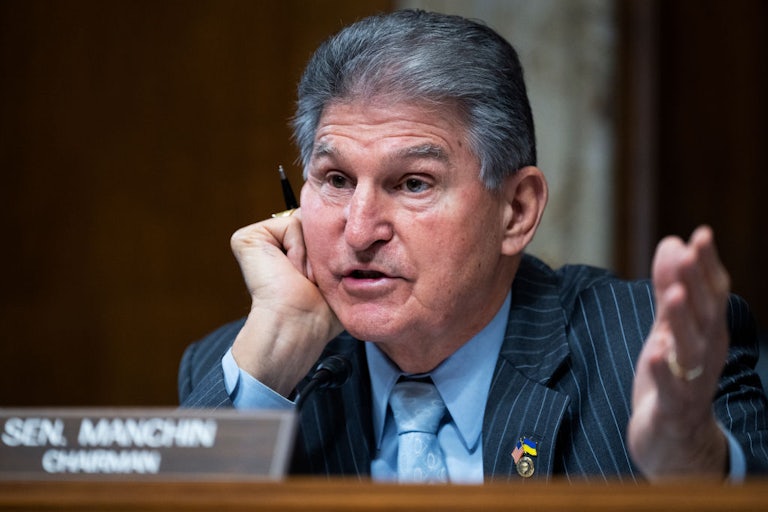
Joe Manchin gesticulates while speaking.
Tom Williams/Getty Images
Coal baron Joe Manchin, in his day job as U.S. senator

The bottom line of the dire new U.N. climate report this week is that our current policies to reduce emissions aren’t enough. The Summary for Policymakers released by the Intergovernmental Panel on Climate Change emphasizes that while we have lowered our projected emissions trajectory a bit (here’s a useful graph), we’re still on track for at least three degrees Celsius (5.4 degrees Fahrenheit) of warming by 2100—a truly disastrous scenario. Limiting warming to 1.5 or two degrees, which is still globally disruptive, would require major policy changes almost immediately. “Every decision from here on out matters,” Ketan Joshi wrote at TNR in response to the report. And decisions like last week’s approval of the Willow project in Alaska need to stop: “Every next step must be a step where emissions fall.”

That’s going to be tough. As illustrated by the Willow decision and the battle over last year’s big climate bill, the Inflation Reduction Act, it is really hard to get a majority of lawmakers to take a “no new fossil fuels” position. But there’s no shortage of ideas about how to change that. Here are five that have been proposed at TNR and elsewhere.

Mobilizing nonvoting environmentalists. One of the big reasons often given for American politicians’ lack of ambitious climate policy is that politicians need to get elected, and there just aren’t enough climate-first voters to keep climate-first politicians in power. (This is one of the rationales, presumably, behind Joe Biden’s demonstrable tack to the center ahead of 2024.)

Liza Featherstone, however, spoke last year to members of a nonprofit that thinks all that could change very rapidly. “The polls are right that there are not enough climate-first voters to scare politicians,” Nathaniel Stinnett of the Environmental Voter Project told her. But those polls look at likely voters. And EVP’s research has found that “far more nonvoters list climate as their top priority.” Nonvoting environmentalists, Liza reported, “tend to be young, low-income, or people of color. All those groups vote less than other demographics.” And EVP is betting that helping those people get to the polls via registration, reminders, and transport—rather than earlier climate activists’ attempts at persuading skeptics—might be the way to sway elections.

Liza followed up on this topic after the midterms and found that in the 2022 midterms, “more ‘climate voters,’ people whose top issue is the climate crisis, showed up to cast ballots than in any other election in U.S. history.” There’s a lesson here, she concluded: “Climate voters exist, and Democrats should stop campaigning—and governing—as if they do not.”

Getting fossil fuel money out of politics. Joe Manchin’s frequent obstruction of policies that would transition us off fossil fuels isn’t exactly a mystery, as TNR’s Kate Aronoff has pointed out many times. The West Virginia Democrat gets a lot of both his personal income and his political donations from the fossil fuel industry. And while most of the top recipients of such donations are Republicans, Joe Manchin isn’t the only Democrat raking in oil and gas money! Even at the state level, as Meaghan Winter pointed out in 2019, energy companies wield a tremendous amount of power over politics via political donations.

Fixing this starts with increasing awareness. Media organizations should mention whether a politician receives significant fossil fuel donations when reporting on that politician’s positions on climate change. People can also check the OpenSecrets database to see how much their elected representatives are receiving. Then there are pledges that have circulated in recent years, by which politicians can commit to reject such donations. There’s evidence that these pledges make a difference: “Prior to signing the pledge,” The Guardian reported during the 2020 election, “nearly all of the 2020 Democratic candidates took money from fossil fuel executives, other employees and via political action committees.”

To build momentum, Aaron Regunberg argued last year, activists could “start stigmatizing fossil fuel enablers wherever they exist”—not just the politicians who take donations. Or, of course, there’s always Kate Aronoff’s “one quick trick for curbing the fossil fuel industry’s political influence”: nationalization.

Getting fossil fuel money out of policy. The oil and gas industry influences politics in more subtle ways, for instance by funding a lot of the research from which policies get drafted. ExxonMobil has routinely given six-figure sums to Brookings, the Center for Strategic and International Studies, and similar D.C. think tanks, Kate Aronoff reported in 2021. That’s something that ought to be disclosed when experts from those think tanks write blog posts denouncing investigative exposés of the company, as happened that year, or get quoted about how increased gas exports could help Ukraine—a frequent occurrence in 2022.

The divestment campaign at universities is also picking up steam, as people realize just how much climate research at top-tier research institutions is funded by fossil fuels. Recently, Data for Progress and Fossil Free Research calculated that six fossil fuel companies alone had probably spent $700 million funding research at 27 different U.S. universities between 2010 and 2020—something that ought to be taken into account, the authors argued, when considering the research those universities produced favoring things like carbon capture, a questionable climate “solution” that the industry loves because it allows it to continue with its core business model. If you’re interested in a particularly chilling case study in this process, don’t miss Kate Aronoff’s look at Ernest Moniz—the MIT professor emeritus, Obama alum, and former Biden adviser who has built a substantial portion of his career taking fossil fuel money and churning out emissions-heavy “all of the above” energy policies.

The rights-of-nature movement. Climate journalist Amy Westervelt recently wrote about this for Orion magazine. Given that the Inflation Reduction Act is the most ambitious climate policy that the U.S. has ever passed—in fact, it almost didn’t pass—and yet the final form lacked any mechanism for reducing fossil fuels, she writes, there’s a strong case for “rethinking our decision-making framework altogether so that maybe, eventually, we have a shot at not repeating the same damn mistakes over and over for the next century.”

The rights-of-nature movement, she points out—which emerged from Indigenous approaches—offers a way to modify the Western legal system to make more room for the kind of policies we need in the current era. The framework doesn’t just grant “ecosystems the right to survive and thrive” but also “grants the communities surrounding those ecosystems the ability to protect those rights.” And in so doing, she argues, it would fix the “fatal flaw in the U.S. operating system”: the “social contract” theory that, in the end, has assigned vastly more rights to corporations and individuals than to the community or the resources that community needs. “Rights of nature kicks that idea to the curb. No person or entity is more important than its ecosystem, no one gets out of their obligation to protect it.”

Making climate a local issue. Climate scientist Katharine Hayhoe has written extensively about how even some climate skeptics can be won over if you start by talking about local weather patterns. Often, they’ve noticed that weather is getting weirder, and they’re concerned. That’s an underutilized technique when it comes to politics, as well, Liza Featherstone argued ahead of last year’s midterms. Primary challengers who talk about climate not in national terms but in terms more immediately relevant to their potential constituents—hurricanes, water shortages, wildfires—often get more traction than the political establishment might have predicted.

TNR politics reporter Grace Segers also noticed this trend when it came to the general election, when many Democrats shied away from the climate topic in a way that may have cost them winnable votes:

This data suggests that, contrary to conventional wisdom that candidates should focus solely on “kitchen table” economic issues, talking about climate change could help boost turnout for Democrats. But given the nuances of individual elections, that rhetoric may be most effective if it is tailored to the particular races they are trying to win and the voters they are hoping to convince.

Good News

The European Commission has proposed new rules to crack down on corporate greenwashing in the EU, by making companies substantiate vague claims like “climate neutral” that they might slap on labels to entice customers.

Bad News

Oil executives are preparing to spend big on new offshore oil projects in the next two years, as new investments rise “to levels not seen in a decade,” Climatewire reports.

Stat of the Week

No, you’re not imagining it if you feel your allergies are lasting longer. The “freeze-free season,” i.e., possible allergy season, has expanded on average by 15 days in the U.S. since 1970, according to recent number crunching from Climate Central. Here in D.C., allergy season has gotten 20 days longer. Oh, and a 2021 paper in the journal Environmental Sciences found that allergy seasons across the U.S. are more intense, with pollen concentrations increasing by 21 percent, “strongly coupled to observed warming.”

Elsewhere in the Ecosystem

A “Rocking Chair Rebellion”: Seniors Call on Banks to Dump Big Oil

A series of demonstrations across the country this week staged by environmentalist Bill McKibben’s Third Act group for older activists received a rousing writeup in the Times with plenty of pictures of the demonstrations. Cara Buckley described the scene in D.C.:

Bundled in long johns, puffer coats, layered knit hats and sleeping bags, and fortified by cookies sent by courier from a sympathetic supporter, dozens of graying protesters sat in rocking chairs outside of four banks in downtown Washington for 24 hours, in a nationwide protest billed as the largest climate action ever undertaken by older folks …

Their targets were Chase, the subsidiary of JP Morgan Chase, Wells Fargo, Citibank and Bank of America, the biggest investors in fossil fuel projects, according to a 2022 report by the Rainforest Action Network and other environmental groups. Collectively, the four banks have poured more than $1 trillion between 2016 and 2021 into oil and gas.

Read Cara Buckley’s Report at The New York Times.

This article first appeared in Apocalypse Soon, a weekly TNR newsletter authored by deputy editor Heather Souvaine Horn. Sign up here.

How to Stay Sane in a World of Crazy Climate Politics

An increasing number of voices are urging people to refocus on the hyperlocal when national events feel too overwhelming.

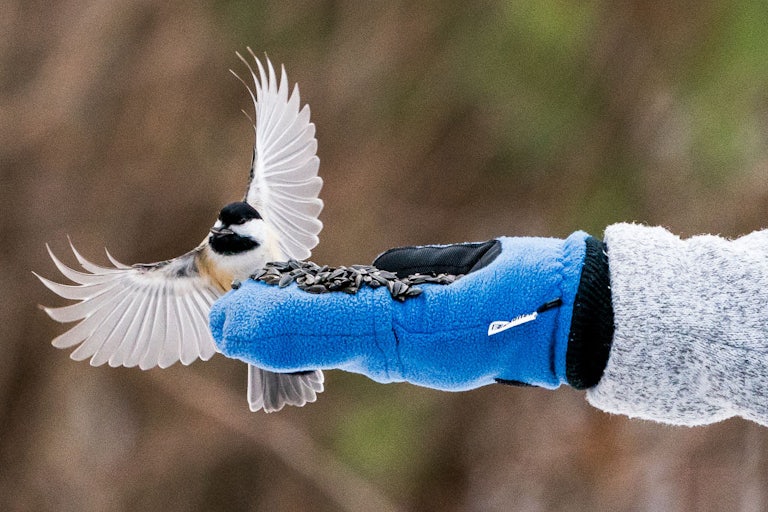
A chickadee lands on a person's mittened, outstretched hand, which contains sunflower seeds.
Portland Press Herald/Getty Images
A chickadee takes a piece of birdseed.

It’s a tough week to be an environmentalist, or really any person concerned about the future.

The Biden administration’s announcement Monday that it will approve the Willow oil project on Alaska’s North Slope represents more than just another retreat from the president’s campaign promise to end drilling on federal lands. It represents more than just the potential degradation of vulnerable Arctic ecosystems. And it’s not just that Willow is projected to add emissions equivalent to 64 coal-fired power plants, at a time when even the International Energy Agency has concluded that new oil and gas development needs to stop immediately to prevent catastrophic levels of global warming.

In addition to all of these things, the Willow approval underlines that the climate phase of the Biden administration is over. The Inflation Reduction Act, a bittersweet compromise, is behind us, and there’s not much hope of passing more ambitious emissions reductions anytime soon. Biden’s once-ambitious biodiversity agenda is languishing in the congressional discard pile. The tack to the center, ahead of 2024, has begun. And what Democrats managed to shove through the last Congress, good though it was, wasn’t enough—not to prevent catastrophic warming, not to prevent ecosystem collapse, not to shore up and reform the country’s vulnerable and unsustainable food system.

So if you’re worried about this, what should you do now?

In the past decade, much of the most effective environmental and climate advocacy has come from rejecting the 1990s and early-aughts emphasis on personal lifestyle change and instead encouraging people to pour their anxieties into collective action. If the prototypical twentieth-century environmentalist was a bird-watcher, the prototypical twenty-first-century environmentalist would be an organizer. Showcasing these principles, the Sunrise Movement in two short years went from being airily dismissed by Nancy Pelosi as “the green dream or whatever” to being widely credited, among other leftist and youth-focused groups, with changing the Democratic Party’s approach to climate change, pulling Joe Biden left, and influencing the early architecture of the Inflation Reduction Act.

But at a moment when this kind of political action seems pretty comprehensively stymied, how do you do what you can without feeling futile? One answer, which has been floated by a number of different environmental thinkers, is to focus on hyperlocal instead of national issues. It’s the approach many urged as a political strategy back when the legislation that eventually became the IRA looked like it wouldn’t pass at all. And in a slight twist from the organizing push of the last few years, nourishing your local sensibilities as an individual is now the approach a growing number of voices seem to be suggesting for spiritual refreshment, as a personal way of dealing with a political reality that feels overwhelming.

This was one of the themes of Jenny Odell’s surprise bestseller in 2019, How to Do Nothing: Resisting the Attention Economy—that shutting down Twitter, closing the news websites, and reconnecting to the natural world around you is itself a radical act and could furnish the emotional reserves for better political action: “sustenance for those feeling too disassembled to act meaningfully” at present. Odell’s second book, Saving Time, was published last week, and it similarly rejects strict productivity culture in favor of a more organic way of life intimately connected to place (Odell is big on bird-watching and bioregionalism).

Odell’s not alone in pointing to the power of reengaging with what’s directly in front of you, nor the need for an almost spiritual antidote to activist burnout. That’s also one of the themes of British author and former religious sister Karen Armstrong’s Sacred Nature, which came out last fall and argued that contemplating nature in “silence and a degree of solitude” might be necessary, as part of a broader “spiritual revolution,” to fuel policy change. “If we want to halt the environmental crisis, we need first, like Coleridge, to seek a silent receptiveness to the natural world, bringing it into our lives little by little every day.”

Mainstream outlets seem to be catching the vibe. The Atlantic’s climate newsletter recently touted the benefits of creating a frog pond in your backyard, noting that “saving species in the 21st century isn’t just about protecting big, undeveloped parks,” adding that “it can be dizzying to think about all the species that need help right now, but engaging in everyday conservation can also just be fun.” This came barely a week after The New York Times’ climate newsletter linked the obsessive tracking of New York City’s escaped Eurasian eagle-owl to compassion and “radical care” in the Anthropocene, and closed by asking readers, “Tell us: what’s wild around you?”

I’ll admit to a tiny bit of skepticism about this “bird-watching, but make it socialist” approach. While it suits my own proclivities just fine, this kind of solitary engagement with nature is easier recommended by people who already find it compelling than carried out by people with little background in, or space for, avian observation and garden projects. Many people may not know how to start engaging with nature, find it time-consuming, or may not feel inclined to persist in it as a solitary pursuit. And while reconnecting with nature may lead to collective action, there’s no built-in mechanism for it if we’re all walking the urban forests alone.

This is where citizen science comes in. You can focus on the nature around you—even get guidance on doing so—and then submit it to a collective project. Contemplate a nearby stream, then contribute data to a group tracking salt runoff from winter roads. If you do like bird-watching, your time reconnecting with feathery neighbors could feed into a broader effort to figure out the impact of climate change on avian communities. For those who find birds too high-energy for their particular breed of burnout, bivalves are always an option: Volunteer oyster gardening is a thing these days. Where I live in D.C., some of the best information on community water quality gets collected by community members. And these networks are still a way of meeting others—so while they’re a break from politics, they can also furnish not just the data but the connections for subsequent reengagement.

TNR’s climate desk has more to come on the topic of recharging—the emotional sustainability of the climate fight, if you will, in addition to ecological sustainability. But in the meantime, give one of the options here a try. If bad news is getting you down, focus on your immediate surroundings for a while. There isn’t a wrong answer here. Just don’t let despair swallow you whole and spit you out as someone who has given up caring about our fate.

Good News

The distance the average electric vehicle sold in the U.S. can go between charges is now quickly approaching 300 miles, Bloomberg reports. That’s four times the average range in 2011—one of many changes, along with increasing charging station availability, subsidies, and more, that are making E.V.s practical for a wider range of consumers. (Caveat: As TNR’s Kate Aronoff has pointed out, there are problems with “simply recreating current American car culture with electric batteries,” though. Shifting to more of a public transit–oriented system might be more sustainable.)

Bad News

There are possibly PFAS (a.k.a “forever chemicals”) in your toilet paper, and also coffee is going to get more scarce and expensive due to climate change. The Biden administration announced its intent to start restricting PFAS on Tuesday by requiring utility companies to remove them from drinking water.

Stat of the Week

That’s the amount by which a Washington Post investigation found insurance companies were “adjusting” (i.e., reducing) claims from Hurricane Ian survivors, rewriting and even deleting elements of licensed insurance adjusters’ reports to result in lower payouts.

Elsewhere in the Ecosystem

Landowners Fear Injection of Fracking Waste Threatens Aquifers in West Texas

Fracking sites in West Texas, Dylan Baddour reports, “can produce five times as much wastewater as oil.” And the wastewater is typically reinjected into the ground. While researchers know injection wells can cause earthquakes, they don’t have definitive proof yet that they are contaminating groundwater (although there’s plenty of reason to suspect it’s possible, especially given the earthquakes). The practice is starting to unnerve even reliably conservative farmers in the area:

Shifflett, 74, has nothing against oil. He votes Republican, hangs a cross above his door and leans an old rifle on his living room wall. Oil companies are doing their jobs, he said. For this situation, he blames the government—specifically, Texas’ oil field regulator, the Railroad Commission, which issues permits for fracking wastewater injection wells.

“If they ruin the water out here, there won’t be anyone left. This will be a desert with no inhabitants,” he said from his dining room table. “It’s only a matter of time.”

Read Dylan Baddour’s story at Inside Climate News.

This article first appeared in Apocalypse Soon, a weekly TNR newsletter authored by deputy editor Heather Souvaine Horn. Sign up here.